
Key Points:
- South Korea’s LG Group plans to adopt 10,000 advanced Nvidia Blackwell graphics processing units to accelerate its artificial intelligence capabilities.
- The conglomerate will deploy state-of-the-art chips at its AI Research Center to train its proprietary large language model, EXAONE.
- LG Electronics will also use the massive computing power to run physics-based simulations for its highly anticipated humanoid robot project.
- Deploying 10,000 Blackwell GPUs alongside custom data center infrastructure will push LG’s total high-performance computing investment close to $1 billion.
South Korean industrial giant LG Group is taking a giant leap into the future of computing. On Thursday, June 4, 2026, local business reports revealed that the conglomerate plans to acquire 10,000 state-of-the-art Blackwell graphics processing units (GPUs) from Nvidia. This massive hardware acquisition represents one of the largest corporate commitments to advanced AI computing in East Asia. By building a high-performance computational fortress, the group hopes to supercharge its proprietary artificial intelligence models and accelerate its transition into a highly automated, AI-driven multinational enterprise.
The news first emerged in South Korea’s Maeil Business Newspaper, which cited an unnamed high-level industry source familiar with the company’s long-term procurement strategy. According to the report, the massive shipment of Nvidia chips will go directly to LG’s central AI Research Center. This dedicated facility acts as the core technological hub for the entire group, developing the foundational algorithms that power LG’s various consumer, industrial, and medical business units. Securing 10,000 Blackwell chips ensures that the research center has the raw computational horsepower needed to train next-generation large language models.
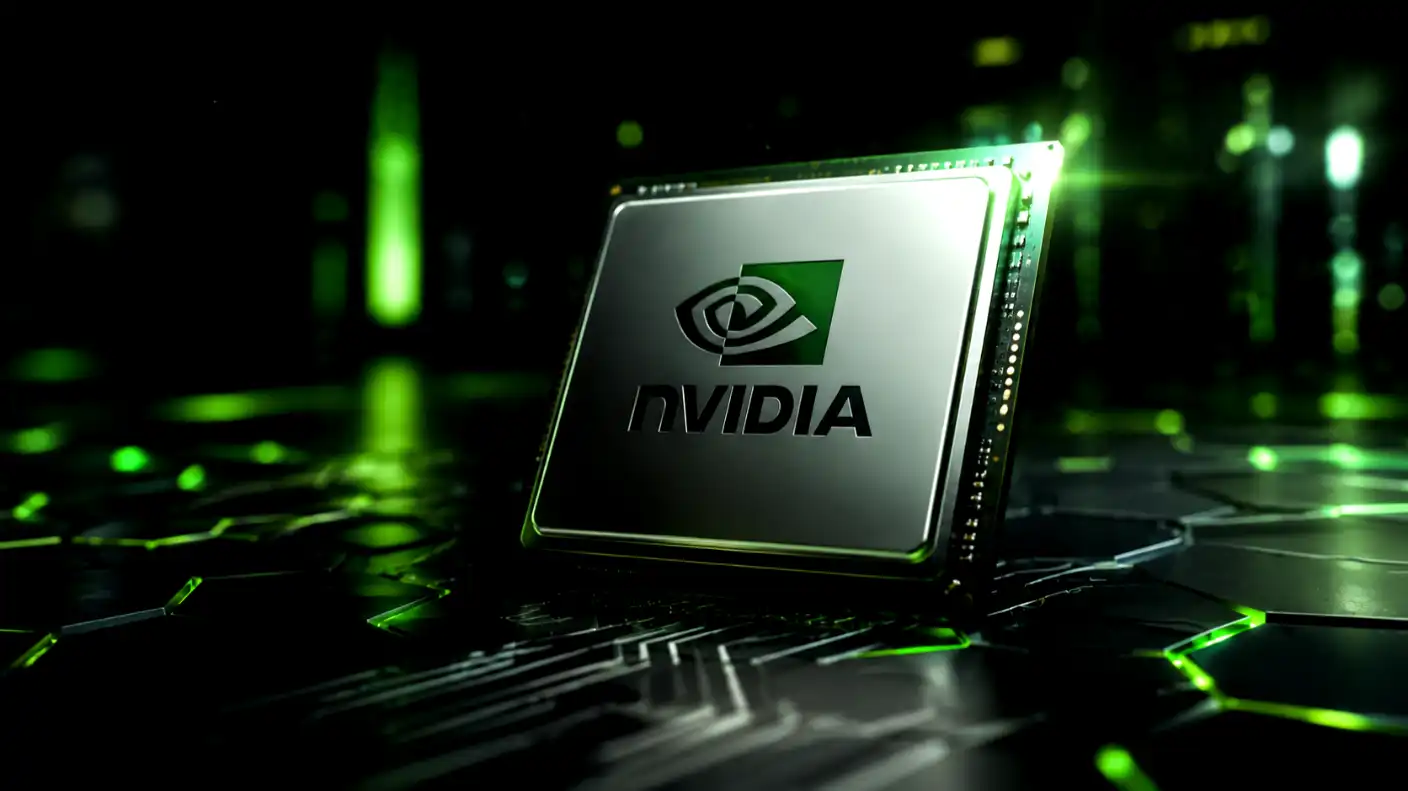
Nvidia’s Blackwell architecture represents the gold standard in high-performance computing, delivering significantly higher processing speeds than older Hopper-generation silicon. These specialized chips excel at running massive parallel processing tasks, which are essential for training complex generative AI systems. However, acquiring such advanced hardware demands massive capital. With individual Blackwell chips retailing for $30,000 to $40,000, industry analysts estimate that procuring 10,000 units, combined with custom server racks, liquid cooling systems, and specialized network switches, will push LG’s total infrastructure investment close to $1 billion.
The decision to execute such a massive financial and technical play stems directly from the top. LG Group Chairman Koo Kwang-mo has spent the first half of 2026 aggressively pushing for a rapid, group-wide artificial intelligence transformation. Chairman Koo has repeatedly urged executives to move past simple digital cloud services and embrace physical, active AI technologies. His personal determination played a decisive role in securing the substantial capital required for the Nvidia deal, as he views advanced silicon as the essential foundation for the conglomerate’s long-term survival.
A primary goal of this hardware expansion is to accelerate the development of LG’s proprietary artificial intelligence model, EXAONE. By utilizing the 10,000 Blackwell GPUs, LG’s research team can train larger neural networks in a fraction of the time, allowing them to process vast datasets with higher accuracy. The upgraded model will integrate directly into the group’s domestic and international operations, assisting chemical researchers in discovering new battery materials, helping display engineers design energy-efficient screens, and enabling logistics teams to optimize global shipping routes in real time.
Beyond software-based large language models, LG plans to dedicate a significant portion of its new computing power to “physical AI.” LG Electronics is currently developing an advanced humanoid robot designed to perform complex domestic chores and assist workers on busy factory floors. Training a physical robot to navigate dynamic household environments, recognize thousands of everyday objects, and respond to verbal commands requires immense deep-learning simulation. The Nvidia Blackwell chips will run these complex physics-based simulations, helping the robot learn how to balance, grip fragile items, and interact safely with human companions.
The economic benefits of successful physical AI integration are massive. Market analysts estimate that introducing intelligent humanoid robots into manufacturing assembly lines could boost industrial productivity by up to 15% over the next decade. By automating repetitive, physically demanding tasks, companies can significantly reduce workplace injuries and offset labor shortages in rapidly aging societies like South Korea. For LG, which operates massive home appliance and automotive component factories worldwide, even a 1.5% increase in operational efficiency can translate into hundreds of millions in additional annual revenue.
LG’s aggressive tech expansion occurs amid a fierce semiconductor arms race among South Korea’s largest family-owned conglomerates, or chaebols. Rivals like Samsung Electronics and SK Group are also investing billions to expand their AI data centers and secure their own direct allocations of Nvidia silicon. Because Nvidia’s supply chain remains highly constrained due to overwhelming global demand, securing a dedicated batch of 10,000 Blackwell chips represents a massive logistical victory for LG, allowing it to keep pace with its domestic and global competitors.
By embedding 10,000 Nvidia GPUs into its research infrastructure, LG is positioning itself as a key pioneer in the physical AI space. While many technology companies focus strictly on virtual software assistants and online search tools, LG’s unique strength lies in its massive hardware manufacturing footprint. Marrying state-of-the-art AI brains with physical consumer electronics, home appliances, and electric-vehicle components enables the group to build a unique hardware-software ecosystem that pure software companies cannot easily replicate.
In the end, LG Group’s massive investment in Nvidia Blackwell chips marks a vital turning point for the legendary conglomerate. As the 10,000 graphics processors arrive at the AI Research Center, they will provide the computational foundation needed to bring humanoid robots and advanced proprietary AI models to life. By choosing bold, early adoption over cautious observation, Chairman Koo is ensuring that LG remains at the absolute forefront of the global technological revolution, proving that the future of industry belongs to those who successfully merge physical manufacturing with artificial intelligence.