
Key Points:
- South Korean Foreign Minister Cho Hyun and Turkish Foreign Minister Hakan Fidan met in Seoul to advance cooperation across high-tech defense, trade, nuclear energy, and infrastructure.
- The summit acted as a follow-up to the landmark November 2025 meeting in Ankara between South Korean President Lee Jae Myung and Turkish President Recep Tayyip Erdogan.
- A strategic focus remains on small modular reactors (SMRs) and massive infrastructure, aiming to expand bilateral trade beyond the current $10 billion threshold.
- The two “brother countries,” sharing historic ties since the 1950-53 Korean War, will mark the 70th anniversary of formal diplomatic relations in 2027.
A major diplomatic and economic push is underway in East Asia as two historically close nations seek to elevate their partnership. On Thursday, June 4, 2026, South Korean Foreign Minister Cho Hyun met with his Turkish counterpart, Hakan Fidan, in Seoul to discuss regional security issues and finalize follow-up measures from their nations’ recent presidential summit. Fidan’s arrival marked the first visit by a Turkish foreign minister to South Korea in five years. The high-level talks focused heavily on converting political goodwill into concrete economic agreements, with nuclear energy development, defense systems, and massive infrastructure projects topping the bilateral agenda.
The meeting served as a crucial review of the comprehensive agreements signed during South Korean President Lee Jae Myung’s state visit to Turkey in November 2025. During those landmark talks in Ankara, President Lee and Turkish President Recep Tayyip Erdogan oversaw the signing of six major cooperation agreements. The historic visit, which marked the first travel by a South Korean leader to Turkey in 13 years, established a strong framework for long-term collaboration. The foreign ministers aimed to transform those high-level commitments into concrete joint projects, particularly in high-technology fields such as artificial intelligence (AI) and biotechnology.
Bilateral economic ties between Seoul and Ankara have expanded rapidly over the past decade, and both ministers expressed a strong desire to build on this momentum. Supported by a robust free trade agreement that took effect in 2013, the annual trade volume between South Korea and Turkey has officially surpassed the $10 billion threshold. South Korea remains Turkey’s second-largest trading partner in the Far East after China, with major Korean firms investing in local automotive, information technology, and manufacturing sectors. The ministers discussed strategies to address trade imbalances while encouraging further South Korean foreign direct investment into Turkey’s growing industrial zones.
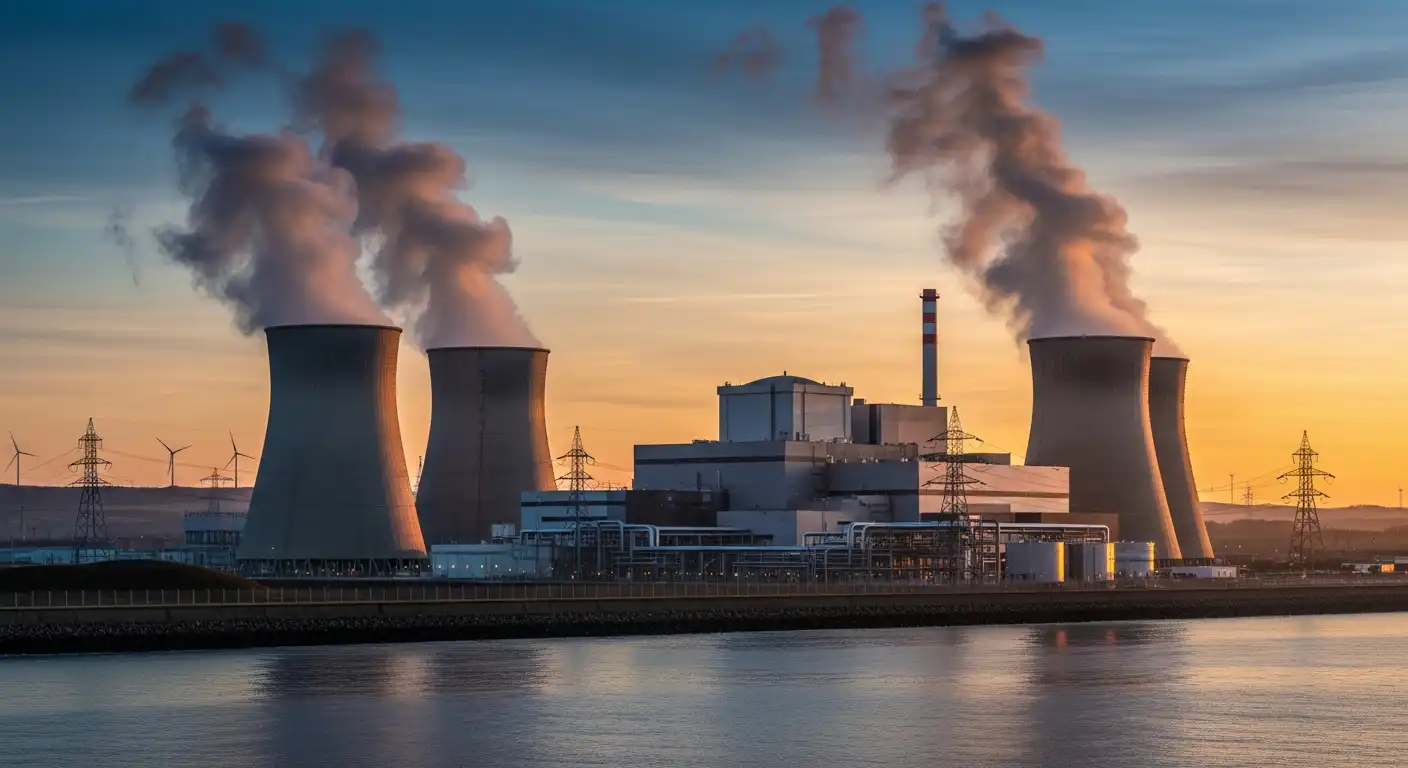
Nuclear energy represents a vital pillar of the expanding South Korea-Turkey strategic partnership. Just one day before the ministerial meeting, South Korea’s Innovative Small Modular Reactor Development Agency (i-SMRDA) and Turkish nuclear technology company Nuclean signed a strategic cooperation agreement in Seoul. This partnership aims to support the deployment of advanced small modular reactors (SMRs) in Turkey, helping the nation work toward its ambitious clean energy target of reaching 20,000 megawatts of nuclear power capacity by 2050. The agreement will allow Turkish industrial firms to integrate directly into the international SMR supply chain, boosting local manufacturing capabilities.
Beyond modular technology, South Korea is aggressively pursuing larger utility-scale nuclear contracts in the region. State-owned utility Korea Electric Power Corporation (KEPCO) previously submitted a comprehensive proposal to build four massive APR-1400 nuclear reactors in northern Turkey. During their discussions in Seoul, Cho and Fidan reviewed the ongoing evaluation process for this multi-billion-dollar project. Turkey’s energy department is actively exploring nuclear collaboration with both South Korea and the United States, and South Korean officials hope their proven construction track record will secure them a leading role in the development of Turkey’s second nuclear power plant.
Defense industrial cooperation remains another highly active area of mutual interest. The two nations have collaborated on multiple high-profile military projects, including the joint development of Turkey’s Altay main battle tank, which utilizes advanced South Korean transmission systems. South Korea has also emerged as a key exporter of military hardware to the Turkish armed forces, supplying advanced systems like the K9 self-propelled howitzer. The ministers pledged to deepen these defense ties, exploring potential opportunities for joint weapon production, co-development of uncrewed systems, and expanded personnel training exchanges to make both nations leading defense exporters.
The diplomats dedicated a significant portion of their meeting to discussing major global security crises that threaten international stability. The ministers held in-depth exchanges on the rising tensions on the Korean Peninsula, particularly focusing on North Korea’s ongoing weapons development. They also addressed the highly volatile situation in the Middle East and the devastating war in Ukraine. Because South Korea and Turkey both maintain deep strategic interests in global maritime trade routes, both sides agreed to coordinate closely on multilateral platforms to protect supply chains and support peaceful resolutions to these ongoing conflicts.
Beyond economic and defense agreements, the ministers emphasized the importance of reinforcing the social and cultural foundations of their bilateral relationship. They discussed concrete ways to expand student exchange programs, increase bilateral tourism, and foster collaborative scientific research between top-tier universities in Seoul and Ankara. Cho and Fidan agreed that strengthening these young academic and cultural networks is essential for securing the next generation of leadership for their strategic alliance.
The unique bond between South Korea and Turkey carries deep historical significance. Fidan warmly described the two nations as “brother countries,” a fraternal relationship forged when Turkey dispatched over 15,000 troops to defend South Korea during the 1950-53 Korean War. This military contribution, which ranked fourth among the United Nations member states, cemented a permanent bond of gratitude in South Korea. To keep this shared heritage alive, the ministers pledged to organize a wide range of commemorative cultural and educational events next year as the two nations mark the 70th anniversary of their formal diplomatic relations in 2027.
In the end, the high-level meeting in Seoul demonstrates that the strategic partnership between South Korea and Turkey is successfully transitioning from historical nostalgia to modern pragmatic cooperation. By aligning their interests in cutting-edge nuclear power, high-tech defense systems, and digital infrastructure, the two nations are building a highly resilient economic corridor. As developers and government agencies work to finalize these agreements over the coming months, this deep-sea industrial alliance will continue to play a vital role in shaping the energy security and defense landscapes of both Europe and East Asia.