In 2009, an anonymous entity known as Satoshi Nakamoto introduced Bitcoin, creating the first decentralized digital currency. For years, Bitcoin was the only game in town. It was the synonym for cryptocurrency. However, the blockchain technology that powered Bitcoin was open-source, and developers quickly realized it could do far more than facilitate peer-to-peer payments.
This realization marked the beginning of the altcoin era (Alternative Coin).
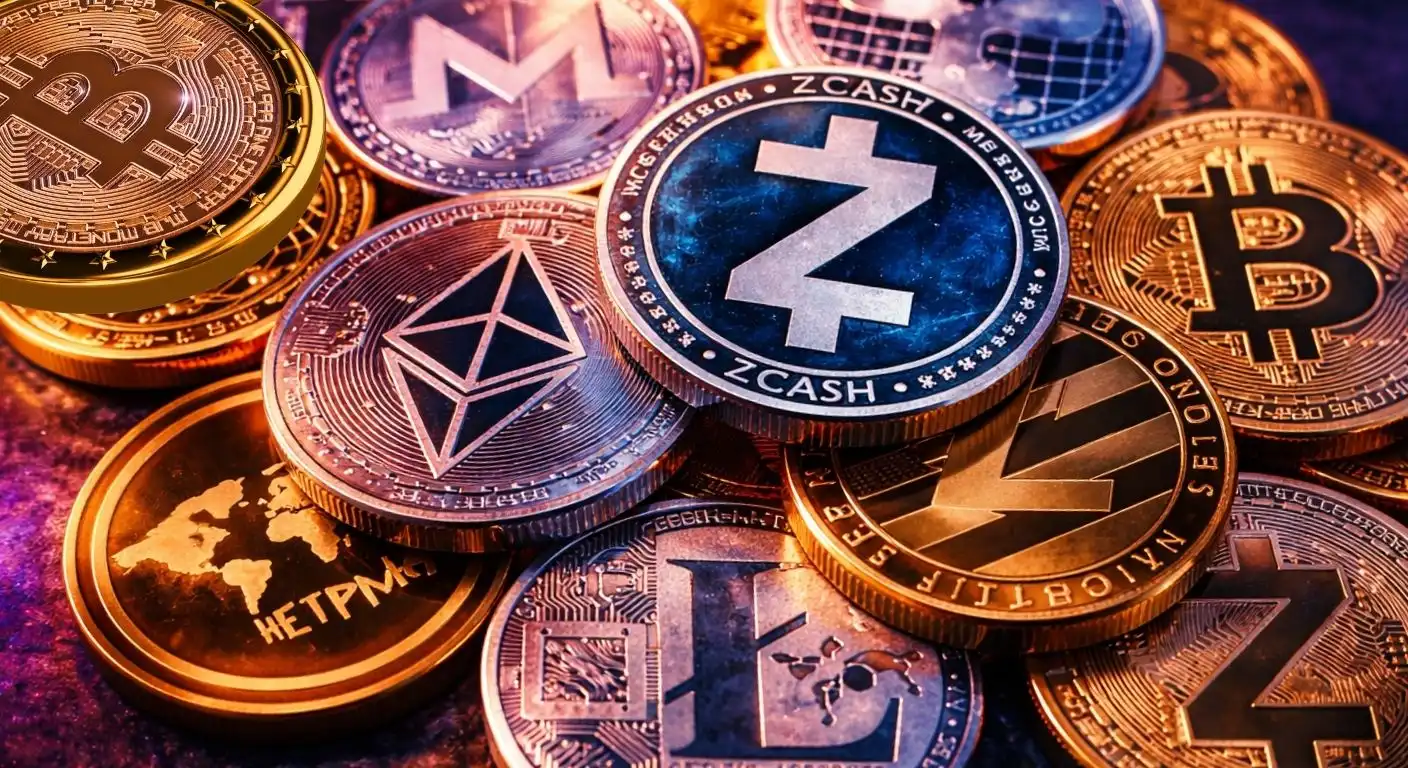
Today, there are over 20,000 distinct cryptocurrencies in existence. While Bitcoin remains the “King” with the largest market capitalization, the Altcoin market represents a trillion-dollar ecosystem of innovation, speculation, and technological revolution. From Ethereum’s smart contracts to Solana’s high-speed transactions, and from the stability of USDC to the meme-fueled chaos of Dogecoin, Altcoins are where the true experimentation of the crypto world happens.
This comprehensive guide explores the diverse world of Altcoins, explaining what they are, the categories, the risks involved, and why they are essential to the future of the digital economy.
What is an Altcoin?
The definition is simple: any cryptocurrency other than Bitcoin is an Altcoin.
The term is a portmanteau of “Alternative” and “Coin.” In the early days, most altcoins were simple clones (forks) of Bitcoin. Developers would copy Bitcoin’s open-source code, tweak a few parameters—such as transaction speed or the total coin supply—and launch a “new” currency. Litecoin (LTC) and Bitcoin Cash (BCH) are classic examples of this first generation.
However, the definition has evolved. Today, Altcoins are no longer just “Bitcoin alternatives.” They are utility tokens, governance tokens, platform currencies, and digital art. They power Decentralized Finance (DeFi), Non-Fungible Tokens (NFTs), and the Metaverse.
The Evolution of Altcoins: Generations of Innovation
To understand the Altcoin market, it helps to view it through the lens of technological generations.
Generation 1: The Currencies (2011-2014)
The goal of these coins was simply to be a “better Bitcoin.”
- Litecoin (LTC): Created by Charlie Lee, it aimed to be the “silver to Bitcoin’s gold.” It offered faster block times (2.5 minutes vs Bitcoin’s 10 minutes) and a different mining algorithm.
- Dogecoin (DOGE): Created as a joke, it has inadvertently become a functional currency for tipping and micro-transactions due to its low fees and unlimited supply.
Generation 2: The Platforms (2015-Present)
This changed everything. Rather than being just money, these blockchains enabled developers to write code on top of them.
- Ethereum (ETH): Vitalik Buterin introduced the concept of “Smart Contracts”—self-executing code that runs on the blockchain. This turned crypto from a calculator into a computer. Ethereum is the foundation for most modern crypto applications.
Generation 3: Scalability and Interoperability (2017-Present)
As Ethereum became popular, it became slow and expensive. The third generation of Altcoins focused on solving the “Blockchain Trilemma”: achieving security, decentralization, and scalability simultaneously.
- Solana (SOL), Cardano (ADA), and Avalanche (AVAX): These are “Ethereum Killers” that offer lightning-fast transaction speeds and lower fees through consensus mechanisms such as Proof-of-History and Proof-of-Stake.
- Polkadot (DOT) and Cosmos (ATOM): These focus on “Interoperability”—allowing different blockchains to talk to each other.
Categories of Altcoins: It’s Not All The Same
Lumping all 20,000 coins together is a mistake. An investor must distinguish between the different types of Altcoins to understand their value proposition.
Smart Contract Platforms (Layer 1s)
These are the infrastructure plays. They are the “operating systems” of the crypto world.
- Examples: Ethereum, Solana, Binance Smart Chain (BNB).
- Value: Their value derives from network effects. The more developers build apps on them, the more valuable the native token becomes, as it is required to pay gas fees.
Stablecoins
These are cryptocurrencies pegged to a stable asset, usually the US Dollar. They are designed not to fluctuate in value.
- Examples: Tether (USDT), USD Coin (USDC), Dai (DAI).
- Value: They provide a safe harbor for traders during volatility and facilitate everyday payments without the risk of price volatility during transactions.
DeFi Tokens (Decentralized Finance)
These tokens are used in financial applications built on blockchains (usually Ethereum). They function like stocks in a bank, but the bank runs on code.
- Examples: Uniswap (UNI), Aave (AAVE), Maker (MKR).
- Value: They often serve as “Governance Tokens,” granting holders the right to vote on how the protocol is governed and how treasury funds are spent.
Utility Tokens
These tokens grant access to a specific service or product within a blockchain ecosystem.
- Example: Chainlink (LINK) connects smart contracts to real-world data (such as stock prices or weather). Filecoin (FIL) allows users to pay for decentralized cloud storage.
Meme Coins
These are driven purely by social sentiment and community hype. They often have no technological utility but can experience explosive growth (and crashes) based on internet culture.
- Examples: Dogecoin (DOGE), Shiba Inu (SHIB), Pepe (PEPE).
- Risk: Extremely high.
Why Invest in Altcoins? The Risk/Reward Ratio
If Bitcoin is the safest bet, why do people buy Altcoins? The answer is Asymmetric Upside.
Because Bitcoin already has a massive market capitalization (hundreds of billions of dollars), it would take a substantial amount of new capital to double its price. An Altcoin with a small market cap (say, $10 million) takes much less capital to double, triple, or 100x in value.
During a “Bull Market,” capital tends to flow in a cycle:
- Bitcoin Phase: Money flows into BTC first.
- Ethereum Phase: Money rotates into ETH.
- Large-cap Alts: Money flows to established coins like SOL or ADA.
- Altseason: Money flows into risky, small-cap coins, causing massive price spikes.
However, this works both ways. When the market crashes, Bitcoin might drop 50%, but Altcoins often drop 90-99%. Many Altcoins from the 2017 cycle never recovered their all-time highs. Investing in Altcoins is effectively venture capital: most will fail, but the winners can deliver life-changing returns.
How to Analyze an Altcoin: The “Tokenomics”
Before buying an Altcoin, you must look “under the hood.” Analyzing tokenomics (Token Economics) is crucial for avoiding scams and poor investments.
Market Cap vs. Price
Novice investors make a fatal mistake: “This coin is only 0.01! If it goes to the price of Bitcoin, I’ll be a billionaire!”
This is mathematically impossible if the supply is too high. Always look at the Market Cap (Price x Circulating Supply). If a coin has 1 trillion tokens, reaching $1 would require a trillion-dollar market cap (larger than Tesla).
Supply Dynamics
- Circulating Supply: How many coins are in the market now?
- Total/Max Supply: How many coins will ever exist?
- Inflation: If only 10% of the coins are circulating, that means 90% are yet to be released. When those coins are unlocked, they will flood the market, diluting the price.
Allocation and Vesting
Who owns the coins? If the “Team” and “Early Investors” own 50% of the supply, they can sell their holdings to retail investors. Look for a fair distribution where the community holds the majority. Also, check the “Vesting Schedule”—how long are the team’s coins locked up?
Utility
Does the token actually do anything? If a project has a great app but the token isn’t required to use it, the token might be worthless even if the app succeeds.
The Risks: Rug Pulls and Vaporware
The Altcoin market is the “Wild West” of finance. Regulation is light, and predators are everywhere.
The Rug Pull
Developers create a new coin, promote it on social media to attract capital, and then suddenly withdraw all liquidity from the trading pool, driving the price to zero. They disappear with the investors’ money. This is common in the DeFi and Meme coin space.
Vaporware
Projects that promise revolutionary technology but have no working product. They sell tokens based on a “white paper” (a PDF explaining the idea) and fancy marketing. Years later, they still have nothing to show for it.
Regulatory Risk
The US Securities and Exchange Commission (SEC) has argued that many Altcoins are actually unregistered securities (like stocks), not commodities (like Bitcoin). If an Altcoin is deemed a security, it could be delisted from exchanges and face massive fines, which could crush its price.
Major Altcoins You Should Know
While there are thousands, a few define the market structure.
Ethereum (The King of Alts)
Ethereum is less of an Altcoin and more of a separate asset class. It powers the vast majority of the crypto economy (NFTs, DAOs, Stablecoins). Its transition to “Proof of Stake” (The Merge) made it environmentally friendly and deflationary.
Solana (The Speed Demon)
Known for its high throughput and low cost, Solana has become the home for high-frequency trading and consumer apps. Despite past network outages, its developer activity is second only to Ethereum’s.
Chainlink (The Oracle)
Chainlink solves the “Oracle Problem.” Blockchains can’t see the outside world. Chainlink provides a decentralized way to feed real-world data (stock prices, sports scores) into smart contracts. It is a critical infrastructure.
Monero (The Ghost)
Monero (XMR) is a “Privacy Coin.” Unlike Bitcoin, where every transaction is public, Monero uses advanced cryptography to hide the sender, receiver, and amount. It is popular among privacy advocates (and criminals), making it a prime target for government bans.
The Future of Altcoins: Consolidation and Utility
The future of the Altcoin market will likely look different from the past. The era of “easy money” and copycat coins is fading.
The Great Filtering
As regulations tighten and institutional money enters the space, 99% of Altcoins will likely go to zero. The market will consolidate around projects that have real-world utility, active user bases, and sustainable revenue models.
Tokenization of Real Assets
The next wave of “Altcoins” might not be new currencies, but tokenized representations of real-world assets (RWA). Imagine an Altcoin that represents a share of a New York skyscraper, or a token that tracks the revenue of a music catalog. This is the convergence of traditional finance and blockchain.
Conclusion
Altcoins represent the frontier of financial and technological innovation. They offer opportunities to participate in the growth of new decentralized networks, the future of the internet (Web3), and the democratization of finance.
However, they are speculative assets. The golden rule of crypto applies heavily here: Do Your Own Research (DYOR) and Never invest more than you can afford to lose.
Bitcoin may be the savings account of the crypto world, but Altcoins are the venture capital portfolio. For those willing to navigate volatility, scams, and complexity, the Altcoin market offers a front-row seat to the rebuilding of the global financial system.