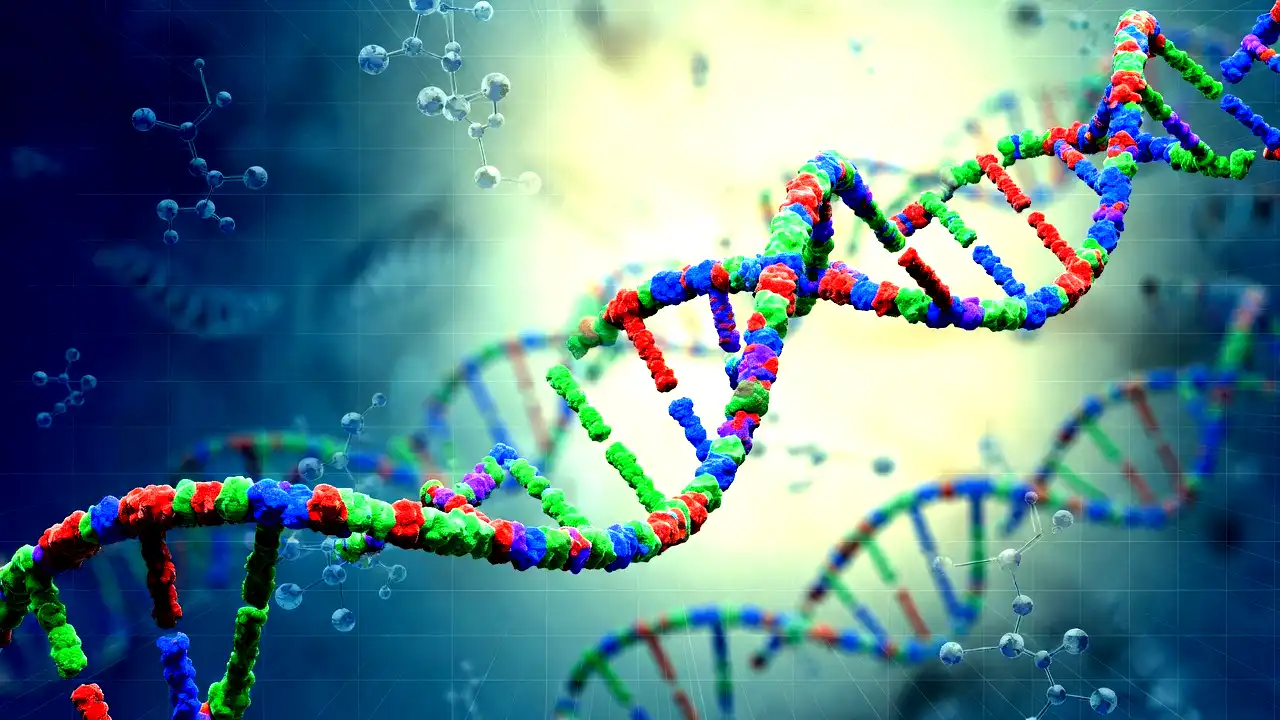
In modern biology, the reference genome serves as the definitive map. Just as early navigators relied on cartography to traverse the physical world, geneticists, conservationists, and agricultural researchers rely on reference genomes to navigate the biological one. A reference genome is a representative example of a specific species’ genetic set—a digital database of the nucleic acid sequences (A, C, T, G) assembled into chromosomes. It is the coordinate system upon which all other data—from gene expression to variant calling—is overlaid.
However, constructing this map is one of the most complex computational and biological challenges in science. From the initial Human Genome Project, which took over a decade and billions of dollars, to today’s Telomere-to-Telomere (T2T) achievements, the field has evolved rapidly. Yet, the task remains daunting. A fragmented, error-prone reference can lead to misdiagnosed diseases, failed crop improvements, and incorrect evolutionary conclusions.
This comprehensive guide explores the intricate process of building a high-quality reference genome, analyzes persistent challenges, and outlines current best practices that define the “platinum standard” of genomic assembly.
The Evolution of Genomic Assembly Standards
To understand contemporary best practices, we must first appreciate the limitations of the past. For nearly two decades, genome assemblies were largely fragmented. They consisted of thousands—sometimes hundreds of thousands—of short stretches of DNA called “contigs” that were not physically linked. This was largely due to reliance on short-read sequencing technologies, which could read only 100-300 bases at a time.
From Draft to Telomere-to-Telomere (T2T)
The goalpost has shifted significantly. A “draft” assembly, characterized by many gaps and unplaced scaffolds, is no longer sufficient for high-impact research. The new standard is the T2T (Telomere-to-Telomere) assembly—a gapless, end-to-end reconstruction of chromosomes.
Achieving this requires moving beyond simple coverage metrics. Researchers now focus on three pillars of assembly quality:
- Continuity: How long are the contiguous pieces of the sequence?
- Completeness: How much of the estimated genome size is represented?
- Correctness: How accurate is the base-level sequence and the structural arrangement?
Core Challenges in De Novo Assembly
Building a genome from scratch, known as de novo assembly, is akin to solving a massive jigsaw puzzle. However, unlike a standard puzzle, this one has billions of pieces, many of which are identical, and the box top (the reference image) is missing.
The Repeat Problem
The single greatest hurdle in genome assembly is repetitive DNA. Genomes, particularly in complex eukaryotes such as humans, maize, and amphibians, are replete with transposons, retroelements, and centromeric repeats.
Imagine a puzzle where 50% of the pieces are just pure blue sky. If you pick up a blue piece, you have no idea where it goes relative to the others. In sequencing, if a read is shorter than the repetitive element it covers, the assembly algorithm cannot determine where that piece belongs. This leads to “collapsed” assemblies, in which thousands of repeat copies are stacked on top of one another, or to fragmented assemblies, in which the graph breaks at each repeat.
Heterozygosity and Haplotype Phasing
Most organisms are diploid, meaning they possess two sets of chromosomes—one from each parent. In a reference genome, we ideally aim to distinguish between these two sets, a process known as haplotype phasing.
High heterozygosity—where the maternal and paternal sequences differ significantly—confuses assembly algorithms. The software struggles to determine whether a sequence difference represents a genuine distinct location in the genome (a repeat) or merely a variation between the two chromosome copies (alleles). This often results in a “fragmented” assembly, in which the two haplotypes are inadvertently split into different contigs, thereby artificially inflating the estimated genome size.
Polyploidy and Genome Size
While human genomes are diploid, many plants and fish are polyploid (having three, four, or even eight sets of chromosomes). Wheat, for example, is hexaploid. Separating six very similar sub-genomes is a monumental computational task. Furthermore, some genomes are simply massive. The axolotl genome is approximately 10 times larger than the human genome, requiring substantial computational RAM and storage to process.
Phase I: Sample Preparation and Sequencing Strategies
The quality of a genome assembly is determined before the sequencing machine is even turned on. It begins with the biological sample. “Garbage in, garbage out” is the golden rule of genomics.
High Molecular Weight (HMW) DNA Extraction
The foundation of modern long-read assembly is High-Molecular-Weight (HMW) DNA. You need DNA strands that are hundreds of kilobases long. Standard extraction kits often shear DNA into small fragments during precipitation or pipetting, thereby defeating the purpose of long-read sequencing.
Best Practice: Use specialized HMW extraction protocols. Technologies such as magnetic nanobind disks or agarose plug extractions protect the DNA from shearing forces. Always verify fragment length using Pulse Field Gel Electrophoresis (PFGE) or Femto Pulse systems before sequencing. If your average fragment length is below 20kb, the resulting assembly will likely remain fragmented.
Choosing the Right Organism
To minimize the challenge of heterozygosity, sample selection is critical.
Best Practice:
- Inbred Lines: If working with model organisms or crops, sequence a highly inbred individual (homozygous). This collapses the two haplotypes into a single haplotype, simplifying the problem.
- Haploid Tissues: In some species, sequencing gametes or haploid tissues (e.g., the megagametophyte in conifers or drone bees) can eliminate heterozygosity.
- Heterogametic Sex: For separating sex chromosomes (X and Y, or Z and W), choose the heterogametic sex (e.g., human males) to capture the unique sequences of both chromosomes.
The Long-Read Revolution: PacBio HiFi and Nanopore
You cannot build a modern reference genome with short reads (Illumina) alone. While short reads are excellent for polishing and error correction, they cannot bridge large repeats.
Best Practice:
- PacBio HiFi (High Fidelity): Currently, the gold standard for de novo assembly. These reads are generated by repeatedly sequencing a circularized molecule to produce a consensus. They are long (15kb-20kb) and highly accurate (99.9%). HiFi reads solve the repeat problem while minimizing the need for aggressive error correction.
- Oxford Nanopore Technologies (ONT): capable of “ultra-long” reads (100kb to 1 Mb+). While historically more error-prone (though this is improving with newer chemistry), they are essential for bridging the largest genomic gaps, such as centromeres and ribosomal DNA arrays.
A hybrid approach is often the best strategy: HiFi for the bulk of the accurate assembly, and Ultra-Long ONT to bridge the most difficult repetitive gaps.
Phase II: Computational Strategies and Assembly
Once the DNA is sequenced, the computational heavy lifting begins. The transition from raw data to a chromosome-level assembly involves three distinct stages: Contig Assembly, Scaffolding, and Polishing.
Algorithms for Phased Assembly
Modern assemblers are designed to explicitly handle diploidy. Older “consensus” approaches sought to merge Mom and Dad’s chromosomes into a single artificial sequence. Today, we aim for haplotype-resolved assemblies.
Best Practice: Use tools like hifiasm or Verkko. These assemblers utilize the accuracy of HiFi reads to produce phased assemblies from the start. They rely on “string graphs” to separate haplotypes.
- Trio-Binning: If possible, sequence the parents of your target individual with short reads. The assembler can use parental data to sort offsprings’ long reads into “maternal” and “paternal” bins before assembly begins. This results in two perfect, separate genomes.
Scaffolding with Hi-C
Long reads produce “contigs”—continuous stretches of DNA. However, these contigs typically don’t span an entire chromosome. To order and orient these contigs into chromosomes, researchers use Hi-C (Chromosome Conformation Capture).
Hi-C maps the 3D structure of the genome inside the nucleus. It identifies which DNA sequences are physically close to one another. Sequences on the same chromosome interact much more frequently than sequences on different chromosomes.
Best Practice: Always generate Hi-C data alongside long-read data. Algorithms such as SALSA2 and YaHS use this proximity data to stitch contigs into full-length chromosomes. This turns a fragmented draft into a chromosome-scale assembly.
Optical Mapping
Another validation tool is Optical Mapping (e.g., Bionano Genomics). This technique physically images extremely long DNA molecules labeled with fluorescent tags, creating a “barcode” of the genome.
Best Practice: Use optical maps to correct mis-assemblies. If the computational assembly indicates that two pieces are connected, but the optical map shows they are miles apart, the assembly is incorrect. This provides independent physical verification of the digital assembly.
Phase III: Quality Control (QC)
You have an assembly, but is it accurate? Rigorous Quality Control is mandatory before releasing a genome to the public databases.
BUSCO Scores
Benchmarking Universal Single-Copy Orthologs (BUSCO) checks for the presence of specific “housekeeping” genes that should be present in your species group (e.g., eudicots, mammals, fungi).
Best Practice: A high-quality assembly should have a BUSCO score >95%, indicating that most essential genes are present and intact. A high percentage of “Duplicated” BUSCOs may indicate that you failed to separate haplotypes correctly.
QV Scores and K-mer Analysis
The QV (Quality Value) score represents the probability of error. A QV of 50 (Q50) means one error every 100,000 bases.
Best Practice: Use k-mer-based tools like Merqury. This compares the raw sequencing reads directly to the final assembly. If the assembly contains k-mers (short sequences) that don’t exist in the raw reads, those are artificial errors. Mercury provides visual plots that clearly indicate whether your assembly is complete or redundant.
Contig N50 vs. Scaffold N50
N50 is a weighted median statistic. If your N50 is 1 Mb, it means that half of your genome is contained in fragments 1 Mb or larger.
Best Practice: While N50 is a standard metric, do not rely on it alone. An aggressive assembler can produce a high N50 by misassembling pieces. Always pair high N50 with low error rates and correct structural alignment. An ideal scaffold N50 should approach the size of a chromosome.
Phase IV: Annotation
A sequence without annotation is just a string of letters. An annotation identifies the locations of genes, the proteins they encode, and regulatory elements.
Repeat Masking
Before finding genes, you must identify and “mask” the repetitive elements so the gene-finding software doesn’t get confused.
Best Practice: Use tools such as RepeatMasker, combined with species-specific repeat libraries. Failure to properly mask repeats often leads to thousands of false-positive gene predictions (e.g., identifying a transposon as a functional protein-coding gene).
Integrating Transcriptomics (RNA-Seq)
To find genes, you need to know what the genome is expressing.
Best Practice: Sequence the transcriptome (RNA-Seq) from multiple tissues (leaf, root, brain, liver, etc.) of the same organism used for the genomic assembly. This provides experimental evidence that a specific DNA sequence is transcribed into RNA, thereby helping to accurately pinpoint exons and introns. Tools such as BRAKER2 and MAKER integrate protein evidence, RNA-seq data, and ab initio predictions to generate the final gene set.
The Future: The Pangenome Era
We are currently witnessing a paradigm shift from a linear reference genome to a pangenome.
A single reference genome represents one individual. It captures the individual’s genes but misses “dispensable” genes or structural variants present in other members of the population. This causes “reference bias,” where reads from other individuals fail to map because the reference lacks that specific sequence.
Best Practice: For major species (human, rice, corn), the field is moving toward graph pangenomes. Instead of a straight line, the genome is represented as a network of paths. This structure captures the diversity of the entire species, enabling more accurate mapping and the discovery of rare variants associated with disease or adaptation.
Conclusion
Building a reference genome is one of the most enduring contributions a scientist can make to their field. It serves as the foundational infrastructure for all subsequent research on that species. While the challenges of repeats, heterozygosity, and DNA extraction are significant, the convergence of long-read sequencing (PacBio/ONT), chromatin conformation capture (Hi-C), and phased assembly algorithms (hifiasm) has made T2T-level assemblies achievable for nearly any organism.
By adhering to these best practices—prioritizing HMW DNA, utilizing hybrid long-read strategies, ensuring haplotype phasing, and conducting rigorous curation—researchers can construct genomic maps that will stand the test of time, unlocking the biological secrets encoded within the DNA.