Key Points:
- China launched the Tianzhou-10 cargo ship from the Wenchang Spacecraft Launch Site on Monday.
- The spacecraft carries 67 pieces of equipment and 41 scientific experiments to the China Space Station.
- Researchers will study early embryonic development using stem cells, zebrafish, and mouse embryos in microgravity.
- The mission includes testing ultra-thin solar cells that cost 90 percent less than traditional space batteries.
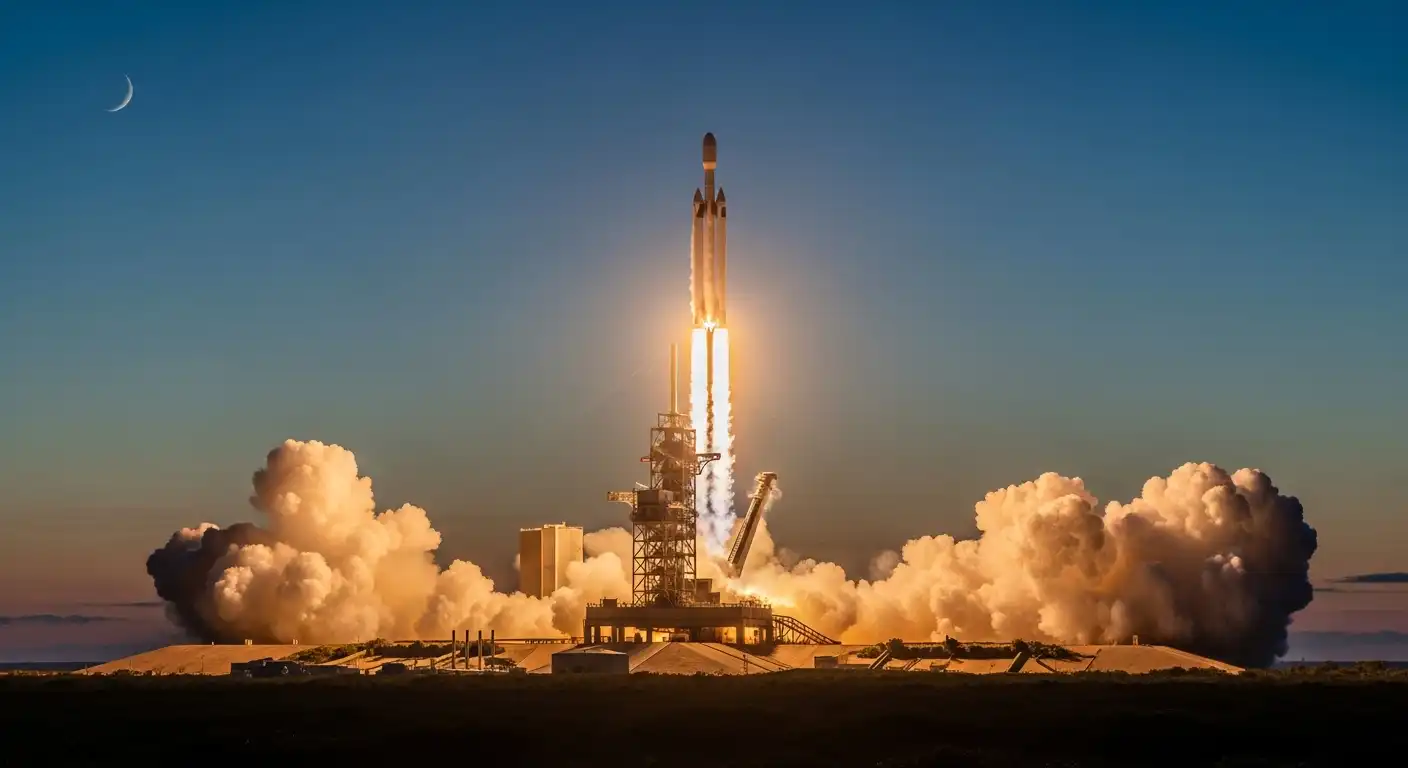
China launched the Tianzhou-10 cargo spacecraft on Monday morning. The massive rocket blasted off from the Wenchang Spacecraft Launch Site, which sits in the southern island province of Hainan. This successful launch marks another major step forward for the growing space program as the country quickly expands its permanent orbital capabilities.
The new spacecraft acts as a giant delivery truck for the China Space Station. Inside the pressurized cargo hold, the ship carries exactly 67 pieces of important equipment and 41 distinct scientific experiments. Astronauts already living on the station will soon open the hatches to unload experimental payloads, hardware, and daily consumables. Once they bring the materials safely inside the main module, the crew will install the gear to support a fresh wave of cutting-edge research.
Scientists back on Earth want to explore several new fields using this new equipment. The deliveries will help experts study space life sciences, microgravity physics, space application technologies, and space astronomy. A major highlight of this mission is a comprehensive study of how different embryos develop in the harsh environment of space.
As humanity actively plans for long trips to Mars and other distant planets, scientists must understand how space travel affects reproduction. Planners view this issue as a major hurdle for any future interplanetary migration. To solve this problem, the Tianzhou-10 payload includes 5 core life science experiments designed specifically to decode how the space environment impacts the earliest stages of life.
The biology team will test how microgravity causes bone loss and alters heart muscles over time. They will also explore how to construct human artificial embryos using basic stem cells. By studying mouse and zebrafish embryos right alongside these stem-cell models, scientists hope to solve the deep mysteries of life in orbit. This practical biology research eventually lays the groundwork for humans to survive long-term journeys beyond Earth.
In addition to medical research, the cargo ship carries samples of a brand-new flexible solar cell. Chinese researchers spent 3 solid years developing this specific mono-crystalline silicon technology. The resulting panels are incredibly thin, very light, and completely rollable. The material weighs less than 1 kilogram per square meter, making it incredibly easy to transport into orbit.
Astronauts will install these new solar cells directly on the outside hull of the space station. Out in the open vacuum, the panels will face brutal space conditions. They must survive extreme particle radiation, harsh ultraviolet rays, and damaging atomic oxygen to prove their durability. Engineers want to see if the thin material holds up just as well as heavy traditional panels.
If these new cells survive the test, they could completely change space economics. This new technology costs significantly less than traditional methods. The flexible panels cost only one-tenth as much as the heavy gallium arsenide batteries that space agencies usually use today. Slashing these hardware costs will make future rocket launches much cheaper. It will also help private companies expand commercial satellite internet networks and boost space-based computing power.
The mission also addresses climate change here on Earth. The Hong Kong University of Science and Technology created a special climate detector for this flight. This advanced instrument will measure the exact concentrations of carbon dioxide and methane gas escaping from key emission sources across the globe.
Placing this climate detector in space offers massive advantages over traditional ground-based weather stations. The satellite instrument provides broad coverage and highly accurate readings across different regions. It can track dangerous emissions across the planet without worrying about national borders or restricted airspaces. The high-frequency data will give scientists a crystal clear picture of global carbon footprints. This information will provide robust support for national emission-reduction strategies and offer valuable new insights into global climate governance.
Beyond biology and climate tracking, the Tianzhou-10 mission supports many other interesting scientific fields. The astronauts will conduct numerous experiments focusing on microgravity fluid physics. They will also look into advanced combustion science to see how fire behaves without gravity, and they will test space material sciences to see how different metals mix in orbit.
China continues to push the strict boundaries of space research by leveraging the unique environment of its orbital station. These frequent supply missions drive technological innovation forward at a rapid pace. The discoveries made aboard the station will absolutely support future deep-space exploration and create useful everyday applications for people living back on Earth.