Key Points
- China’s economic growth is estimated to have slowed to a three-year low of 4.4% in the fourth quarter of 2025.
- The full-year growth is expected to be 4.9%, meeting the government’s target of around 5%.
- A record trade surplus drove the growth, while domestic demand remains weak.
- China’s economic growth is forecast to slow further to 4.5% in 2026.
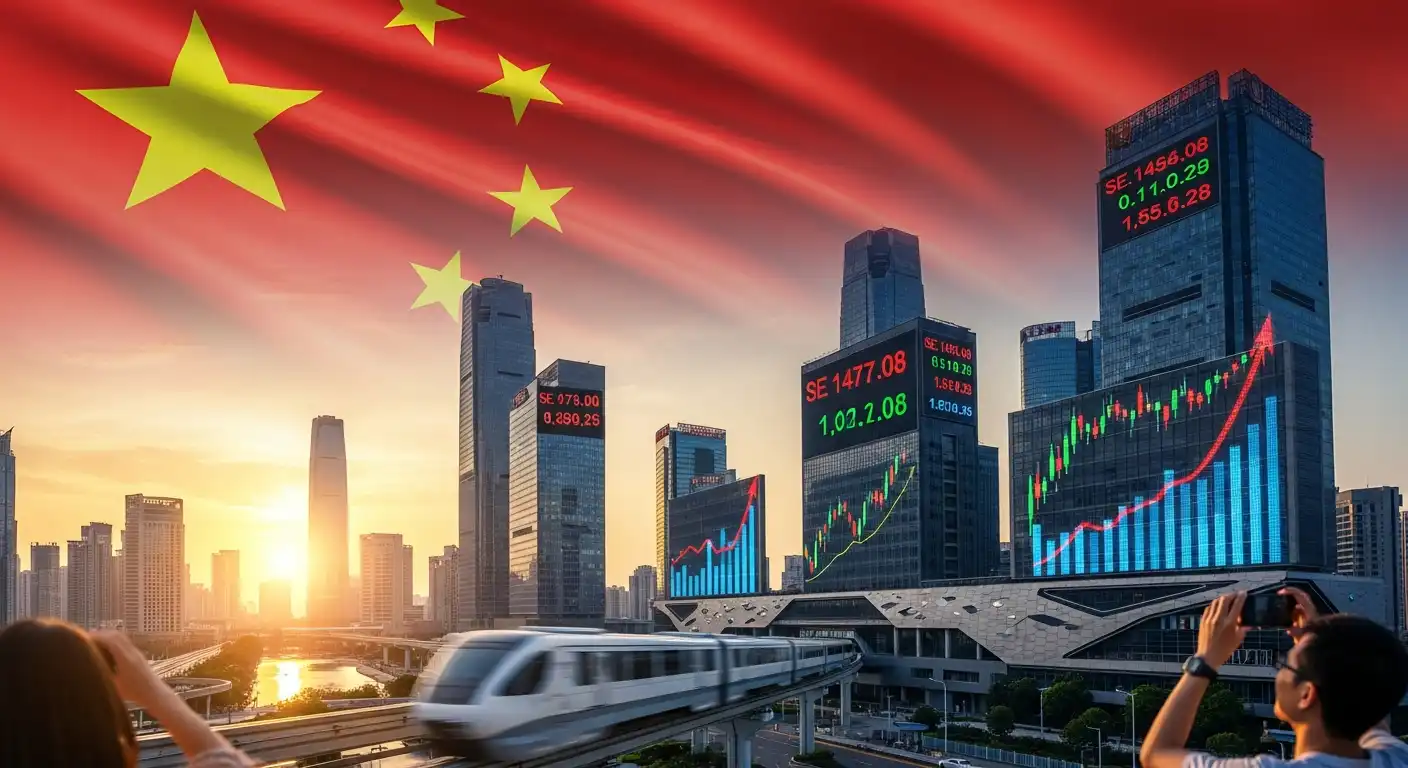
China’s economic growth likely slowed to a three-year low in the fourth quarter of 2025, as weak domestic demand and a deepening property crisis continue to drag on the world’s second-largest economy. While the full-year growth is expected to hit Beijing’s target of around 5%, the outlook for 2026 is clouded by trade tensions and deep structural problems.
The Chinese economy showed surprising resilience in 2025, thanks in large part to its powerful export machine. Manufacturers diversified their markets to offset the impact of U.S. tariffs, resulting in a record trade surplus of nearly $1.2 trillion.
However, this reliance on external demand highlights the weakness at home. Domestic spending has been sluggish, with retail sales growing at their slowest pace since the end of the pandemic. The property slump continues to erode household wealth, and the country is grappling with persistent deflationary pressures.
Economists are forecasting that China’s GDP grew by 4.4% in the fourth quarter, down from 4.8% in the third quarter. For the full year, the economy is expected to have grown by 4.9%.
Looking ahead to 2026, the challenges are mounting. Rising global trade protectionism and the unpredictable economic policies of the Trump administration are major risks. The Reuters poll forecasts that China’s economic growth will slow to 4.5% in 2026, likely forcing Beijing to roll out more stimulus measures.
Chinese leaders have promised to “significantly” lift household consumption’s share of the economy over the next five years, but it’s a tough challenge. They will need to boost household incomes and strengthen the country’s weak social safety net to convince people to spend more and save less.