

Key Points
- Chinese scientists built a new sensor to detect tiny amounts of water.
- The sensor uses a special material that changes color from red to blue when wet.
- The material is so sensitive that it can find water at the parts-per-billion level.
- An AI algorithm helps the sensor read the color changes more accurately.
Researchers in China have developed a new, highly sensitive sensor that can find tiny amounts of water in the air. This breakthrough, led by Professor Jiang Changlong, could solve major problems for industries that require their products to remain perfectly dry. It is also a significant concern for environmental monitoring, where even a small amount of moisture can signal a larger problem. The new sensor is cheap, fast, and so precise it can detect water at the parts-per-billion level.
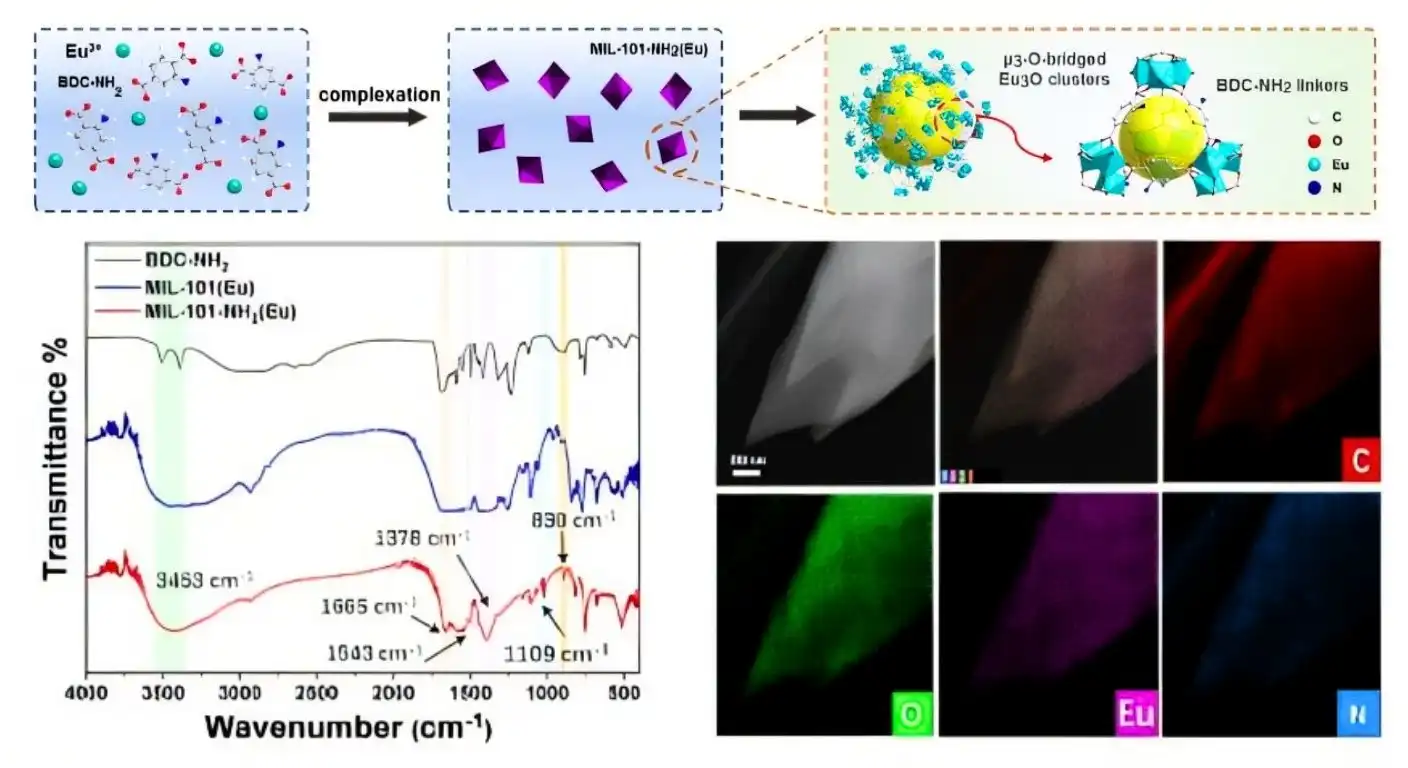
Finding such small traces of water is incredibly difficult. Normal sensors often give weak signals, and water’s natural stickiness makes them respond slowly. Changes in temperature and other chemicals in the air can also affect the readings. To address these issues, the Chinese team developed a special material called a metal-organic framework (MOF).
This material has a neat trick: it glows with two different colors. When it is completely dry, a special “antenna effect” makes it glow red. When it comes into contact with even a single water molecule, the water disrupts that effect. This reveals the material’s natural blue glow.
By observing the color change, scientists can determine the amount of water present. The change is so dramatic that you can even see it with the naked eye.
To further improve the sensor, the team placed this special MOF material onto a flexible nanofiber membrane. This makes the sensor fast, reliable, and easy to use in different settings. They also incorporated a deep learning algorithm into the system. This AI helps the sensor interpret the color changes with even greater accuracy, making it one of the most sensitive water detectors ever built.
The researchers believe this technology could be used in various new ways. It is cost-effective for routine quality control in factories, yet sufficiently sensitive for high-tech scientific laboratories. Because it is flexible, it could be woven into smart clothing to monitor an athlete’s sweat or monitor air quality wherever you go.
Source: Chemical Engineering Journal (2025).






