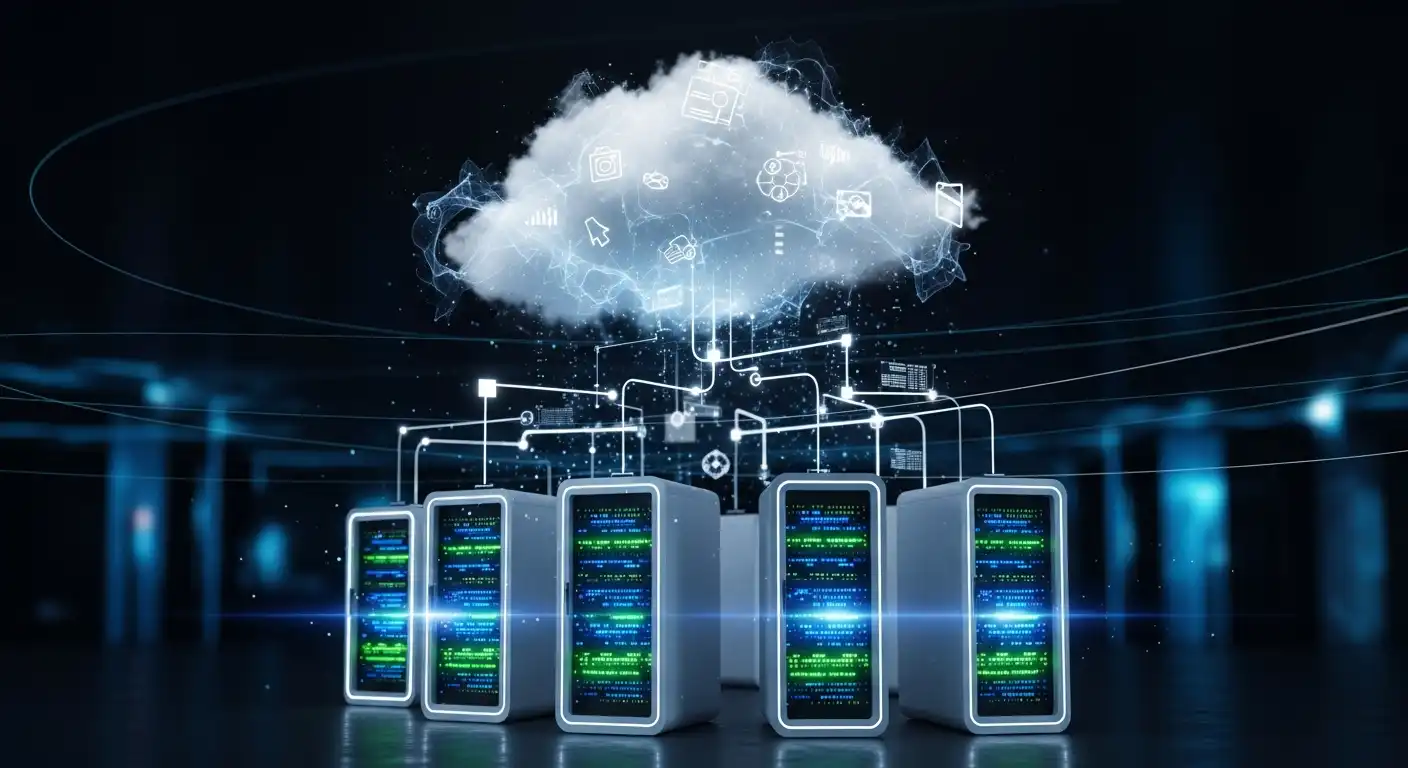
In the dynamic landscape of modern cloud computing, the emergence of Cloud Kubernetes has revolutionized the deployment, management, and scaling of containerized applications. This innovative technology leverages containerization and orchestration to create a dynamic, efficient environment for running applications in the cloud.
In this comprehensive article, we will delve deeply into the concept of Cloud Kubernetes, meticulously explore its integral components and manifold benefits, address its challenges, and scrutinize its potential applications. Additionally, we will underscore the profound significance of Cloud Kubernetes in reshaping the very fabric of contemporary cloud-native development.
What is Cloud Kubernetes?
Cloud Kubernetes, often called Kubernetes or K8S, is an open-source container orchestration platform that automates the deployment, scaling, and management of containerized applications. Born of Google’s ingenuity and now under the stewardship of the Cloud Native Computing Foundation (CNCF), Kubernetes provides a potent framework for managing complex applications across expansive distributed environments, such as the sprawling cloud infrastructure landscape. It abstracts away the nuances of the underlying infrastructure, empowering developers to focus on conceiving, crafting, and deploying applications without grappling with the intricacies of infrastructure management.
Components of Cloud Kubernetes
At its core, Kubernetes comprises an intricate web of indispensable components that work together to provide a fluid and efficient orchestration ecosystem.
Controller Node
The linchpin of the Kubernetes architecture is the master node, which reigns as the veritable control plane of the Kubernetes cluster. Its overarching responsibility involves debt management and the seamless coordination of myriad components. This sentinel node effectively schedules tasks, arbitrates pivotal decisions on scaling and deployment, and oversees the harmonious symphony of activities orchestrated by meticulously defined configurations.
Worker Nodes
In perfect harmony with the master node, the worker nodes, colloquially known as worker machines or minions, dutifully assume responsibility for running containers and executing pivotal tasks. Each worker node serves as a bastion for hosting multiple containers, and its holistic management is vested in the master node.
Pods
Akin to the fundamental notes in a musical composition, pods serve as the elemental building blocks of the Kubernetes symphony. Conceptually, a pod encapsulates one or more closely coupled containers that share resources, network interfaces, and storage units. The organic cohesion of containers within a pod enables seamless inter-container communication using the local host interface.
Services
Services serve as the connective tissue that effectively binds applications running within pods to the broader network. Services extend a platform for applications to be exposed and accessed via the network. This strategic utility enables automatic load balancing, seamless scaling, and effortless service discovery across the expansive cluster.
Replication Controllers and Deployments
Foraying into the realm of replication controllers and deployments, Kubernetes meticulously ensures the relentless pursuit of high availability and fault tolerance. Replication controllers ensure that a predefined number of pod replicas are perpetually operational, thereby creating an environment robust against adverse conditions. Deployments enable declarative application updates, thereby orchestrating flawless rollouts and judicious rollbacks that shroud applications in an aura of continuous refinement.
Benefits of Cloud Kubernetes
Emanating from its intricate architecture, the adoption of Cloud Kubernetes confers a range of profound advantages that invariably elevate the art of application development, deployment, and management to new heights of excellence.
Scalability and Load Balancing
The hallmark of Kubernetes’s prowess lies in its ability to scale horizontally seamlessly. This intrinsic capability empowers Kubernetes to scale replicas in response to the ebb and flow of traffic or demand. The symphony of dynamic scaling harmoniously intertwines with load balancing, which augments application availability by efficiently distributing requests across the intricate tapestry of replicas.
High Availability and Fault Tolerance
An unwavering commitment to maintaining high availability, even amid the most capricious circumstances, is embedded in Kubernetes’ DNA. These controllers and the self-healing mechanisms ensure applications’ indomitable persistence, even when nodes fail. In the face of adversity, Kubernetes springs into action, seamlessly reallocating containers to healthier nodes, thereby safeguarding operational continuity.
Seamless Application Updates
The felicitous gift of Kubernetes lies in its ability to orchestrate application updates with finesse that borders on artistry. Through deployments, Kubernetes enables declarative changes, allowing applications to transition gracefully to new versions while maintaining a state of uninterrupted equilibrium. The result is a symphony of seamlessly harmonized updates, sparing users from the dissonance of downtime.
Resource Efficiency
At the core of Kubernetes lies the promise of resource efficiency, an essential tenet of modern computing. Containerization, a fundamental facet of Kubernetes, encapsulates applications and their associated dependencies, thus precipitating optimal resource utilization. Within the grand orchestration, Kubernetes allocates containers to nodes to optimize resource consumption and eliminate waste.
Multi-Cloud and Hybrid Cloud Support
Kubernetes, the grand maestro of orchestration, extends its harmonious reach beyond the confines of individual cloud providers. It bestows on organizations the transcendental ability to deploy applications consistently across a diverse panorama of cloud providers, or even within the intricate tapestry of hybrid cloud environments. In this symphony of portability, Kubernetes emerges as the unifying note that bridges the expanse of disparate cloud ecosystems.
Challenges in Implementing Cloud Kubernetes
As with any transformative technology, the adoption of Cloud Kubernetes is accompanied by a set of challenges, each of which must be addressed adeptly to unlock its full potential.
Complexity
The orchestration ballet that is Kubernetes can often present an intricate dance of its own. Configuring and setting up a Kubernetes cluster, replete with its constituent nodes and components, can be daunting, particularly for those entering the fold for the first time. A solid grounding in Kubernetes’ fundamental concepts is paramount to navigating the labyrinthine landscape of cluster management.
Learning Curve
The Kubernetes journey invariably entails surmounting a learning curve. Developers and operators alike must familiarize themselves with Kubernetes’ intricacies, including its diverse concepts, labyrinthine YAML configurations, and the prevailing best practices underpinning its successful implementation.
Monitoring and Troubleshooting
The virtuoso performance of Kubernetes necessitates diligent monitoring and adept troubleshooting. In the absence of vigilant oversight and effective tools, diagnosing and addressing issues in the orchestration landscape can become a Herculean task.
Application Design
The migration of applications to the Kubernetes environment often mandates architectural shifts. Designing applications that optimally harness Kubernetes’ inherent capabilities requires meticulous consideration, with architectural intricacies factored in to capitalize on its strengths.
Applications of Cloud Kubernetes
The versatility of Cloud Kubernetes enables a wide range of applications across various industries and domains. By empowering organizations to craft and deploy scalable, resilient applications, Cloud Kubernetes charts a transformative trajectory across the contemporary technology landscape.
Microservices Architectures
The resounding success of Kubernetes finds a perfect partner in microservices architectures. With its orchestration prowess, Kubernetes is ideally suited for environments where applications are structured as a tapestry of loosely interconnected, independently deployable microservices. This symbiotic relationship ensures streamlined management by imbuing applications with automated scaling and deployment power.
DevOps Practices
Kubernetes is a natural companion to the orchestral melodies of DevOps practices. It seamlessly harmonizes with the ethos of continuous integration and continuous deployment (CI/CD), introducing automation into deployment pipelines and affording developers the luxury of focusing on their creative endeavors rather than the intricacies of infrastructure management.
Cloud-Native Development
Kubernetes stands as a vanguard of cloud-native development. It enthusiastically espouses the paradigm of crafting applications that thrive within the ephemeral confines of the cloud. In this endeavor, Kubernetes offers the alchemy of containerization, enabling developers to navigate the development, testing, and production landscape with unparalleled agility.
IoT and Edge Computing
As the dawn of the Internet of Things (IoT) and the burgeoning realm of edge computing approaches, Kubernetes emerges as a beacon for seamless deployment and management. As applications proliferate across edge devices, Kubernetes shepherds the seamless deployment of containers, thus ensuring uniformity and reliability across distributed landscapes.
Future Trends and Considerations
As Cloud Kubernetes embarks on its journey into the future, several trends and considerations are emerging on the horizon, shaping its trajectory.
Serverless Integration
A compelling trajectory on Kubernetes’ roadmap entails integrating with serverless computing platforms. This strategic integration augments resource management by allowing granular control, facilitating efficient scaling, and judicious cost optimization.
Security and Compliance
The Kubernetes landscape is continually evolving to strengthen its security and compliance capabilities. This proactive stance addresses concerns about container vulnerabilities and the imperative to align with regulatory mandates.
Edge Kubernetes
The burgeoning domain of edge computing is giving rise to Edge Kubernetes solutions. These bespoke solutions are meticulously designed to meet the unique demands of edge environments, enabling the deployment and orchestration of applications near data sources.
Conclusion
In the grand tapestry of cloud computing, Cloud Kubernetes occupies a commanding position, orchestrating a harmonious symphony of scalability, resilience, and efficiency. This orchestration marvel empowers organizations to craft applications that reach new heights in scalability and fault tolerance. While challenges exist, they are surmountable obstacles that can be transcended with the right blend of expertise and proven best practices. Cloud Kubernetes is a luminous enabler across microservices, DevOps practices, cloud-native development, and the dynamic realm of IoT and edge computing.
As the tendrils of innovation continue to entwine with Kubernetes, it emerges as the bedrock of modern cloud computing—a harbinger poised to reshape the very contours of how applications are conceived, built, and orchestrated within the cloud’s expansive embrace.