Key Points:
- More than 100 offshore wind farms face new security threats from unknown drones and hybrid warfare in the North Sea.
- Energy companies rarely report drone sightings because European countries lack clear security rules for deep-water infrastructure.
- Germany struggles to defend its ocean energy hubs due to a complicated federal system with overlapping police and military rules.
- Nine countries plan to add 15 gigawatts of wind power annually to generate €1 trillion in economic activity and protect energy supplies.
Europe faces a growing security problem right off its coast. Unknown drones, possible sabotage, and mapping operations by foreign submarines now threaten offshore wind farms in the North Sea. These giant energy hubs provide vital renewable power to millions of people. However, governments and private companies still do not know exactly who must step up to protect them from modern hybrid warfare.
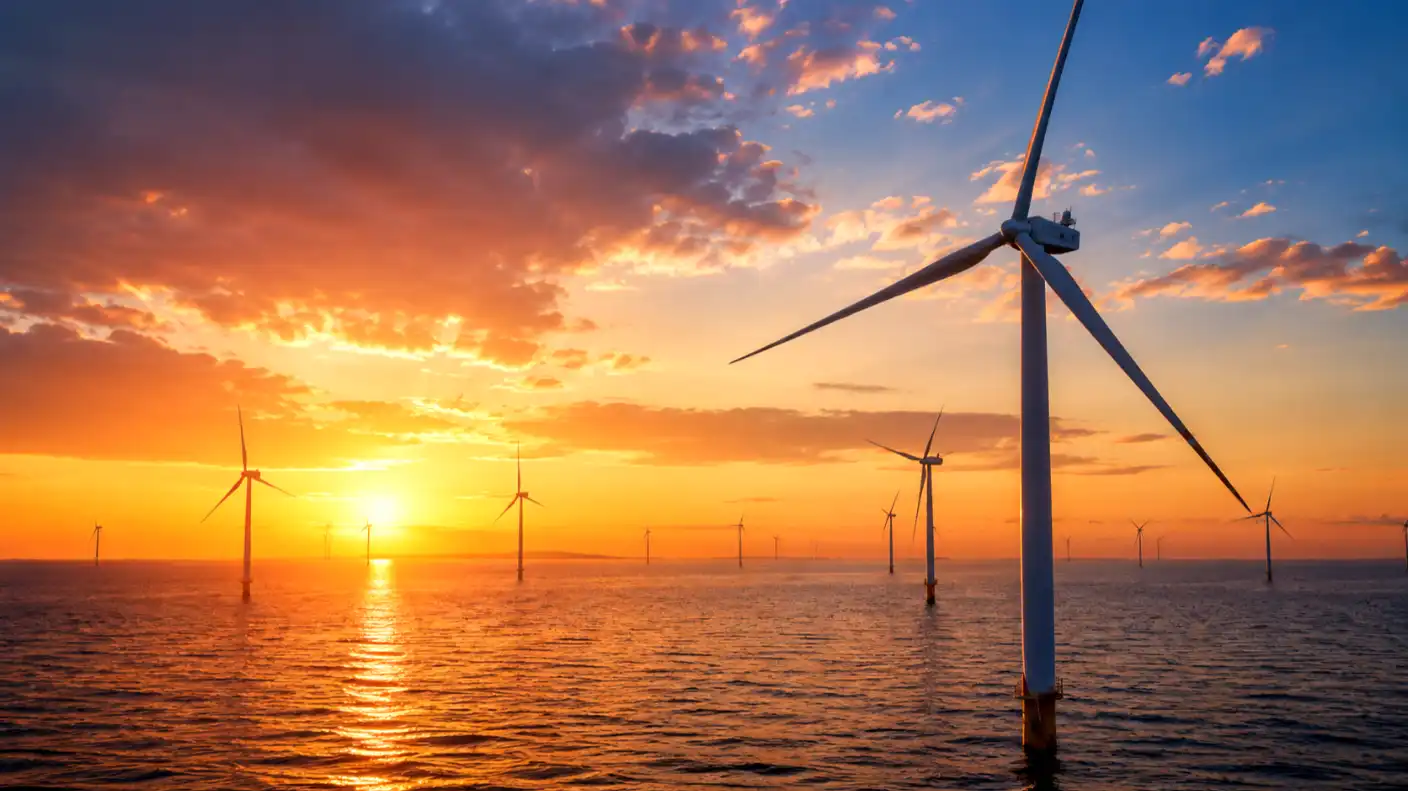
As of early 2026, more than 100 offshore wind farms operate across the North Sea. These massive installations sit in the exclusive economic zones of Germany, the United Kingdom, the Netherlands, Denmark, and Belgium. Huge clusters of wind turbines in the German Bight and along the eastern coast of the UK make this specific area one of the largest offshore wind hubs on the planet.
The deep-water locations of these energy parks create a massive blind spot for security forces. When a threat appears on land, the rules look very simple. If someone spots a drone flying near critical infrastructure in Germany, the local police handle the situation. If a drone flies over a military base, the armed forces have the green light to shoot it down. Out on the ocean, the rules completely fall apart. When operators spot a drone hovering over an offshore wind turbine, no one registers the event or takes action.
Albéric Mongrenier serves as the Executive Director at the European Initiative for Energy Security. He warns that these attacks occur more frequently and take many forms across the entire energy sector. Mongrenier notes that attackers target offshore wind parks simply because they sit far away from the coast, making them incredibly difficult to defend. He specifically points out that the long underwater cables connecting the ocean turbines to the mainland remain highly vulnerable to sabotage.
The lack of basic communication makes the problem even worse. Dan Marks, a research fellow at the Royal United Services Institute in London, highlights a massive gap in data sharing. He says that when companies actually report an incident, they usually call the local police. The police try to take witness statements and follow up, but the process breaks down quickly. Marks notes that companies have very little incentive to report these events. Workers might see a drone, watch it hover for a few minutes, and then go back to work when it flies away. The incident disappears without any official record.
Marks strongly doubts that local hobbyists fly these drones. He points out that regular consumer drones do not accidentally travel several nautical miles out into the harsh ocean winds just to hover over a turbine. Security analysts still do not know exactly who operates these devices or where they launch from. However, Marks points to several recent events in which drones were launched directly from shadow fleet tankers. These rogue ships use dark tactics to smuggle sanctioned oil around the world, and they frequently cross through the North Sea.
Protecting these facilities remains a fragmented mess across Europe. Mongrenier says governments must create a clear, simple framework so private companies know exactly what to do. The private sector needs a direct line of communication to the police, the navy, or other authorities. Companies need to know exactly who takes charge before, during, and after an attack. Right now, the Nordic countries, especially Norway, handle this coordination very well. Germany struggles significantly because its federal government structure creates too many overlapping layers of authority.
Sabrina Schulz, the German Director for the European Initiative for Energy Security, agrees with this assessment. She points out that Germany splits responsibilities across the regular police, the water police, the navy, and the Federal Office for Information Security. The German constitution prevents the Ministry of Defense from simply taking over the situation. While Germany’s Maritime Safety and Security Center seeks to serve as a central point of contact, Schulz says the country must learn from its North Sea neighbors and adopt better practices.
These wind farms matter more now than ever before. When Russia launched its massive invasion of Ukraine in 2022, European countries realized they needed energy independence. Nations like Germany rushed to replace Russian oil and gas with liquid natural gas imports from the United States and Qatar. Today, the ongoing war between the United States, Israel, and Iran creates new problems. Iran continues to disrupt shipping traffic through the Strait of Hormuz, threatening global oil supplies and prompting Europe to rely even more heavily on domestic wind energy.
Daniel Greve speaks for Germany’s Federal Ministry for Economic Affairs and Energy. He calls offshore wind a strategic cornerstone for the European industrial base. Because these turbines run consistently, they heavily reduce Europe’s need for imported energy. In January, nine North Sea countries signed the Hamburg Declaration to boost this exact resilience. The governments agreed to add 15 gigawatts of offshore wind capacity every single year starting in 2031.
This massive expansion will transform the regional economy. The wind industry expects to create 91,000 new jobs and generate roughly €1 trillion in fresh economic activity. Adding 15 gigawatts of capacity provides enough power to run about 10.5 million average households for an entire year. Greve says countries now coordinate their construction schedules to avoid supply chain jams and keep the projects moving forward.
Despite the bright economic outlook, the security threats will only grow as the industry expands. By the end of 2025, Germany alone boasted 9.7 gigawatts of offshore wind capacity. The country plans to multiply that number by seven before 2045. Schulz notes that wind farms withstand attacks better than oil rigs because they lack volatile chemicals and a single point of failure. Still, past hybrid attacks focused heavily on the Baltic Sea, and she warns that those same tactics will inevitably spill over into the North Sea very soon.