Key Points:
- Gold and silver futures dropped significantly on Tuesday, losing roughly 2% and 2.5% of their respective market value.
- Investors dumped precious metals after realizing the Federal Reserve plans to keep interest rates elevated for longer.
- Global oil prices, hovering near $104 per barrel, continue to drive up inflation, forcing policymakers to pause any planned rate cuts.
- The ongoing war and diplomatic standoff between the United States and Iran keep energy markets nervous, and fuel costs high.
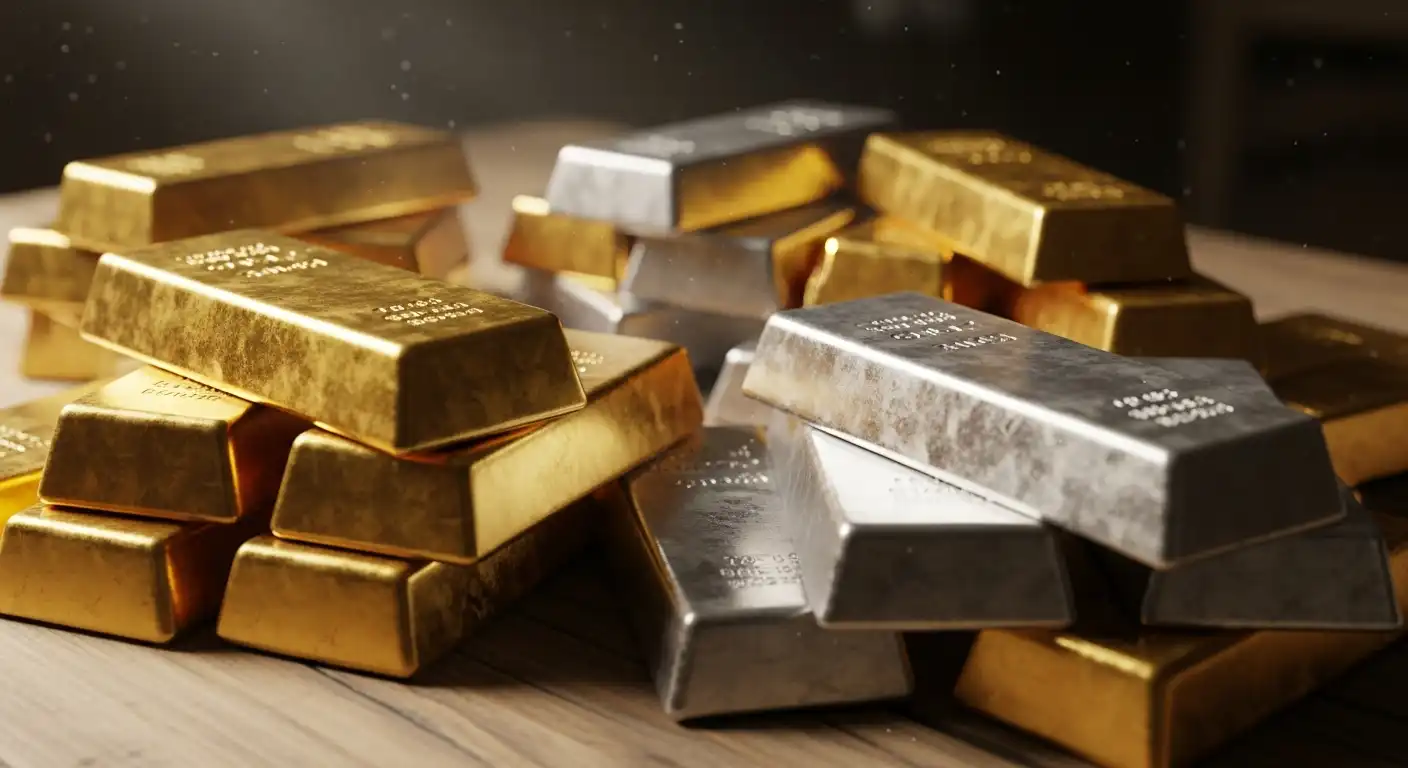
Gold and silver prices took a massive dive on Tuesday afternoon. Heavy selling pressure hit the precious metals market as traders aggressively adjusted their financial strategies. Investors dumped their gold holdings, sending futures tumbling more than 2%. Silver took an even harder hit, plunging over 2.5% during midday trading. The sudden selloff wiped out millions of dollars in market value in just a few short hours.
Looking at the specific numbers, gold futures dropped 2.03% to $4,598.40 per ounce by 12:10 PM Eastern Time. Silver followed closely behind, falling 2.51% to reach $73.14 an ounce. The financial bleeding did not stop with the top two precious metals. Platinum futures dropped 2.02% to hit $1,957.20, while copper shed 1.63% to settle at $5.92 a pound.
The root cause of this massive market move traces directly back to the United States Federal Reserve. Wall Street traders now believe central bankers will keep interest rates elevated for a much longer period than they originally expected. Earlier this year, many financial experts predicted the government would start cutting borrowing costs. Those hopes completely vanished as new economic realities forced policymakers to change their game plan.
High interest rates naturally create a toxic environment for precious metals. When you buy a bar of gold or a silver coin, that metal simply sits in a vault. It does not pay you a monthly dividend or generate any yield. On the other hand, government bonds pay out regular cash to investors. When the Federal Reserve keeps interest rates high, bond yields look incredibly attractive. Consequently, investors move their cash out of shiny metals and put it into safe, income-generating bonds.
Policymakers refuse to lower interest rates right now because they desperately need to fight inflation. The cost of living remains stubbornly high across the country. Every time an average consumer fills up their gas tank or pays a utility bill, they feel the financial pinch. The Federal Reserve knows that cutting interest rates today would only make inflation worse, leaving everyday citizens struggling to afford basic groceries and rent.
Skyrocketing oil prices sit at the very center of this ongoing inflation nightmare. International Brent crude oil futures currently hover near a staggering $104 per barrel. Meanwhile, United States domestic crude futures trade right around the $100 mark. These high fuel costs ripple through the entire global economy. Factories pay more to run their machines, trucking companies pay more to deliver goods, and airlines charge passengers more for plane tickets.
Severe ongoing tensions in the Middle East keep the energy market completely on edge. Negotiations between the United States and Iran hit a massive brick wall. Both sides currently appear stuck in a diplomatic impasse, offering very little hope for a quick resolution to the conflict. This lack of progress leaves oil traders nervous, prompting them to bid up fuel prices to protect themselves against future supply shocks.
Gold prices have experienced wild volatility since the war in Iran officially broke out on February 28. During times of war, investors typically flock to gold as a haven for their wealth. However, this specific conflict created a unique financial trap. The war directly choked global energy supplies, driving up oil prices, fueling inflation, and forcing the government to keep interest rates high. That high-rate environment ultimately crushes the demand for gold.
Other industrial materials also felt the heat from this complicated economic web on Tuesday. Palladium futures slipped 0.90% to land at $1,473.00, while aluminum dropped 0.62% down to $3,498.75. Manufacturers use these metals to build everything from cars to modern smartphones. When interest rates stay high, businesses borrow less money for factory expansion, which slows down the broader economy and reduces the immediate need for raw industrial materials.
Moving forward, Wall Street expects this bumpy financial ride to continue. Until diplomats can broker a real breakthrough between the United States and Iran, oil prices will likely remain stuck near the $100 level. As long as fuel stays expensive, the Federal Reserve will keep its foot firmly on the economic brakes. Metal investors must now brace for more painful days as they contend with this high-rate reality.