

Key Points:
- A new global study reveals that diverse soil bacteria act as a biological wall that stops dangerous human pathogens from spreading.
- Researchers built a worldwide map using 1,602 dirt samples from 59 countries to track disease hotspots.
- Wet environments and agricultural croplands harbor the highest levels of illness-causing bacteria such as Salmonella and Listeria.
- Climate change will likely increase these hidden dangers, making soil conservation a top priority for global health.
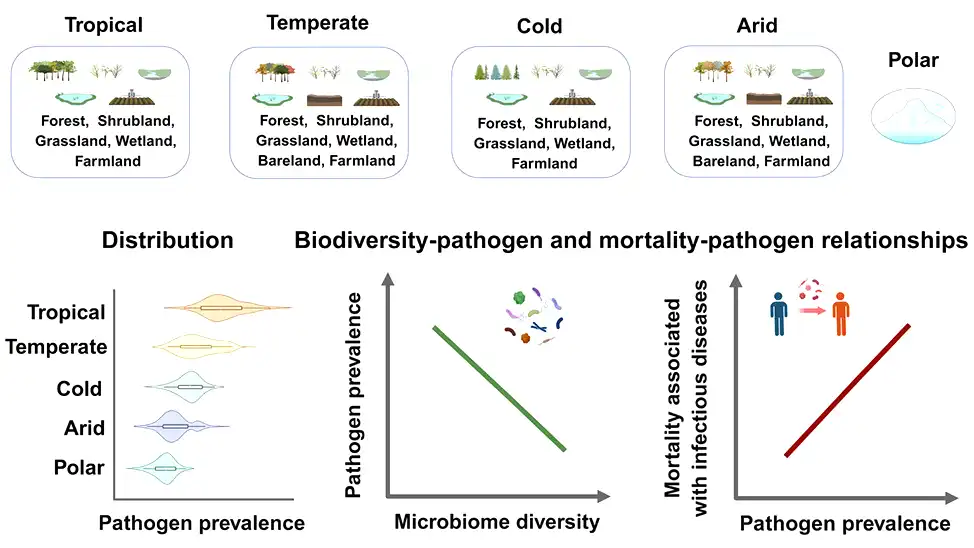
The dirt beneath our feet does much more than simply grow our food. It actively protects us from deadly diseases. A groundbreaking new study shows that a wide variety of microscopic life in the soil acts as a natural biological barrier. These healthy microbes fight off dangerous human pathogens and stop them from taking root. The journal Cell Host & Microbe recently published these findings, changing how scientists view the ground we walk on.
Professor Brajesh Singh from The University of Western Australia led the global research team. He champions the One Health concept, which directly connects human well-being to the health of plants, animals, and ecosystems. Singh explains that soil represents a complex living system. This system heavily influences our food safety, the stability of our environment, and our daily risk of catching a serious disease.
To understand this invisible world, the research team analyzed 1,602 soil samples collected from 59 different countries. They used this massive amount of data to create a global map showing where human bacterial pathogens thrive. The results revealed a clear and alarming pattern. The team found strong links between the sheer number of pathogens in local soils and the global death rates from infectious diseases in those same areas.
Many people think of soil only as a source of nutrients for crops. However, the ground serves as a natural home for nasty bugs like Salmonella and Listeria. These bacteria cause severe food poisoning and ruin food supplies. Another common soil bacterium causes melioidosis, a dangerous infection that threatens thousands of lives. Despite the clear danger to human health, science previously knew very little about where these pathogens lived or how they survived in the wild.
Dr. Chao Xiong, the first author of the study and a research fellow at the university, uncovered specific patterns in the data. He found that these human pathogens love wet ecosystems. They thrive in tropical and temperate regions across the globe. More importantly, the bacteria accumulate in large numbers in agricultural croplands. Farm soils serve as a direct bridge connecting environmental health, global food production, and human exposure to disease.
The financial and health costs of ignoring soil quality remain massive. Experts estimate that treating soil-borne diseases and managing crop losses cost the global economy roughly $3.2 billion every year. Farmers who fail to protect their soil biodiversity might easily spend an extra $5,000 per season on chemical treatments to fight off crop diseases. Conversely, boosting the natural microbial diversity in a field can reduce local infection risks by a steady 2.4% over just a few years.
The future looks increasingly challenging due to changing weather patterns. Xiong and his team used computer models to predict what will happen as the planet warms. They discovered that climate change will drastically increase the number of human pathogens hiding in the dirt. As extreme weather brings more rain and warmer temperatures, these bacteria will find even more places to multiply and spread.
These alarming findings carry a strong message for the future of farming and medicine. Healthy soil communities do much more than support crop yields. They play a critical role in keeping human beings out of the hospital. Protecting the sheer variety of life in the soil benefits both sustainable agriculture and public health.
Moving forward, experts plan to use this new global map to improve public safety. Governments and health organizations can now predict disease risks before an outbreak happens. Farmers can also adopt smarter land management strategies. By simply encouraging healthy microbes to grow, we can stop dangerous pathogens right at the source.
Source: Cell Host & Microbe (2026).






