Key Points
- Cells must balance protein synthesis and degradation to maintain the appropriate size.
- “Passive adaptation” naturally slows protein clearance when production declines.
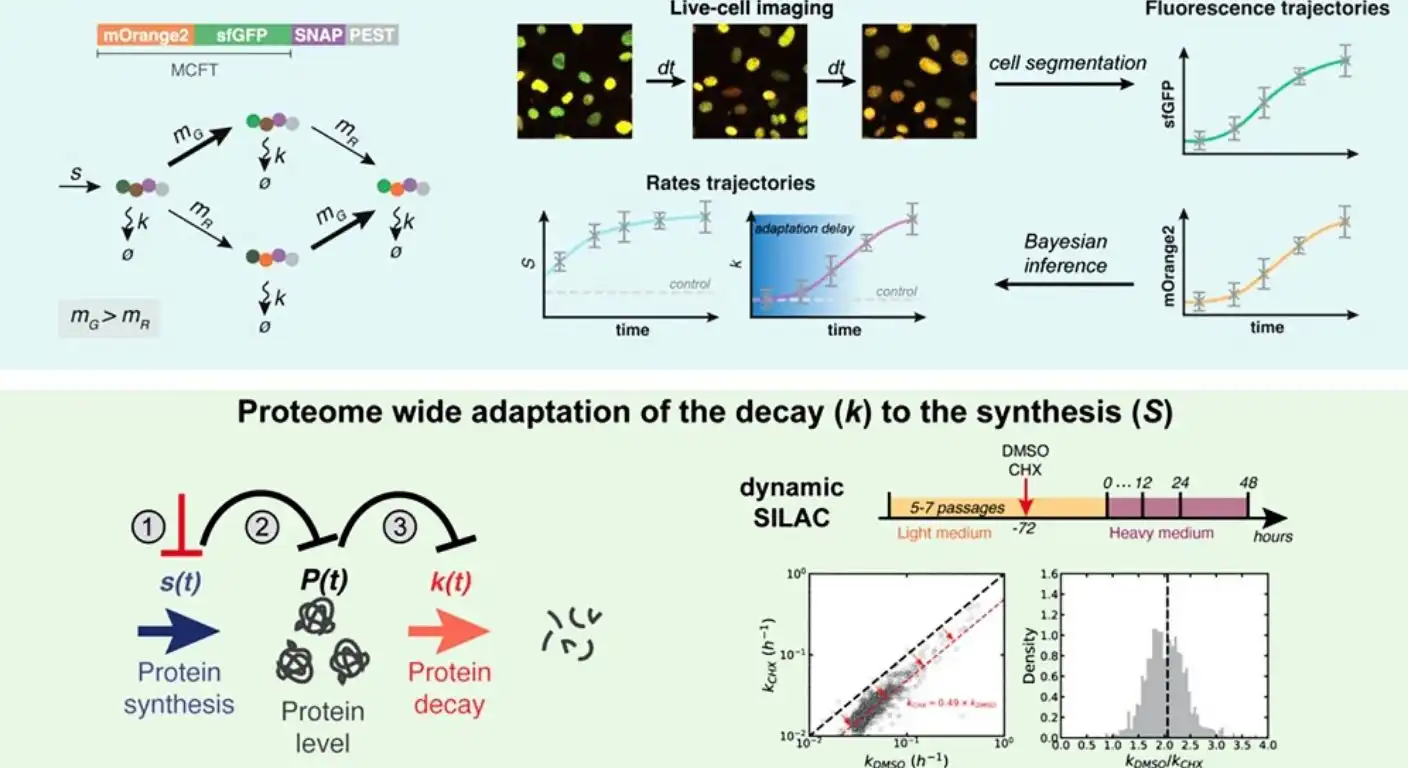
- Scientists used glowing proteins to track these changes in living cells.
- Embryonic stem cells are highly resilient and maintain steady levels even when starving.
Every cell in your body is like a busy factory. To remain healthy, it must constantly synthesize new proteins while degrading and recycling old or damaged ones. If a cell makes too many proteins, it becomes cluttered. If it removes them too fast, it shrinks and dies. To survive, the cell must maintain a precise balance between these two tasks.
Researchers at EPFL recently determined exactly how cells manage this balancing act when things get complex. For instance, if you haven’t eaten in a while or if a cell is under a lot of stress, it might not be able to build proteins as fast as usual. You might expect the cell to waste away simply, but the team discovered a built-in survival mechanism they call “passive adaptation.”
Consider a factory that manufactures both toys and the machines that crush old toys. If the factory slows down and makes fewer toys, it naturally ends up making fewer of those “crusher” machines, too. Because there are fewer crushers around, the old toys stay in the building longer. This prevents the factory from becoming empty.
By using fluorescent proteins to observe this in real time, the researchers found that whenever protein production declines, the removal process slows just enough to keep the cell at a safe size.
The team also examined embryonic stem cells and found that they are even tougher. These cells are incredibly resilient. Even if their protein production drops by half, they keep their protein levels almost perfectly steady. They use a specific nutrient sensor, mTOR, to suppress protein breakdown almost entirely when resources are low.
The researchers believe this is why human embryos can survive in harsh environments before they have a blood supply to deliver nutrients.
This study helps explain how the body remains strong during illness or periods of low nutrition. It also provides scientists with a better understanding of why early-stage embryos are so hardy, which could help improve treatments such as IVF. By seeing how cells “talk” to themselves to maintain this balance, we can better understand diseases where this system fails.
Source: Cell Systems (2025).