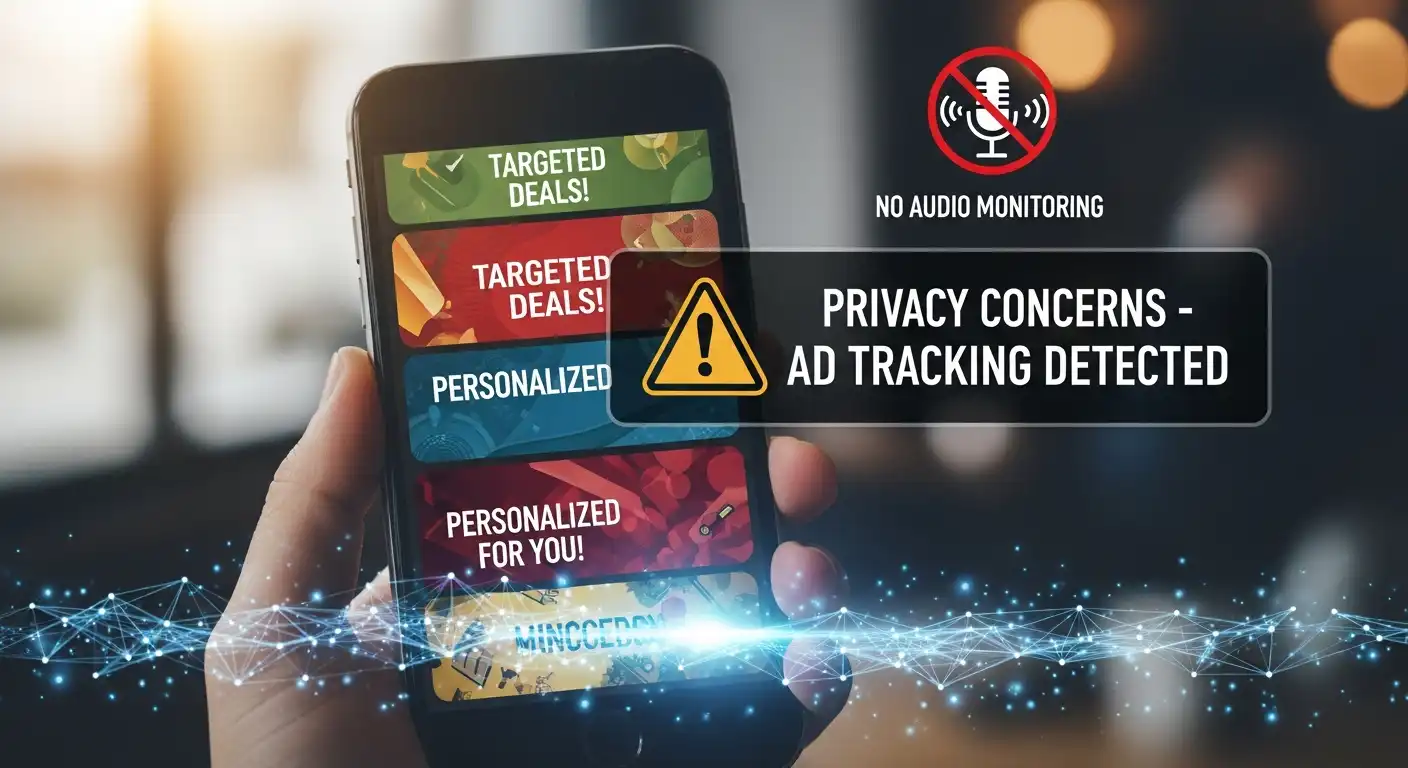
It is a scenario that has become a modern urban legend, yet it feels disturbingly real to almost everyone. You are sitting at brunch with a friend, discussing something completely random—perhaps a specific brand of hiking boots, or a desire to travel to Portugal. You have never searched for these things. You have never emailed about them. You have simply spoken the words into the air.
An hour later, you open Instagram or Facebook, and there it is: an advertisement for those exact hiking boots. A sponsored post about “Top 10 Hotels in Lisbon.”
The hair on the back of your neck stands up. The conclusion seems obvious, even undeniable: My phone is listening to me.
It is a pervasive belief. In surveys, a significant majority of smartphone users believe that apps use the microphone to capture conversations for ad targeting. It feels like the only logical explanation for such uncanny coincidences.
But the reality of digital surveillance is both less conspiratorial and far more complex than a microphone recording your every word. The short answer is: No, your phone is likely not recording your conversations to sell you things.
The long answer, however, is much more unsettling. Tech companies do not need to listen to your voice because they already know so much about you that they can predict what you will say before you say it. They have built a digital version of you that is so accurate, it renders eavesdropping obsolete.
Here is the comprehensive truth about ad tracking, predictive algorithms, and reclaiming your digital privacy.
The Logistics of “Listening”: Why It’s Highly Unlikely
To understand why Facebook, Google, and Amazon aren’t recording your brunch conversations, we first have to look at the technological and logistical hurdles. While it is technically possible for an app to record audio, doing so at scale for advertising purposes is currently impractical for three main reasons.
The Data Volume Problem
Audio data is heavy. High-quality audio recording takes up significant storage space. If an app like Facebook were constantly recording the conversations of its billions of users, the amount of data being uploaded to servers would be astronomical.
Security researchers who monitor phone data traffic have never found the massive spikes in data usage that would accompany 24/7 audio streaming. If your phone were constantly sending audio files to a remote server, your data plan would evaporate in days, and your battery would drain in hours.
The Processing Nightmare
Recording audio is the easy part. Understanding it is the hard part. To be useful for advertising, raw audio must be transcribed and analyzed by Natural Language Processing (NLP) AI to extract keywords and context.
While AI has advanced, processing billions of hours of gibberish, background noise, and muffled pockets to find the word “hiking boots” in real time would require more computing power than all the data centers on Earth combined. It is simply not cost-effective.
The Legal and PR Suicide
If a whistleblower or a security researcher proved that a major tech giant was secretly recording users without consent, the resulting class-action lawsuits and regulatory fines would amount to trillions of dollars. It would likely destroy the company. For tech giants, the risk-to-reward ratio doesn’t make sense—especially when they have legal, cheaper ways to get the same data.
The Real Magic: Predictive Modeling and Data Aggregation
If they aren’t listening, how did they know about the hiking boots?
The answer lies in Data Aggregation. You are not an island; you are a data point in a massive web of connections. Ad tech companies have built a “Digital Twin” of you—a profile based on thousands of data points that allows them to predict your behavior with terrifying accuracy.
The Power of Location Data
Your location history is the single most valuable asset advertisers have. It tells a story more accurate than your words.
Let’s go back to the brunch scenario. You didn’t search for hiking boots, but your friend did.
- Geolocation: Your phone’s GPS places you at the same café as your friend for an hour.
- Social Graph: The algorithm knows you are friends.
- Inference: Your friend spent the last week researching hiking gear. Since you are socially connected and physically together, the algorithm assumes you share interests or are discussing your recent hobbies.
- The Ad: The ad network serves you the ad your friend has already seen, assuming it is highly relevant.
You thought the ad appeared because you talked about it. In reality, the ad appeared because you were near someone interested in it.
Demographic Profiling (Lookalike Audiences)
Advertisers use “Lookalike Audiences.” They analyze the behavior of millions of people.
The algorithm knows that:
- People of your age, gender, and income bracket…
- Who lives in your zip code…
- Who buys coffee at 10 AM on Saturdays…
- And recently bought a tent…
- …Are statistically 85% likely to buy hiking boots within the next week.
You are following a pattern set by thousands of people before you. You talked about the boots because you were psychologically primed to want them by your environment and demographics. The algorithm predicted that desire simultaneously. It feels like magic, but it is just statistics.
The Invisible Trackers: How They Follow You
Your phone doesn’t need a microphone to track you because it is constantly broadcasting a digital paper trail.
The Pixel and Cookies
Almost every website you visit contains a “Facebook Pixel” or Google tracking code. These invisible snippets of code report your browsing history back to the advertising giants. If you browse a travel blog about Portugal on your laptop, that data is instantly linked to your mobile profile, triggering ads on Instagram.
Device Fingerprinting
Even if you block cookies, companies use “fingerprinting.” This technique scans your device for unique characteristics: your screen resolution, battery level, operating system version, installed fonts, and browser type. Combined, these create a unique “fingerprint” that identifies your device across the web without you ever having to log in.
Data Brokers
There is a multi-billion-dollar industry of “Data Brokers” (companies like Acxiom, Experian, and Oracle) that exists solely to buy and sell information. They scrape public records, buy warranty registration data, and purchase shopping data from retailers.
They know your mortgage status, your car model, your magazine subscriptions, and your credit score. They sell this packet to Facebook or Google, which matches it to your email address to refine your ad profile.
The Psychology of Coincidence: The Baader-Meinhof Phenomenon
Part of the “listening” myth is psychological. It is a cognitive bias known as the Frequency Illusion, also called the Baader-Meinhof Phenomenon.
The average person is exposed to between 4,000 and 10,000 ads per day. Your brain filters out 99% of them as white noise. You ignore the ads for dish soap, car insurance, and accounting software.
However, once you talk about “hiking boots,” your Reticular Activating System (the part of the brain that governs attention) primes you to notice hiking boots.
Suddenly, when you scroll past a boot ad—which might have been there yesterday, too—you notice it. You count the one “hit” as proof of spying, while ignoring the thousands of “misses” (ads for things you didn’t talk about).
The Gray Area: Voice Assistants
While apps like Facebook aren’t recording your calls, what about Siri, Alexa, and Google Assistant? This is where the line blurs.
“Wake Word” Technology
Smart speakers and assistants operate in a few-second loop. They listen locally on the device for a “Wake Word” (e.g., “Hey Siri”). Technically, nothing is sent to the cloud until that wake word is detected.
However, there are two issues:
- False Positives: Sometimes the device thinks it heard the wake word when it didn’t. It then activates and records a snippet of conversation, sending it to the cloud.
- Human Review: Amazon, Apple, and Google have all admitted in the past that human contractors review a small percentage of these anonymized voice recordings to improve the AI’s understanding.
While this is a privacy concern, it is distinct from “listening for ads.” These companies state that voice data is used to train the AI, not to build ad profiles (though skepticism here is healthy).
How to Take Control: A Digital Privacy Guide
You may not be able to disappear completely, but you can significantly reduce the data you bleed. Here is a step-by-step guide to locking down your smartphone.
Audit Your Microphone Permissions
Most apps do not need access to your microphone. A flashlight app, a calculator, or a photo editor has no business listening to you.
- iOS: Go to Settings > Privacy & Security > Microphone. Toggle off access for any app that doesn’t strictly need it.
- Android: Go to Settings > Privacy > Permission Manager > Microphone. Revoke access.
Kill “Precise” Location Tracking
Does the weather app need to know exactly which house you are in, or just which city?
- iOS: Go to Settings > Privacy & Security > Location Services. Select an app and toggle off “Precise Location.” This gives the app an approximate radius rather than your exact coordinates.
- Android: Go to Settings > Location > App location permissions. Turn off “Use precise location.”
Disable Ad Tracking (Mobile ID)
Your phone generates a unique code called an Advertising ID (IDFA on iPhone, GAID on Android). This ID allows advertisers to track your activity across different apps.
- iOS: Go to Settings > Privacy & Security > Tracking. Turn off “Allow Apps to Request to Track.” This is Apple’s “App Tracking Transparency” feature, and it is a massive blow to the data industry.
- Android: Go to Settings > Privacy > Ads. Tap “Delete advertising ID.” This resets your profile and disconnects your history from your future activity.
Manage Your “Off-Facebook Activity”
Facebook has a setting that shows you exactly which other companies are sending it data about you. It is terrifying, but you can turn it off.
- Action: Open Facebook > Settings & Privacy > Settings > Your Information > Off-Facebook Activity.
- Here you can “Clear History” and select “Disconnect Future Activity.” This stops Facebook from using data collected from other websites to target ads at you.
Review Voice Assistant History
You can delete the recordings that your smart assistants have made.
- Amazon Alexa: Open the Alexa App > More > Settings > Alexa Privacy > Review Voice History. You can set it to auto-delete recordings.
- Google Assistant: Go to myactivity.google.com. Filter by “Assistant” and delete your history. You can also pause “Web & App Activity” here.
Use Privacy-First Tools
Switching your software can break the tracking chain.
- Browser: Use Brave or Firefox instead of Chrome. These browsers block third-party trackers and fingerprinting by default.
- Search: Use DuckDuckGo or Startpage. They do not store your search history or build a user profile.
- VPN: Use a reputable VPN (like NordVPN or ProtonVPN) to mask your IP address, making it harder to link your location to your identity.
The Future of Tracking: From Cookies to AI
The landscape of tracking is changing. As consumers become more savvy and laws like GDPR (Europe) and CCPA (California) tighten restrictions, the “cookie” is dying. Apple’s privacy crackdowns have cost Facebook billions in revenue.
However, advertisers are evolving. The future is Server-Side Tracking and AI Modeling.
Instead of tracking you directly, companies are moving toward “cohorts”—grouping you into a bucket of 1,000 people with similar interests. They track the bucket, not the individual.
Furthermore, AI is getting better at prediction. They need less data to make better guesses. The “Digital Twin” of you will continue to get smarter, even as you hide your data.
Conclusion
So, is your smartphone listening to you? Almost certainly not.
But the reality—that a global network of algorithms analyzes your location, your friends, your purchases, and your browsing history to predict your desires before you even articulate them—is arguably more intrusive than a microphone.
The microphone theory is a comfort; it implies that if we just tape over the mic, we are safe. The truth is that we are constantly leaking digital exhaust.
You do not have to throw your smartphone in the ocean to be safe. By understanding how the machinery works, you can make informed choices. You can trade some convenience for privacy. You can turn off the trackers, use better browsers, and deny permissions.
The next time you see an ad that is too perfect, remember: It’s not magic, and it’s not a wiretap. It’s just math. And you have the power to change the variables.