
Key Points:
- Longtime board member and venture capitalist Jay Hoag has officially assumed the role of board chairman at Netflix.
- Co-founder Reed Hastings has stepped down from the board after nearly three decades to focus on philanthropy.
- Shareholders backed Hoag’s reelection with over 93% support during the annual meeting on June 4.
- The streaming giant determined it no longer needs a separate lead independent director under SEC and Nasdaq rules.
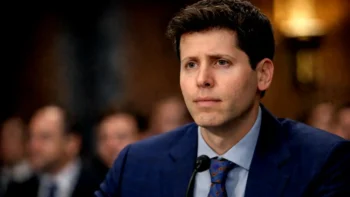
A major chapter in the history of digital entertainment has officially closed as the world’s leading streaming platform executes a historic board reorganization. On Friday, June 5, 2026, Netflix Inc. announced that longtime board member and prominent venture capitalist Jay Hoag has officially taken over as Chairman of the Board. Hoag succeeds co-founder Reed Hastings, who has formally stepped down from the board of directors after nearly three decades of visionary governance. This transition marks the final step in a gradual, years-long succession plan that has successfully transferred operational and strategic leadership to a new generation of executive talent.
The appointment of Jay Hoag ensures deep corporate continuity for Netflix during a period of rapid technological change. Hoag, a co-founder and founding general partner of the highly successful growth equity firm Technology Crossover Ventures (TCV), is one of Netflix’s longest-serving directors, having joined the board in 1999. TCV’s early venture capital backing, which exceeded several million dollars during the company’s formative years, provided the essential financial runway that allowed Netflix to transition from a small physical business into a digital powerhouse. Beyond Netflix, Hoag currently lends his strategic financial expertise to the boards of online real estate marketplace Zillow Group and fitness technology firm Peloton Interactive.
Hoag assumes the chairmanship with strong backing from the company’s institutional and retail shareholders. During the annual shareholders meeting on Thursday, June 4, investors voted overwhelmingly in favor of Hoag’s reelection, granting him over 93% support. This decisive vote successfully reversed the prior year’s shareholder backlash, which had focused heavily on his attendance records at certain committee meetings. By securing such a dominant majority, Hoag has solidified his mandate to guide the board as the streaming giant navigates a highly competitive, evolving global media landscape.
Hoag’s promotion has also allowed Netflix to streamline its overall corporate governance structure. Since 2012, Hoag has served as the board’s lead independent director. Following his elevation to chairman, the board of directors determined that Netflix would no longer require a separate lead independent director. Because Hoag fully qualifies as an independent director under the strict guidelines established by the U.S. Securities and Exchange Commission (SEC) and the Nasdaq stock exchange, he can seamlessly combine the roles of chairman and independent leader, eliminating unnecessary administrative layers.
The departure of Reed Hastings concludes one of the most celebrated runs in corporate leadership in modern business history. Hastings co-founded Netflix in 1997 alongside Marc Randolph, initially operating the business as a niche, regional DVD-by-mail subscription service. Over the next 25 years, Hastings served as Chief Executive Officer, driving the company through multiple high-stakes transitions, including the bold pivot to online streaming in 2007, the launch of original programming in 2013, and a massive global expansion that brought premium streaming to nearly every country on the planet.
Reflecting on his nearly thirty years of service, Hastings shared a touching personal statement about the company’s global impact. He noted that Netflix changed his life in countless ways, pointing to January 2016 as his all-time favorite memory, when the company successfully enabled nearly the entire planet to enjoy its streaming service simultaneously. Having driven the company to become the undisputed, world-leading premium streaming service, Hastings is stepping away from his formal governance role to focus his time and considerable financial resources on philanthropy, educational initiatives, and other personal pursuits.
This board-level transition represents the natural conclusion of a highly organized, multi-stage succession process. Hastings began stepping back from day-to-day operations in 2020 when he appointed Ted Sarandos as co-CEO. In 2023, Hastings officially stepped down as Chief Executive Officer altogether, allowing Greg Peters to join Sarandos as co-CEO. Hastings then transitioned to the role of executive chairman before stepping down from that position in 2025 to remain a non-executive board member. This cautious, phased approach has protected Netflix’s corporate stability, preventing the leadership disruptions that frequently plague other media giants during founder transitions.
Under the guidance of its reorganized board, Netflix is operating at an unprecedented scale, with its annual revenues now comfortably exceeding $40 billion. To maintain its global subscriber lead, the company routinely spends more than $17 billion annually on its original content budget, producing high-budget dramas, local-language features, and interactive entertainment across dozens of countries. This massive content machine ensures Netflix can consistently attract and retain subscribers, even as rival entertainment studios raise subscription prices to offset high production costs.
As Hoag takes the helm, the company is actively executing several major strategic expansions to secure its next phase of growth. Netflix is rapidly building out its highly lucrative ad-supported subscription tier, aiming to capture a larger share of the global television advertising market. Additionally, the company is investing heavily in live programming, having secured long-term, multi-billion-dollar broadcast rights for World Wrestling Entertainment (WWE) Raw, NFL holiday games, and major live comedy specials. This shift into live sports and events is essential, especially as even a minor 1.5% increase in global subscriber retention can translate into over $1 billion in additional annual operating profit for the streaming giant.
Ultimately, the transition of the chairmanship to Jay Hoag marks a highly successful and orderly conclusion to the Reed Hastings era. By choosing a veteran director who has helped steer the company’s strategy for twenty-seven years, Netflix’s board has secured a stable, experienced hand to guide its next chapter. As operational co-CEOs Ted Sarandos and Greg Peters continue to expand the company’s live sports, advertising, and gaming portfolios, Hoag’s oversight ensures that the streaming pioneer remains highly disciplined, exceptionally profitable, and well-positioned to dominate the global entertainment industry for decades to come.