
Key Points:
- A powerful G3-class geomagnetic storm triggered by three massive solar flares has put the Northern Lights on track to appear across Germany this weekend.
- Peak viewing opportunities will occur on Friday and Saturday nights, especially in northern regions and rural areas with minimal light pollution.
- Spotting the aurora during the June solstice remains challenging due to brief periods of darkness and lingering evening twilight.
- Stargazers can capture the rare light show on modern smartphones using high ISO settings, long exposures, and a stable tripod.
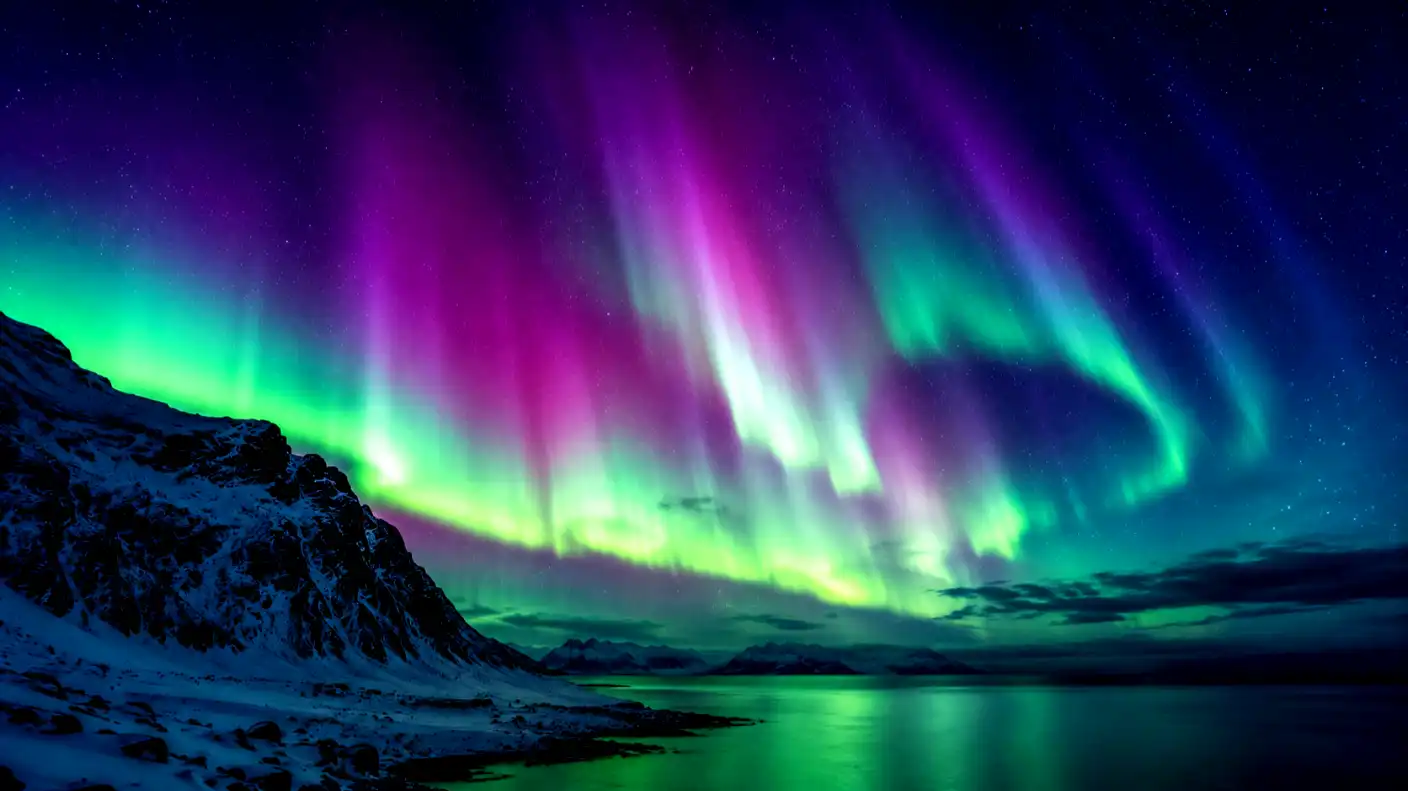
Skywatchers across Central Europe are preparing for a rare, breathtaking celestial display as solar activity surges to historic levels. On Friday, June 5, 2026, space weather agencies confirmed that a series of powerful eruptions on the Sun could trigger a strong G3-class geomagnetic storm, making the Northern Lights in Germany visible this weekend. The potential solar storm, sparked by multiple coronal mass ejections from Active Region 4455, has prompted auroral alerts for both Europe and North America. Enthusiasts in Germany have a unique opportunity to witness the shimmering pink and green curtains of the aurora borealis, provided they can find clear skies and escape the bright glow of municipal light pollution.
The physical catalyst behind this rare summer sky spectacle is a highly active sunspot group that unleashed three massive solar flares over 24 hours. The solar activity escalated on Wednesday when Active Region 4455 released a major X1.0-class solar flare, triggering an immediate radio blackout on the sunlit side of Earth. This powerful eruption launched a series of fast-moving coronal mass ejections (CMEs)—massive plumes of charged plasma and magnetic fields—directly toward Earth’s magnetic field. Space weather monitors predict that these overlapping energy waves will collide with Earth’s atmosphere throughout Friday and Saturday, supercharging the planet’s auroral oval.
While a G3-class geomagnetic storm typically guarantees a spectacular light show at mid-latitudes, spotting the Northern Lights during the summer months presents a unique challenge. The upcoming aurora coincides closely with the June solstice, a period when nightfall is exceptionally brief across Europe, and lingering twilight dominates the evening sky. This limited window of true darkness makes the faint colors of the aurora far more difficult to see with the naked eye. To overcome this seasonal twilight barrier, stargazers must closely monitor real-time solar-wind data, prepare for sudden, fleeting bursts of activity, and remain highly patient throughout the night.
To maximize their chances of witnessing the elusive display, skywatchers must carefully select their viewing locations. Germany’s northernmost state, Schleswig-Holstein, offers some of the most ideal conditions in the country due to its flat landscapes and wide-open horizons. The coastal regions of Nordfriesland, located near the Danish border, have a history of excellent aurora sightings during strong solar storms. Similarly, the UNESCO-listed Wadden Sea National Park provides vast, dark skies with minimal artificial light pollution, making it a prime destination for dedicated stargazers willing to brave the chilly nighttime temperatures.
For those seeking the absolute darkest skies, Germany’s remote islands represent the ultimate viewing platforms. The popular North Sea island of Sylt boasts broad, unobstructed horizons and very low light pollution. In contrast,e the smaller island of Amrum offers vast, open beaches that are perfect for night sky observation. However, the most secluded spot remains Heligoland, a rocky island situated far out in the North Sea. Completely isolated from the mainland’s glowing urban centers, Heligoland provides an exceptionally dark, pristine sky, allowing the delicate red and green hues of the aurora to stand out clearly against the stars.
Stargazers located further south in the country do not need to miss out on the cosmic show. Higher-altitude inland regions, particularly those with low light pollution, also offer viable viewing opportunities during peak solar storms. The Harz National Park, which spans parts of Lower Saxony and Saxony-Anhalt, features several high-elevation sites where the aurora has been spotted in the past. The absolute top spot in this region is Brocken Mountain, the highest peak in northern Germany. Standing at over 1,141 meters above sea level, Brocken’s summit rises above local low-altitude cloud cover, offering a clear, unobstructed view of the northern horizon.
Alternatively, highly reliable viewing spots include Germany’s officially designated dark sky parks, where local municipalities actively restrict artificial lighting to preserve the natural night environment. The rural Mecklenburg Lake District features vast, open agricultural plains and thousands of reflective lakes that can dramatically mirror the aurora’s colors. Additionally, the Uckermark Region in Brandenburg, located just northeast of Berlin, contains protected dark sky zones that dramatically improve the visibility of faint celestial objects. These rural sanctuaries provide the perfect backdrop for experiencing the delicate, dancing ribbons of the aurora borealis.
Even if the aurora remains too faint for the naked human eye to resolve fully, modern mobile technology can easily capture the colorful phenomenon. Today’s smartphone cameras feature highly advanced low-light sensors that are incredibly sensitive to the specific green and red wavelengths of the aurora. To take high-quality photos, astrophotographers recommend using a stable tripod to prevent camera shake. Users should switch their phones to “Night Mode,” raise the ISO setting to 1600 or 3200, and set a manual long exposure of 2 to 5 seconds, allowing the camera lens to gather enough light to reveal the vibrant colors hidden in the dark.
This surging public interest in cosmic spectacles is driving a massive wave of consumer spending across the global technology and tourism sectors. The global astrophotography and stargazing gear market is booming, as consumers spend over $1 billion annually on high-end smart telescopes, specialized camera lenses, and advanced low-light optical sensors. Even a minor 1.5% increase in global tourism bookings can translate into millions of dollars in additional revenue for remote hotels, eco-lodges, and guided tour operators positioned near dark sky parks. This growing economic trend highlights how space weather continues to influence consumer behavior on Earth.
In the end, the potential arrival of the Northern Lights in Germany this weekend represents a rare and magical opportunity for European skywatchers. By pushing past the logistical challenges of brief summer nights and finding secluded, dark-sky viewing spots, stargazers can experience one of nature’s most magnificent light shows firsthand. As the Sun continues its active solar cycle over the coming months, these rare mid-latitude auroral displays remind us of the powerful, invisible, energetic connections that constantly bind our planet to the wider cosmos, turning the night sky into a vibrant canvas of celestial wonder.
Northern Lights in Germany, G3 geomagnetic storm, Active Region 4455 solar flares, Schleswig-Holstein stargazing, Wadden Sea National Park, Brocken Mountain Harz, dark sky parks Brandenburg, smartphone astrophotography tips, June solstice twilight, cosmic space weather alert