Key Points
- Scientists have developed a new diagnostic test, dSHERLOCK, for the pathogenic fungus Candida auris.
- The test can identify the pathogen in 20 minutes and determine its drug resistance in 40 minutes.
- It combines CRISPR technology with single-molecule imaging and machine learning.
- The new method is much faster and more accurate than current tests, which can take up to a week.
Scientists have developed a powerful new diagnostic test that can quickly and accurately detect a dangerous, drug-resistant fungus called Candida auris. The new method, called “dSHERLOCK,” can identify the pathogen in just 20 minutes from a simple swab sample, a huge improvement over current tests that can take up to a week. This breakthrough could be transformative for hospitals and nursing homes, where the fungus can spread quickly and cause harm to vulnerable patients.
C. auris is a particularly nasty yeast fungus. It’s often resistant to standard antifungal drugs, and once an infection reaches the bloodstream, it can be life-threatening. Current diagnostic methods are slow and expensive, making it difficult for physicians to determine the optimal course of treatment quickly. This new test solves that problem.
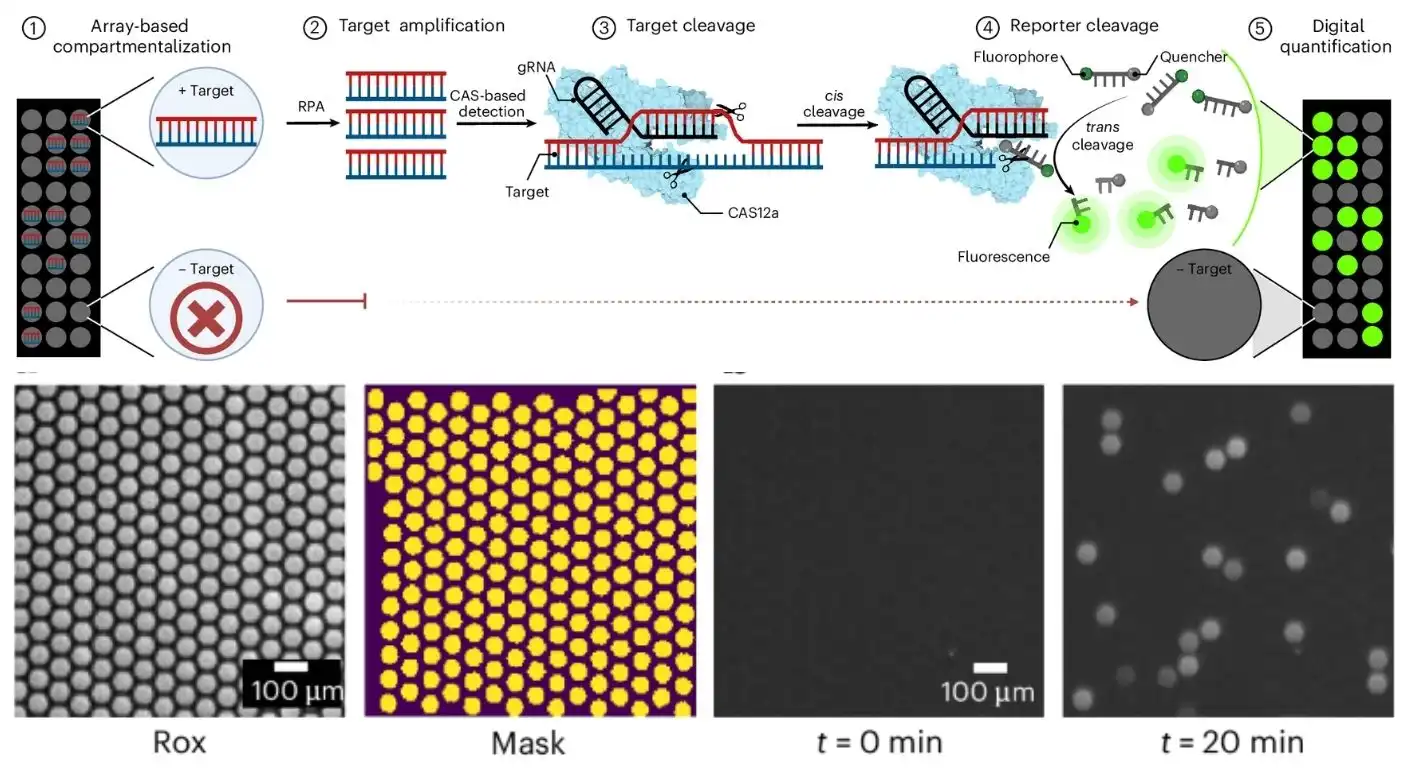
The dSHERLOCK system, developed by a team at Harvard’s Wyss Institute, combines two cutting-edge technologies: CRISPR and single-molecule imaging.
The CRISPR component of the test is designed to detect the specific genetic signature of C. auris. The single-molecule imaging technology enables researchers to visualize and quantify individual pathogen molecules in a sample.
But the test doesn’t just identify the fungus; it can also tell if it’s resistant to specific drugs. By looking for subtle mutations in the fungus’s DNA, dSHERLOCK can provide physicians a “quantitative snapshot” of the drug-resistance landscape in a single patient. This is crucial information that can help them choose the appropriate medication from the outset, saving time and potentially saving lives.
The researchers have also used machine learning to create a simple, easy-to-read output so that hospital staff can get clinically actionable results quickly. While the initial focus is on C. auris, the team reports that the dSHERLOCK platform can be readily adapted to detect a wide range of other dangerous pathogens.
Source: Nature Biomedical Engineering (2026).