In the bustling world of technology, giants rise and fall with the relentless pace of innovation. Companies that define one decade are often relics by the next. Yet for over 130 years, one company has defied this trend, transforming itself time and again without ever losing its soul. It began not in a Silicon Valley garage, but in a small wooden shop in Kyoto, Japan, in 1889, with a product that required no electricity, no screen, and no software: handmade playing cards. That company is Nintendo Co., Ltd.
The story of Nintendo is a saga of improbable success, catastrophic failure, and brilliant, defiant creativity. It is the story of a family-run business that morphed into a global entertainment behemoth, a company that saved the entire video game industry from collapse, lost its throne, and then reinvented the very definition of “gamer” to reclaim it. It is a tale of visionary leaders, quirky inventors, and legendary artists who created worlds that have captivated billions across generations. From the simple joy of a deck of Hanafuda cards to the revolutionary hybrid design of the Nintendo Switch, the company’s journey is guided by a singular, unwavering philosophy: the relentless pursuit of fun.
This is the definitive story of Nintendo. We will travel back to its 19th-century origins, navigate its bizarre forays into taxis and “love hotels,” and witness its pivot into the electronic age that would change the world. We will explore the minds of geniuses like Gunpei Yokoi, Satoru Iwata, and the father of modern gaming, Shigeru Miyamoto. We will dissect the triumphs of the NES, the Game Boy, the Wii, and the Switch, as well as the humbling lessons of the Virtual Boy and the Wii U. This deep dive will uncover the core philosophies that drive Nintendo’s unique approach to hardware, software, and the enduring magic of play.
The Humble Beginnings: A Deck of Cards in Old Kyoto
Before Mario ever jumped over a barrel, before Link ever drew the Master Sword, and before Pokémon were ever “caught,” Nintendo was a company built on paper, ink, and paste. Its origins are a crucial part of its DNA, instilling a culture of craftsmanship and quality that persists to this day.
Fusajiro Yamauchi and the Hanafuda Cards
In 1889, during the Meiji period of Japan’s rapid modernization, a 29-year-old entrepreneur named Fusajiro Yamauchi founded “Nintendo Koppai.” The company’s business was the creation of Hanafuda, or “flower cards.” These were beautifully illustrated playing cards used for a variety of gambling games. At the time, the Japanese government had banned most playing cards due to their association with illegal gambling, but Hanafuda were permitted.
Yamauchi’s cards were not mass-produced; they were works of art, handcrafted from the bark of mulberry and mitsu-mata trees, with intricate designs painted by hand. The quality was exceptional, and they quickly became popular with the local populace and even the Yakuza (Japanese organized crime), who were among the most avid gamblers. The name “Nintendo” is often translated as “leave luck to heaven,” a fitting moniker for a company whose first products were instruments of chance.
The Yamauchi Dynasty and a Culture of Quality
The company remained a family business, passed down through generations of the Yamauchi family. In 1949, at just 22, the formidable and visionary Hiroshi Yamauchi, Fusajiro’s great-grandson, was forced to drop out of university to take over the company after his grandfather suffered a stroke.
Hiroshi Yamauchi was a ruthless, intuitive, and often tyrannical leader who would steer Nintendo for over 50 years. He was not a gamer, nor did he have a passion for toys. What he possessed was an uncanny instinct for what would sell and an absolute, uncompromising demand for quality. He immediately fired relatives from the company to assert his authority and began looking for ways to modernize and expand beyond the Hanafuda card niche. One of his first major successes was a 1959 deal with Walt Disney to produce playing cards featuring Disney characters, a move that opened up the massive market for children and families.
The Wilderness Years: Taxis, Love Hotels, and a Search for Identity
With the card business thriving but ultimately limited, the ever-restless Hiroshi Yamauchi embarked on a series of bizarre and mostly disastrous ventures in the 1960s. He was searching for a “hit,” a new business that could propel Nintendo to the next level. This period of wild experimentation is a fascinating chapter in the company’s history.
Hiroshi Yamauchi’s Quest for a “Hit”
Believing that diversification was the key to growth, Yamauchi threw Nintendo’s money at a dizzying array of businesses, none of which had anything to do with entertainment.
This list showcases the company’s almost comical lack of focus during this era. These failures were crucial in teaching Yamauchi that the company’s future lay in entertainment, not commodities.
- A Taxi Company: He founded Daiya, a taxi company, which initially did well but was ultimately crushed by powerful labor unions.
- “Love Hotels”: Nintendo operated a chain of short-stay hotels that rented rooms by the hour, a business line the modern company is famously reluctant to discuss.
- Instant Rice: He tried to sell instant rice, a product that was a complete commercial flop.
- A Vacuum Cleaner: The “Chiritory” was a remote-controlled vacuum cleaner that also failed to find a market.
After these failures, the company’s stock plummeted, and Nintendo was on the brink of collapse. It was during this desperate time that Yamauchi made the discovery that would not only save the company but set it on its world-changing course. He discovered an inventor on the company’s assembly line.
The Pivot to Play: The Dawn of Electronic Entertainment
The man who would change Nintendo’s destiny was a maintenance engineer on the Hanafuda assembly line named Gunpei Yokoi. He was a tinkerer, a quirky inventor with a unique design philosophy that would become a cornerstone of Nintendo’s success for decades.
Gunpei Yokoi and “Lateral Thinking with Withered Technology”
One day, Yamauchi was touring a factory and saw a simple, extendable arm that Yokoi had built in his spare time to pick up out-of-reach objects. Yamauchi, with his uncanny eye for a hit, ordered Yokoi to turn it into a commercial product. The result was the “Ultra Hand,” a toy that became a runaway success, selling over a million units and pulling the company back from the brink of bankruptcy.
This success propelled Yokoi to the head of a new R&D department. It was here that he developed his famous design philosophy: “Lateral Thinking with Withered Technology.” The idea was to take mature, well-understood, and therefore cheap technology (“withered technology”) and use it in new, innovative ways (“lateral thinking”). This philosophy was born of necessity—Nintendo didn’t have the R&D budgets of giants like Sony—but it became a profound strategic advantage. It allowed Nintendo to create novel, reliable, and affordable products by focusing on creativity rather than cutting-edge power.
The Arcade Revolution: Donkey Kong and the Birth of a Legend
Following the success of its toys, Nintendo tentatively entered the burgeoning arcade game market in the late 1970s. Its early efforts were mostly derivative and forgettable. Facing a crisis with a failing arcade game called Radar Scope in the American market, Yamauchi took a massive gamble. He tasked a young, unknown staff artist with creating a new game that could be installed in the unsold Radar Scope cabinets.
That artist was Shigeru Miyamoto. Miyamoto had no programming experience, but he had a boundless imagination. Instead of another space shooter, he created a story-driven game about a carpenter trying to save his girlfriend from a giant ape. He called it Donkey Kong. The game was a sensation. It introduced the world to “Jumpman” (who would soon be renamed Mario), and its innovative gameplay, which involved navigating platforms and avoiding obstacles, effectively created the platforming genre. Miyamoto’s success cemented Nintendo’s place in the video game world and marked the arrival of the industry’s single most important creative force.
The Famicom Shock: How Nintendo Saved and Conquered the Video Game Industry
While Nintendo was thriving in the arcades, the home video game market in North America was imploding. This context is crucial to understanding the scale of Nintendo’s subsequent achievement.
The Video Game Crash of 1983: A Market in Ruins
The American video game market in the early 1980s, led by Atari, was a lawless gold rush. There was no quality control, and the market was flooded with terrible, rushed games from countless third-party publishers. The breaking point came with the infamous E.T. the Extra-Terrestrial for the Atari 2600, a game so catastrophically bad that it has become a legend. Consumers lost all faith in the industry. Retailers, stuck with mountains of unsold inventory, wrote off video games as a fad. The market collapsed from a $3.2 billion industry in 1983 to just $100 million in 1985, a 97% decline.
The Nintendo Entertainment System (NES): A Trojan Horse for Fun
In Japan, however, Nintendo had launched its own home console in 1983: the Family Computer, or “Famicom.” It was a massive hit. Yamauchi was determined to bring it to the shattered American market, but he knew he couldn’t sell it as a “video game console.” Retailers wouldn’t touch one.
So, Nintendo devised a brilliant Trojan horse strategy. They renamed the Famicom the “Nintendo Entertainment System” and marketed it as a sophisticated toy. It was bundled with R.O.B. (Robotic Operating Buddy), a toy robot that interacted with the games, further distancing it from the tainted image of past consoles. The NES looked nothing like an Atari; it was a sleek, grey box with a front-loading cartridge slot, designed to look more like a VCR than a game machine. After a successful test market in New York City in 1985, the NES launched nationwide and, with hit games like Super Mario Bros., single-handedly resurrected the American video game industry.
The “Nintendo Seal of Quality”: Building a Fortress of Trust
The most important lesson Nintendo learned from the Atari crash was the need for quality control. To prevent the flood of terrible games that had killed the last generation, Nintendo instituted a strict licensing system for third-party developers.
A simple but powerful symbol enforced this system. Every NES game had to display the “Nintendo Seal of Quality.”
- Strict Licensing: Developers had to meet Nintendo’s quality standards to be published on the console.
- Manufacturing Control: Nintendo manufactured all the cartridges in-house, giving it complete control over supply.
- Censorship: The company also enforced strict content guidelines, ensuring its games were family-friendly and free of overly violent or sexual content.
This “walled garden” approach rebuilt consumer trust. The Seal of Quality meant that a game would work, wouldn’t be a broken mess, and would be worth a customer’s money. This foundation of trust became a core pillar of the Nintendo brand.
The Creative Genius: The Minds Behind the Magic
Nintendo’s success has never been just about business strategy; it has been about the transcendent, joyful experiences created by its legendary developers. A few key individuals have left an indelible mark on the company and the broader video game industry.
Shigeru Miyamoto: The Father of Modern Gaming
No single person has had a greater impact on video games than Shigeru Miyamoto. He is the creative mind behind Donkey Kong, Super Mario Bros., The Legend of Zelda, Star Fox, Pikmin, and countless other masterpieces. His design philosophy is rooted in creating intuitive, joyful interactions that he calls “core play mechanics.”
Miyamoto’s genius lies in his ability to translate his real-life experiences and childlike sense of wonder into gameplay. Here are some examples of his creative process.
- The Legend of Zelda was inspired by his memories of exploring the caves, forests, and fields around his childhood home in Kyoto, capturing the thrill of discovery.
- Super Mario 64 and its revolutionary analog control scheme were born when he simply played with an analog stick prototype, imagining Mario moving with a new sense of freedom.
- Pikmin was inspired by watching ants in his garden, imagining them as tiny creatures he could command.
Miyamoto is often called the “Walt Disney of video games,” a creative visionary whose work has defined genres and brought joy to billions.
Gunpei Yokoi: The Master of Handhelds
While Miyamoto was mastering home consoles, Gunpei Yokoi was creating an entirely new market: handheld gaming. Using his “Withered Technology” philosophy, he designed a series of wildly successful handheld devices that would make Nintendo the undisputed king of portable entertainment for decades. His creations include the Game & Watch series and, most importantly, the Game Boy.
Satoru Iwata: The Gamer’s CEO
Satoru Iwata, who served as Nintendo’s fourth president from 2002 until his tragic death in 2015, was a unique figure in the corporate world. He was not a businessman who happened to run a game company; he was a brilliant programmer who became a CEO. He had a “gamer’s heart and a developer’s mind.” He was beloved for his humility, his respect for the creative process, and his direct communication with fans through his “Iwata Asks” interviews and “Nintendo Direct” presentations. It was Iwata who championed the “Blue Ocean Strategy” that led to the creation of the Nintendo DS and the Wii, two of the best-selling and most revolutionary systems in history.
A Kingdom in Your Pocket: Nintendo’s Unrivaled Handheld Dominance
While the console wars raged in living rooms, Nintendo quietly built an untouchable empire in the palms of players’ hands. The company’s dominance in the handheld market is a story of brilliant design, killer software, and a deep understanding of what makes a portable device special.
The Game Boy: A Monochrome Phenomenon
Launched in 1989, the Game Boy was a classic example of Gunpei Yokoi’s design philosophy. Technologically, it was far inferior to its main competitor, the Atari Lynx, which had a full-color screen. But the Game Boy had two crucial advantages: it was cheaper, and its simple monochrome screen gave it a battery life of over 10 hours, compared to the Lynx’s 3-4 hours. Yokoi understood that for a portable device, battery life and affordability were more important than graphical power.
The Game Boy’s success was sealed by its killer app: Tetris. The simple, addictive puzzle game was the perfect companion for the portable device. The Game Boy and its successors would go on to sell over 118 million units, making it one of the most successful consoles of all time.
Pokémon: The Pocket Monster That Captured the World
In the mid-1990s, as the Game Boy’s life seemed to be winding down, a new game appeared that would revitalize the platform and launch a global media franchise. That game was Pokémon Red and Blue. The game’s core mechanics of catching, training, and battling creatures, combined with the social element of trading Pokémon with friends via a link cable, made it a cultural phenomenon. Pokémon drove Game Boy sales into the stratosphere and became one of Nintendo’s most valuable and enduring intellectual properties.
The DS and the 3DS: Innovations in Touch and Vision
Nintendo continued its handheld dominance with the Nintendo DS in 2004, which introduced a dual-screen setup and a revolutionary touch screen. It was followed by the Nintendo 3DS in 2011, which featured a unique glasses-free 3D display. Both systems were massive successes, selling a combined total of over 230 million units and further cementing Nintendo’s reputation as the master of portable innovation.
The Console Wars and the Pursuit of a New Dimension
While Nintendo’s handheld business was a story of near-unbroken success, its journey in the home console market was far more tumultuous, marked by fierce competition and bold, sometimes costly, technological bets.
The Super Nintendo (SNES): The 16-Bit Apex
The follow-up to the NES was the Super Nintendo Entertainment System (SNES), launched in 1990. It represented the pinnacle of 2D gaming, boasting superior graphics and sound that enabled developers to create timeless masterpieces like The Legend of Zelda: A Link to the Past, Super Metroid, and Chrono Trigger. The SNES fought a legendary “console war” with the Sega Genesis, a rivalry that defined a generation of gaming.
The Nintendo 64: A Bold Leap into 3D
In 1996, Nintendo made a bold leap into the third dimension with the Nintendo 64. The console’s most important innovation was its controller, which introduced the analog stick, a feature that would become standard on all future game controllers. This allowed for a new level of precision and fluidity in 3D movement, which was showcased to perfection in the system’s launch title, Super Mario 64. This game was a revelation, a masterpiece that wrote the rulebook for 3D platforming.
However, the N64 also marked a critical strategic error. Nintendo chose to stick with expensive, limited-capacity cartridges while its new rival, Sony’s PlayStation, used cheap, high-capacity CDs. This made games much more expensive to produce for the N64, driving many third-party developers to the PlayStation and beginning a long period where Nintendo consoles struggled for third-party support.
The GameCube: A Mighty Cube in a Changing World
Launched in 2001, the GameCube was a powerful and quirky console that continued Nintendo’s tradition of excellent first-party games, with titles like Metroid Prime and The Legend of Zelda: The Wind Waker. However, it struggled to compete with the overwhelming market dominance of the Sony PlayStation 2 and the arrival of a new, powerful competitor in Microsoft’s Xbox. The GameCube sold a respectable 22 million units but was a distant third in the console race, leading many to believe that Nintendo was losing its magic.
The Blue Ocean Strategy: Redefining “Who is a Gamer?”
By the mid-2000s, Nintendo was at a crossroads. It could not compete with Sony and Microsoft on raw graphical horsepower. Under the leadership of Satoru Iwata, the company decided to stop competing altogether. Instead of fighting over the existing, “hardcore” gamer market (a “red ocean” full of bloody competition), they would create an entirely new market (a “blue ocean” of uncontested space). They would make games for everyone: kids, parents, and even grandparents.
The Nintendo DS: Touching is Good
The first product of this new philosophy was the Nintendo DS. Its touch screen and innovative games like Nintendogs (a virtual pet simulator) and Brain Age (a collection of brain-training puzzles) attracted a massive new audience of “casual” gamers who had never picked up a console before. It became the best-selling handheld console of all time.
The Nintendo Wii: Motion Controls for the Masses
The Blue Ocean strategy reached its zenith with the launch of the Wii in 2006. The Wii was technologically the weakest of its generation, far less powerful than the Xbox 360 and PlayStation 3. But it had a secret weapon: the Wii Remote, an intuitive motion controller that let players control the game by simply swinging their arms.
The pack-in game, Wii Sports, was a stroke of genius. Anyone could pick up a Wii Remote and immediately understand how to bowl, play tennis, or box. The Wii became a global cultural phenomenon, found in family living rooms, community centers, and even retirement homes. It sold over 100 million units, outselling its more powerful competitors and proving that innovative gameplay could be more important than photorealistic graphics.
A Rare Misstep: The Wii U and the Lessons of Failure
Following the monumental success of the Wii, Nintendo’s next console, the Wii U, was a shocking commercial failure. Launched in 2012, the Wii U’s core concept—an “asymmetric” gaming experience using a large, tablet-like controller called the GamePad—was confusing to consumers.
The marketing was a disaster. Many people thought the GamePad was just an accessory for the original Wii, not part of a new console. The console also suffered from a severe lack of third-party support and a drought of major first-party titles in its early years. Despite being home to excellent games like Splatoon and Super Mario Maker, the Wii U sold only 13.5 million units in its lifetime. The failure was a humbling experience for Nintendo, but the lessons learned from its innovative hardware concept would become the direct foundation for its greatest comeback.
The Hybrid Revolution: The Nintendo Switch Reshapes the Industry
After the Wii U’s failure, the pressure on Nintendo was immense. Many analysts predicted the company would follow Sega’s path and exit the hardware business to become a software-only publisher. Instead, Nintendo, in its typical fashion, responded with one of its most innovative and brilliant ideas ever. In 2017, it launched the Nintendo Switch.
One Console, Two Worlds: The Core Concept
The Nintendo Switch was the culmination of everything Nintendo had learned from its decades of experience in both the home console and handheld markets. The core concept, developed under Satoru Iwata before his passing, was a single “hybrid” device that could be used as a traditional home console on a TV and instantly taken on the go as a powerful handheld. This idea solved a modern gamer’s dilemma: having to buy and maintain separate libraries of games for home and portable play. With the Switch, your games were always with you.
The console’s detachable “Joy-Con” controllers were also a marvel of versatile design, allowing for traditional gameplay, Wii-like motion controls, and instant two-player gaming on the go.
A Library of Masterpieces: Fueling the Switch’s Success
A great console is nothing without great games, and the Switch launched with what is arguably the strongest first-year software lineup in history. It debuted alongside The Legend of Zelda: Breath of the Wild, a breathtaking open-world masterpiece that is widely considered one of the greatest video games ever made. This was followed later in the year by Super Mario Odyssey, another critically acclaimed masterpiece.
This incredible start was followed by a relentless cadence of hits, including Animal Crossing: New Horizons (which became a global phenomenon during the 2020 pandemic), Mario Kart 8 Deluxe (the best-selling game on the system), Super Smash Bros. Ultimate, and a new generation of Pokémon games.
The Switch Family: Lite and OLED
Nintendo expanded the Switch’s appeal by introducing new models. The Switch Lite is a cheaper, smaller, handheld-only version, perfect for kids or as a secondary device. The Switch OLED Model features a larger, more vibrant OLED screen, providing a premium handheld experience. To date, the Nintendo Switch family has sold over 140 million units, making it the third best-selling console of all time.
Beyond the Console: The Modern Nintendo Entertainment Ecosystem
In recent years, under the leadership of current president Shuntaro Furukawa, Nintendo has embarked on a new strategy: to leverage its universally beloved characters and intellectual property (IP) far beyond the confines of video games. The goal is to transform Nintendo into a broad entertainment company, creating multiple touchpoints for fans to interact with its worlds.
Super Nintendo World: Stepping into the Mushroom Kingdom
In a landmark partnership with Universal Parks & Resorts, Nintendo has brought its worlds to life with “Super Nintendo World.” The first of these theme park lands opened at Universal Studios Japan in 2021, followed by a location at Universal Studios Hollywood in 2023. These meticulously detailed, interactive lands allow guests to step into a real-life Mushroom Kingdom, punch “?” blocks, and ride attractions based on Mario Kart and Yoshi’s Adventure.
The Big Screen and Beyond: The Super Mario Bros. Movie and IP Expansion
After a disastrous live-action Super Mario Bros. movie in 1993, Nintendo was famously protective of its IP. That changed in 2023 with the release of The Super Mario Bros. Movie, a collaboration with Illumination. The movie was a colossal success, grossing over $1.3 billion worldwide and proving the immense cinematic appeal of Nintendo’s characters. The company has already announced that a live-action Legend of Zelda movie is in development, signaling a major new pillar of its entertainment strategy.
Nintendo’s Mobile Adventures
Nintendo has also made a cautious but deliberate entry into the massive mobile gaming market. While it has stated it sees mobile games primarily as a way to introduce its characters to a wider audience, titles like Fire Emblem Heroes, Animal Crossing: Pocket Camp, and Mario Kart Tour have been financially successful and have kept Nintendo’s IP in the daily lives of millions.
The Nintendo Philosophy: The Enduring Pillars of Success
Through all its transformations, a few core philosophies have remained constant at Nintendo, defining its unique place in the entertainment landscape.
Gameplay First, Graphics Second
The most fundamental Nintendo principle is that the quality of a game is defined by how it feels to play, not how it looks. While competitors have chased photorealism and cinematic spectacle, Nintendo has consistently prioritized novel gameplay ideas, tight controls, and the simple, unadulterated pursuit of fun. This is why many Nintendo games from decades ago are still as enjoyable to play today as they were upon release.
The Pursuit of “Nintendo Hard”
While often associated with “family-friendly” games, Nintendo is also known for its deep, challenging, and incredibly rewarding gameplay. The “Nintendo Hard” of the NES era has evolved, but the underlying principle remains: respect the player’s intelligence and create experiences that are easy to learn but difficult to master. This balance of accessibility and depth is the secret to the longevity of franchises like Zelda, Metroid, and Super Smash Bros.
A Walled Garden of Quality Control
From the NES’s “Seal of Quality” to the curated eShop on the Nintendo Switch, Nintendo has always maintained a “walled garden” approach to its platforms. By exercising tight control over the software released on its hardware, it ensures a baseline level of quality and safety for its consumers, particularly families. This makes a Nintendo console a trusted choice for parents and a reliable platform for gamers.
Challenges in a Modern World
Despite its incredible success, Nintendo faces significant challenges as it navigates the rapidly changing landscape of modern entertainment.
The Online Conundrum
Nintendo has historically lagged far behind Sony and Microsoft in online services. Its online infrastructure has often been seen as clunky and feature-poor compared to the robust PlayStation Network and Xbox Live. While Nintendo Switch Online has improved, it remains an area where the company is playing catch-up.
The Question of Succession
Nintendo’s creative leadership has been remarkably stable for decades, but legends like Shigeru Miyamoto are now in their 70s. A key challenge for the company is cultivating the next generation of visionary game directors who can carry the torch and continue to produce the “Nintendo magic” that defines its games.
Competing with the Cloud and Subscription Services
The games industry is increasingly moving towards cloud gaming and “all-you-can-eat” subscription services like Xbox Game Pass. Nintendo’s model, which is still heavily reliant on selling individual games at a premium price, is an outlier. How the company adapts to or resists this trend will be a key storyline in the coming years.
The Future: What’s Next for the House of Mario?
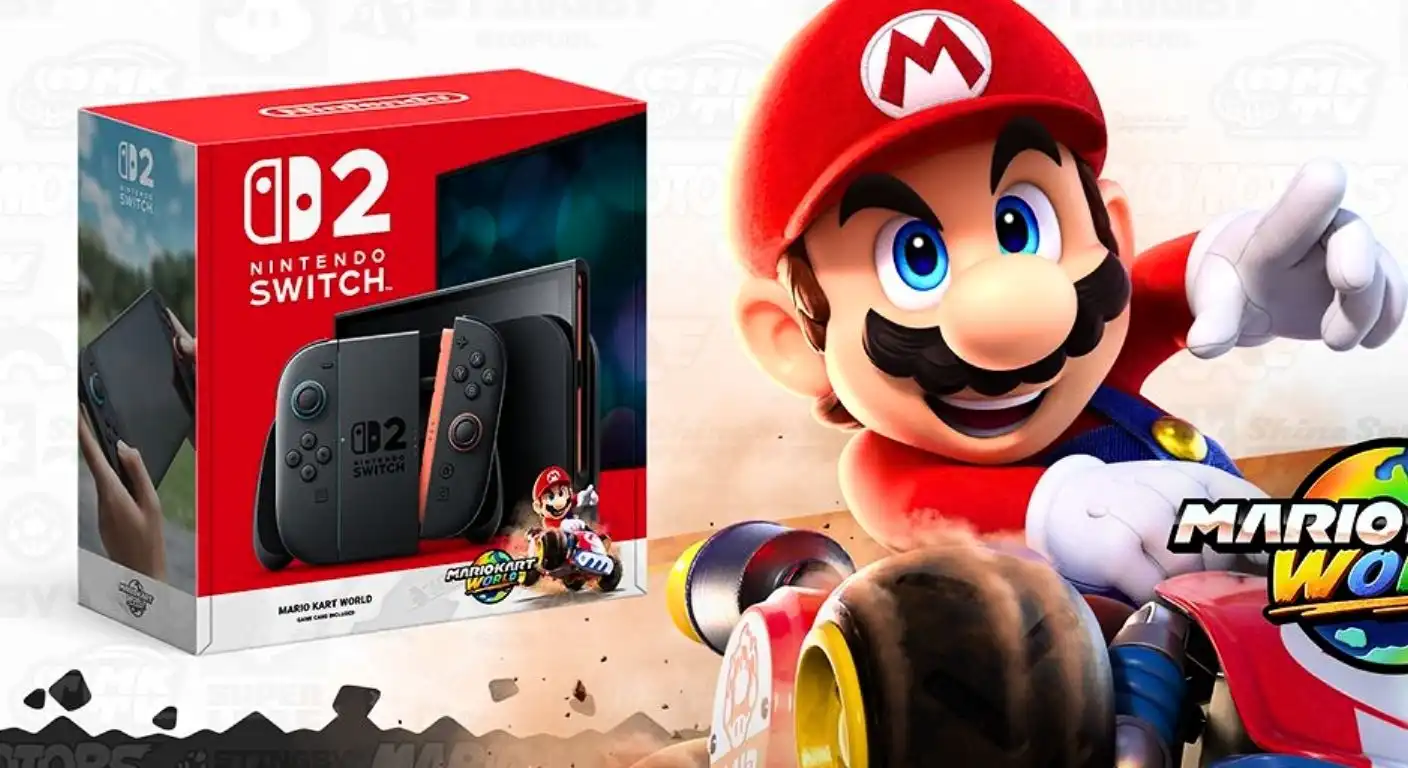
With the Nintendo Switch now in its twilight years, all eyes are on the company’s next move. The successor to the Switch is one of the most highly anticipated pieces of technology in the world. Based on Nintendo’s history, it is unlikely to be a simple “Switch 2” that just offers more graphical power. The world expects, and Nintendo will likely deliver, a new, innovative twist on the concept of play.
The company’s expansion into theme parks and movies will continue, deepening fans’ connection to its characters. The core mission, however, will remain the same as it was under Hiroshi Yamauchi: to create unique, surprising, and joyful entertainment that brings smiles to people’s faces.
Conclusion
From a small card maker in old Kyoto to a global symbol of entertainment, Nintendo’s journey is a story of resilience, creativity, and an unwavering belief in the power of play. It has weathered industry collapses, defied corporate trends, and consistently chosen innovation over imitation. It has created characters as recognizable as any in human history and crafted interactive experiences that have become the shared memories of generations.
In an industry often defined by grim realities and intense competition, Nintendo has remained a bastion of color, whimsy, and pure, unadulterated fun. It is a company that doesn’t just sell products; it sells joy. And in a complex world, that may be the most valuable commodity of all. The legacy of Nintendo is not written in stock prices or sales figures, but in the countless smiles of children, parents, and grandparents, all connected by the universal language of play that this remarkable company from Kyoto has spent over a century perfecting.