Key Points:
- Samsung shares rose after Nvidia CEO confirmed AI chip production.
- Samsung’s foundry division produces Nvidia’s Groq LP30 AI chips.
- Analysts expect Samsung’s foundry business to break even next year.
- AMD’s CEO Lisa Su will meet Samsung Chairman to discuss cooperation.
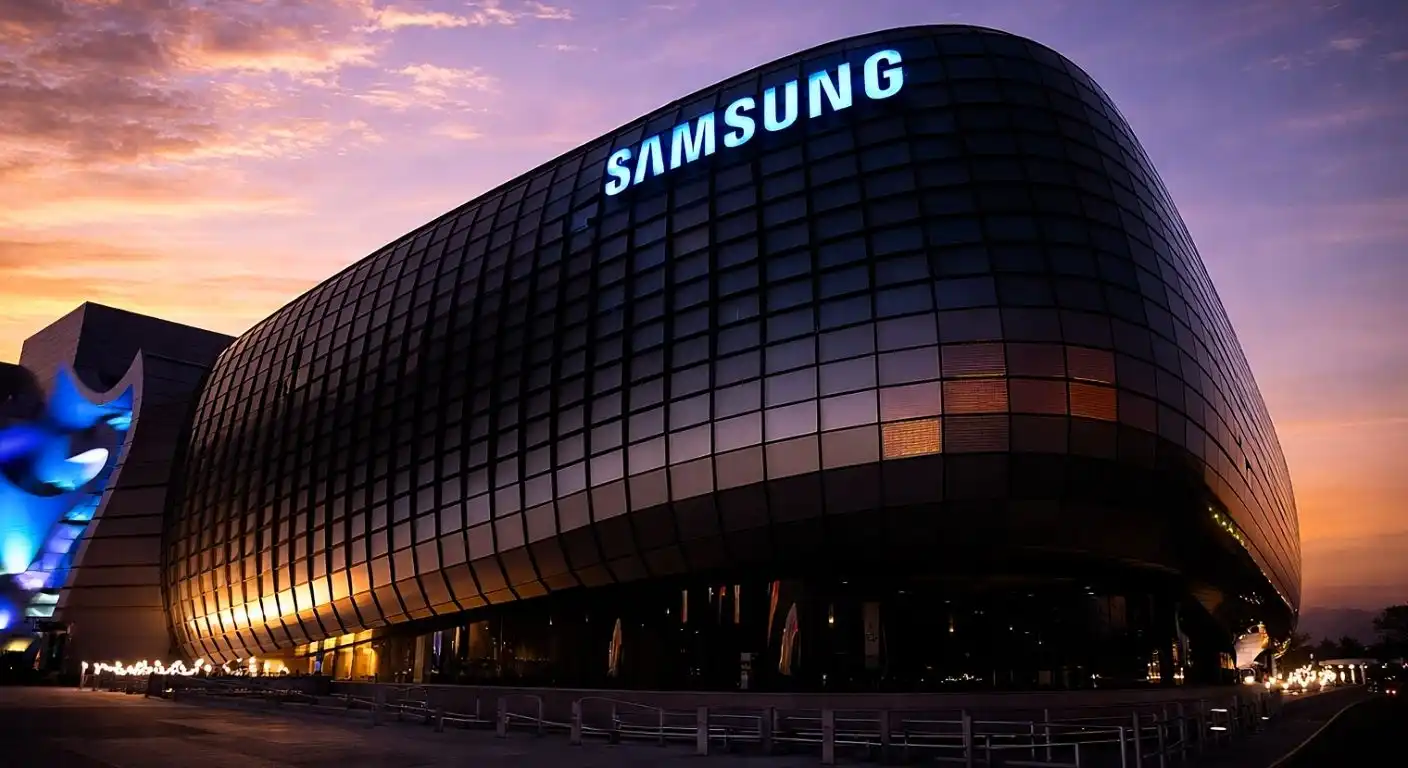
Samsung Electronics (005930.KS) saw its shares climb by as much as 5% on Tuesday. This surge happened after Nvidia (NVDA.O) CEO Jensen Huang announced that the South Korean company is producing Nvidia’s new artificial intelligence chips.
This news has sparked hope that Samsung’s foundry division, which makes custom logic chips for major clients like Tesla (TSLA.O), Apple (AAPL.O), and even Samsung’s own phone unit, could turn its fortunes around. After years of billions of dollars in annual losses, analysts now believe the foundry business might break even as early as next year.
During Nvidia’s GTC developer conference in California on Monday, Huang revealed Nvidia’s latest AI inference processor. This new chip uses technology from the promising chip startup Groq.
“I want to thank Samsung who manufactures the Groq LP30 chip for us and they’re cranking as hard as they can,” Huang stated. He confirmed that these chips are already in production and will start shipping in the second half of this year. Samsung itself showcased these Nvidia chips, made using its advanced 4-nanometer manufacturing process, at the GTC event.
Following the announcement, Samsung shares were up 4.3% at 196,800 won by 0252 GMT, having earlier touched 198,000 won. The broader market (.KS11) also saw a positive bump, rising 2.7%.
Sohn In-joon, an analyst at Heungkuk Securities, predicts that Samsung’s foundry business could reach a breakeven point by late next year. However, he cautioned that weaker demand for mobile phones, mainly due to rising memory chip prices, might put some pressure on the foundry’s earnings.
In other related news, media reports indicate that Advanced Micro Devices’ (AMD.O) CEO Lisa Su plans to meet with Samsung Electronics Chairman Jay Y. Lee in South Korea on Wednesday. Observers are keenly watching to see if their discussions will include potential collaborations on memory chips and logic semiconductors.