

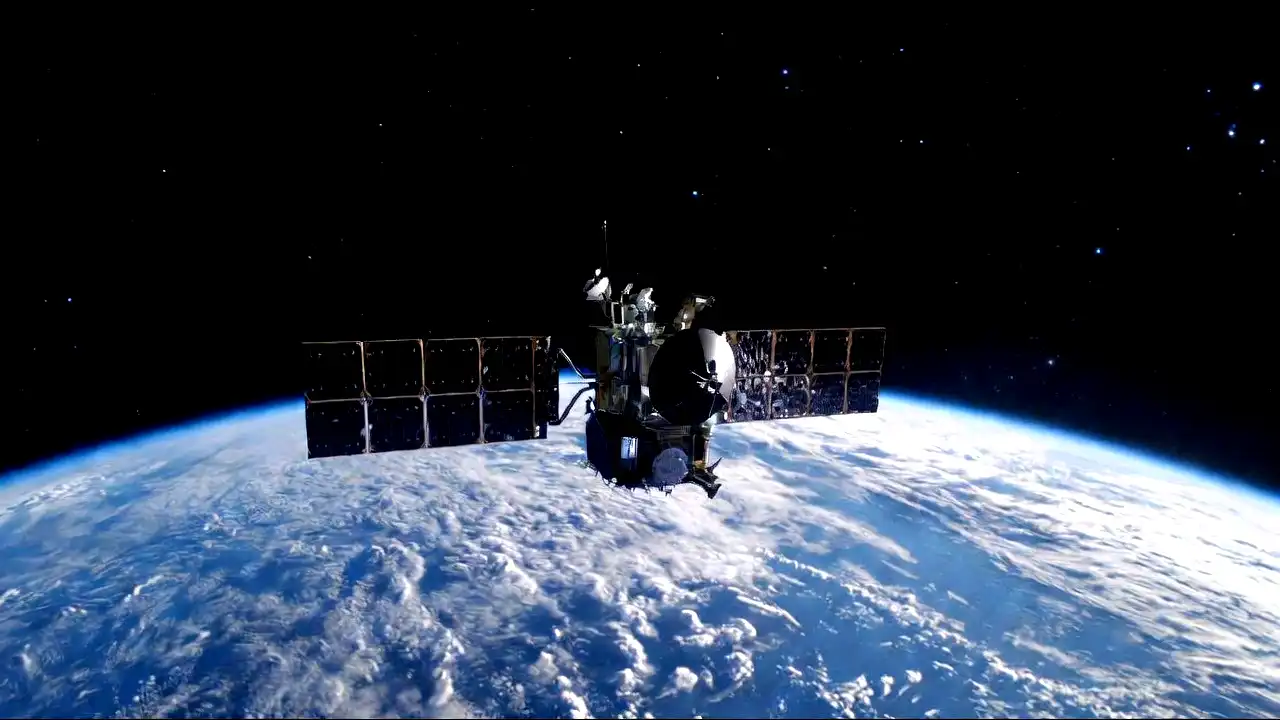
For decades, the promise of the internet—a global village of shared knowledge, opportunity, and connection—has remained an unfulfilled dream for billions of people. The “digital divide,” a stark chasm separating the connected from the unconnected, has persisted as one of the most significant barriers to global equity and progress. It’s a divide carved not by distance, but by the prohibitive cost and logistical impossibility of laying fiber optic cables across treacherous mountains, vast deserts, and sparse rural landscapes. But as we approach 2026, the very heavens are being rewired. A revolution is unfolding hundreds of miles above our heads, a revolution powered by constellations of thousands of small, powerful satellites poised to beam high-speed, low-latency internet to every corner of the globe.
This is the story of how satellite internet, once a slow and cumbersome last resort, is undergoing a radical transformation, driven by ambitious projects such as SpaceX’s Starlink and Amazon’s Project Kuiper. It is becoming the single most powerful tool in our arsenal to finally and decisively close the digital divide. By 2026, this technology will no longer be a novelty; it will be a lifeline, empowering remote schools, enabling life-saving telehealth in isolated villages, fueling economic growth for rural entrepreneurs, and providing critical communication links in the aftermath of natural disasters. This comprehensive guide will explore every facet of this technological leap, from the limitations of the past to the intricate workings of Low Earth Orbit (LEO) constellations, the profound societal impacts, and the challenges that still lie ahead on the path to a truly connected planet.
Understanding the Digital Divide: A Chasm of Inequality
Before we can appreciate the magnitude of the satellite internet solution, we must first grasp the profound and multifaceted nature of the problem it aims to solve. The digital divide is far more than an inconvenience; it is a fundamental barrier to participation in the modern world, a form of 21st-century inequality that exacerbates existing social and economic disparities. It is a complex issue with deep roots and far-reaching consequences.
Defining the Digital Divide in the Modern Era
At its simplest, the digital divide refers to the gap between individuals, households, businesses, and geographic areas at different socio-economic levels, regarding both their opportunities to access information and communication technologies (ICTs) and their use of the internet for a wide variety of activities. However, this definition has evolved. In the early 2000s, it was primarily about access—having a connection or not. Today, the divide is more nuanced.
The following points break down the modern dimensions of this complex global issue. These factors highlight that the problem extends beyond mere connectivity to include quality, affordability, and usability.
- The Access Divide: This is the most basic form—the gap between those who can physically access the internet and those who cannot. This is most pronounced in rural, remote, and developing regions where terrestrial infrastructure is nonexistent.
- The Quality Divide: A 1 Mbps DSL connection is not equivalent to a 1 Gbps fiber connection. This gap in speed, latency, and reliability creates a “broadband underclass” that cannot effectively utilize modern applications, such as video conferencing, cloud computing, or high-definition streaming.
- The Affordability Divide: Even where infrastructure exists, the cost of service and required equipment can be prohibitively expensive for low-income households, creating a significant barrier to adoption.
- The Digital Literacy Divide: Access to a connection is useless without the skills to navigate the digital world safely and effectively. This gap in knowledge separates those who can leverage the internet for personal and professional growth from those who cannot.
The Staggering Human Cost of Digital Exclusion
The lack of meaningful internet access is not a mere inconvenience; it creates profound and compounding disadvantages across society. These consequences permeate every aspect of modern life, hindering individual growth and community development.
- Educational Disadvantage: Students without home internet access fall into the “homework gap.” They cannot access online research materials, submit assignments electronically, or participate in e-learning opportunities, putting them at a significant disadvantage compared to their connected peers.
- Healthcare Disparities: The rise of telehealth has been a boon for many, but it is inaccessible to those without reliable broadband. Rural and elderly populations, who often need remote care the most, are cut off from virtual consultations, remote patient monitoring, and access to online health information.
- Economic Exclusion: In an increasingly digital economy, a lack of internet access is a barrier to employment. It prevents people from searching for jobs online, participating in the gig economy, working remotely, or starting an online business. It also hampers local economies, as businesses are unable to access global markets or modern cloud-based tools.
- Civic and Social Isolation: The internet is a primary platform for civic engagement, accessing government services, and connecting with family and community. Those on the wrong side of the divide can become more isolated, less informed, and less able to participate in the democratic process.
- Hindrance to Precision Agriculture: Modern farming relies on IoT sensors, GPS-guided tractors, and real-time weather data to optimize crop yields and conserve resources. Without connectivity, farmers in rural areas are excluded from these efficiency-boosting technologies.
Why Traditional Solutions Have Failed to Bridge the Gap
For decades, governments and private companies have attempted to solve the rural broadband problem with traditional, ground-based technologies. While these efforts have made progress, they have consistently encountered economic and geographic limitations.
Understanding these failures is key to appreciating why a paradigm shift towards a space-based solution is now necessary. The fundamental economics of terrestrial infrastructure make universal coverage an intractable problem.
- The Prohibitive Cost of Fiber: Fiber optic cable is the gold standard for internet connectivity, offering immense speed and reliability. However, the cost of trenching and laying fiber in sparsely populated areas is astronomical. The return on investment for service providers is simply not there when a mile of cable might only serve one or two households.
- Limitations of DSL and Cable: Digital Subscriber Line (DSL) technology, which runs over old copper phone lines, suffers from severe distance limitations—the further you are from the central office, the slower your speed. Cable internet is generally only available where cable television networks have already been built out, which is rare in deep rural areas.
- Challenges of Fixed Wireless: While fixed wireless access (FWA) can be a suitable solution in some areas, it is highly dependent on maintaining a direct line of sight to a tower. Hills, trees, and buildings can easily block the signal, making it unsuitable for many rugged or forested landscapes.
- Cellular is not a Panacea: While cellular networks (4G/5G) are expanding, they are often designed to cover population centers. Building towers to cover vast, empty regions is uneconomical. Furthermore, cellular data plans often come with restrictive data caps and can become congested, making them an unsuitable and expensive replacement for true home broadband.
The Evolution of Satellite Internet: From GEO to LEO
To understand the revolution happening in 2026, we must first look back at the history of satellite internet. The concept is not new, but the technology has undergone a fundamental transformation that redefines its capabilities. The key to this transformation lies in the altitude of the satellites themselves.
The Old Guard: Geostationary (GEO) Satellites
For over two decades, the only option for satellite internet came from massive satellites orbiting in a geostationary orbit (GEO). These satellites are incredible feats of engineering, but their location in space imposes severe limitations on their performance for internet applications.
These satellites orbit at a very specific altitude, which is both their greatest strength and their most significant weakness. This high orbit allows for vast coverage but comes at an unavoidable cost to performance.
- How They Work: GEO satellites orbit the Earth at an altitude of approximately 35,786 kilometers (22,236 miles) directly above the equator. At this specific altitude, their orbital period matches the Earth’s rotation period perfectly. From our perspective on the ground, they appear to be stationary at a fixed point in the sky.
- The Advantage: Massive Coverage: Because they are so high up, a single GEO satellite can provide coverage to a huge area—roughly one-third of the Earth’s surface. This makes them excellent for broadcasting television signals and providing basic connectivity to very wide, remote regions.
- The Crippling Disadvantage: Latency: The speed of light is finite. A signal from a user’s dish must travel ~36,000 km up to the satellite and ~36,000 km back down to a ground station, and then the return trip must be made. This round trip of over 140,000 km introduces a significant time delay, known as latency or “ping.” For GEO satellites, this latency typically ranges from 600 to 800 milliseconds or more.
- The Impact of High Latency: This delay makes many modern internet applications unusable. Real-time activities, such as online gaming, video conferencing (e.g., Zoom, Teams), and VoIP phone calls, become frustratingly laggy and filled with awkward pauses. Even web browsing feels sluggish, as the high latency delays the initial “handshake” required to load a webpage.
- Other Issues: GEO satellites also have a finite amount of total bandwidth to share among all users in their extensive coverage area, often resulting in slow speeds during peak hours and restrictive data caps.
The New Dawn: Low Earth Orbit (LEO) Constellations
The game-changer is the move to Low Earth Orbit (LEO). Instead of a few large, distant satellites, LEO systems consist of a “constellation” of thousands of smaller, interconnected satellites that orbit much, much closer to the Earth.
This fundamental shift in architecture solves the latency problem and unlocks fiber-like performance from space. LEO represents a complete rethinking of how satellite networks are designed and operated.
- How They Work: LEO satellites orbit at altitudes ranging from 500 to 2,000 kilometers—over 65 times closer to the Earth than GEO satellites. Because they are so close, they move across the sky very quickly. To provide continuous coverage, a vast “mesh” of thousands of satellites is required, so that as one satellite moves out of view, another is already in position to take over the connection seamlessly.
- The Primary Advantage: Low Latency: Due to their proximity to Earth, the signal travel time is dramatically reduced. The round-trip latency for LEO internet is typically between 20 and 50 milliseconds, which is comparable to that of ground-based services such as fiber and cable.
- The Impact of Low Latency: This is the key that unlocks the modern internet. With low latency, video calls are crisp and clear, online gaming is competitive, remote desktop applications are responsive, and web pages load instantly. LEO satellite internet feels like high-speed terrestrial broadband.
- High Throughput: Each LEO satellite is designed to handle a significant amount of data throughput (bandwidth). By having many satellites covering a region, the total network capacity is enormous, allowing for high download speeds (often 100+ Mbps) and more generous data allowances.
The LEO Revolution: A Closer Look at the Key Players and Technology
By 2026, the LEO satellite internet market will be a dynamic and competitive space, dominated by a few major players who are investing billions to deploy their constellations. Understanding these players and the sophisticated technology they employ is crucial to seeing how this revolution is taking shape.
SpaceX’s Starlink: The First Mover and Market Leader
SpaceX, Elon Musk’s aerospace company, has a commanding lead with its Starlink service. Having started launching satellites in 2019, Starlink is already the world’s largest satellite operator, providing service to millions of users in dozens of countries.
Starlink’s aggressive launch cadence and vertical integration give it a formidable advantage. They are not just building a network; they are creating a new paradigm for global connectivity.
- The Constellation: As of late 2023, Starlink already has over 5,000 satellites in orbit, with plans to deploy tens of thousands more. They launch their own satellites in batches of 20-60 at a time aboard their reusable Falcon 9 rockets, allowing for rapid and cost-effective deployment.
- The User Terminal: The user on the ground receives the signal with a small, self-orienting phased-array antenna, affectionately nicknamed “Dishy McFlatface.” This sophisticated device automatically detects and tracks the optimal satellite passing overhead, handing off the connection from one to the next without any user intervention.
- Optical Space Lasers: A key technological advantage is the use of inter-satellite laser links. This allows the satellites to communicate with each other in orbit, creating a true mesh network in space. A user’s signal can be routed through space from satellite to satellite before coming down to a ground station that is closer to its final destination (e.g., a data center in another country). This reduces reliance on ground stations and can even result in latency that is faster than terrestrial fiber for long-distance communication, as light travels faster in a vacuum than through glass.
Amazon’s Project Kuiper: The Emerging Challenger
Amazon is poised to become Starlink’s primary competitor with its own LEO constellation, Project Kuiper. Backed by Amazon’s immense resources and logistical prowess, Kuiper represents a serious and well-funded effort to connect the unconnected. Kuiper plans to leverage Amazon’s existing strengths in cloud computing and consumer hardware to create a competitive service.
Their entry into the market will be a pivotal moment for the industry, driving innovation and competition.
- The Constellation: Project Kuiper is authorized to deploy over 3,200 satellites. While behind Starlink, they began launching their prototype satellites in late 2023 and have secured dozens of launches on rockets from Arianespace, Blue Origin, and United Launch Alliance—the largest commercial launch procurement in history. They are expected to begin beta service in 2024 and scale up rapidly into 2026.
- Integration with AWS: A key advantage for Kuiper will be its deep integration with Amazon Web Services (AWS), the world’s leading cloud computing platform. This will allow them to offer secure, high-performance connectivity directly to AWS services for enterprise and government customers worldwide.
- User Terminals: Amazon is developing a range of user terminals at various price points and performance levels, including an ultra-compact model and a high-bandwidth version for enterprise customers, to make the service accessible to a broader market.
OneWeb and Others: Focusing on Enterprise and Mobility
While Starlink and Kuiper are heavily focused on the consumer market, other players, such as OneWeb, are targeting different segments. This specialization is creating a rich and diverse satellite internet ecosystem. These companies are building the connectivity backbone for industries that operate beyond the reach of terrestrial networks.
Their focus is on providing high-availability, carrier-grade services to businesses and governments.
- OneWeb’s Focus: OneWeb has a fully deployed first-generation constellation of over 600 satellites. Their primary focus is not on direct-to-consumer service but on providing “backhaul” for mobile network operators to extend their coverage to rural areas, as well as providing connectivity for governments, maritime shipping, and aviation.
- Telesat Lightspeed: This Canadian company is developing an advanced constellation called Lightspeed, specifically designed for enterprise-grade services, targeting telecommunications companies, governments, and businesses with secure, high-performance, and flexible connectivity solutions.
How Satellite Internet Directly Bridges the Divide
The technological advancements are impressive, but their true significance lies in their direct application to solving the core problems of the digital divide. By 2026, LEO satellite internet will deliver tangible, life-changing benefits to previously excluded populations worldwide.
Revitalizing Rural and Remote Communities
For the first time, communities physically isolated by geography will have access to the same quality of internet as those in major urban centers. This is a fundamental game-changer for rural life. This newfound connectivity will spark economic and social revitalization in areas that the digital age has left behind.
It levels the playing field, enabling rural communities to participate in the global economy fully.
- Enabling Remote Work: High-speed, low-latency internet makes remote work a viable option for rural residents. This enables people to secure high-paying jobs with major companies without having to relocate, thereby introducing new income streams into rural economies and reversing the trend of “brain drain” to cities.
- Powering Small Businesses: Rural entrepreneurs can launch e-commerce businesses, access global markets, and use modern cloud-based software for accounting, marketing, and operations. A local artisan can sell their goods worldwide, and a small farm can utilize online tools to manage its business more efficiently.
- Access to Government and Financial Services: Residents will be able to easily access online government services, file taxes, apply for benefits, and conduct online banking, tasks that previously required long and costly trips to the nearest town.
Transforming Education and Erasing the “Homework Gap”
The impact on education will be one of the most profound and immediate benefits of LEO satellite internet. It provides the missing link to bring modern educational tools to students and teachers everywhere. Every child, regardless of their zip code, will have the opportunity to access the vast educational resources of the internet.
This will be a massive step towards achieving educational equity.
- Connecting Underserved Schools: Schools in remote areas, including those on tribal lands and in developing countries, can be connected to high-speed internet, giving students access to online learning platforms, digital textbooks, and virtual field trips.
- Empowering Teachers: Teachers can access professional development resources, collaborate with peers globally, and use new digital tools to create more engaging and personalized learning experiences for their students.
- Closing the Homework Gap: With affordable satellite internet available at home, students will no longer be disadvantaged. They can conduct research, collaborate on projects online, and access tutoring and support outside of school hours. This is critical for academic success.
Revolutionizing Healthcare with Telemedicine
Telehealth has the potential to solve some of the most pressing healthcare challenges in rural and remote areas, but it is entirely dependent on a high-quality internet connection. LEO satellite internet provides that crucial link. This technology will bring specialized medical expertise to patients who are hundreds or even thousands of miles from the nearest hospital.
It will save lives, improve health outcomes, and reduce the burden of travel for patients.
- Virtual Doctor’s Visits: Patients can have high-definition video consultations with primary care doctors and specialists from the comfort of their homes. This is transformative for elderly patients, those with mobility issues, and anyone living far from a clinic.
- Remote Patient Monitoring: Medical professionals can remotely monitor patients with chronic conditions, such as diabetes or heart disease, using connected medical devices that transmit data in real-time over a satellite link, allowing for proactive interventions.
- Connecting Rural Clinics and Mobile Health Units: A small rural clinic or a mobile health van can be equipped with a satellite terminal, allowing it to connect to a major hospital’s network. This enables local staff to access electronic health records, consult with specialists via video, and transmit high-resolution medical images, such as X-rays, for expert analysis.
Fueling Economic Growth Through Precision Agriculture
Modern agriculture is a high-tech industry. LEO satellite internet will bring the benefits of this technology to farms and ranches located far from terrestrial broadband infrastructure.
This will lead to more efficient, sustainable, and profitable farming operations. Connectivity turns a traditional farm into a smart farm.
- Real-Time Data Collection: Connected IoT sensors in the fields can monitor soil moisture, nutrient levels, and crop health, transmitting this data in real-time. This allows farmers to apply water and fertilizer with surgical precision, reducing waste, saving money, and protecting the environment.
- Automated and GPS-guided equipment: GPS-guided tractors and drones can operate autonomously, planting, spraying, and harvesting with centimeter-level accuracy, thereby optimizing yields and reducing fuel consumption.
- Supply Chain Management: Farmers can access real-time market data, manage inventory, and connect directly with distributors and customers online, improving the efficiency of their entire operation from field to fork.
A Critical Lifeline in Disaster Response
When natural disasters like hurricanes, earthquakes, or wildfires strike, they often damage or destroy ground-based communication infrastructure, such as cell towers and fiber optic lines. This is precisely when communication is most critical for coordinating rescue and relief efforts.
Satellite internet is uniquely resilient to ground-based disasters, making it an invaluable tool for first responders. It can be deployed rapidly to restore connectivity in minutes, not weeks.
- Instantaneous Connectivity: Emergency response teams can arrive in a disaster zone with portable satellite terminals and establish a high-speed communications hub in minutes. This allows them to coordinate their efforts, access maps and data, and communicate with command centers.
- Public Wi-Fi Hotspots: A single satellite terminal can be used to create a Wi-Fi hotspot for affected residents, allowing them to contact loved ones, access emergency information, and register for aid.
- Supporting Mobile Clinics: In the aftermath of a disaster, satellite-connected mobile clinics can provide essential medical care and coordinate with larger medical facilities to ensure continuity of care.
Overcoming the Hurdles: Challenges on the Path to Universal Connectivity
While the promise of LEO satellite internet is immense, the path to closing the digital divide is not without significant challenges. Addressing these issues will be critical to ensuring the technology’s benefits are distributed equitably and sustainably.
The Affordability Barrier
Perhaps the single greatest challenge is cost. While far cheaper than laying fiber to a remote home, the cost of LEO satellite service can still be a major barrier for the low-income households and developing nations that need it most.
Making the service truly accessible will require innovative pricing models and public-private partnerships. The technology is only a solution if people can afford to use it.
- Hardware Costs: The sophisticated phased-array user terminals are expensive to manufacture, often costing several hundred dollars. While companies are currently subsidizing this cost, it remains a significant upfront expense.
- Monthly Subscription Fees: Monthly service fees, often around $100 in developed nations, are far beyond the means of many families in rural areas and the majority of the population in the developing world.
- Solutions: Potential solutions include government subsidy programs (similar to those for telephone and electricity), community-based models where a single subscription is shared across a village or school, and the development of lower-cost hardware and service tiers specifically for emerging markets.
Regulatory and Geopolitical Hurdles
Operating a global satellite network requires navigating a complex web of international regulations and national politics. Each country has the sovereign right to control the airwaves within its borders.
Gaining permission to offer service in every country is a slow and complex diplomatic process. Politics, rather than technology, may be the biggest obstacle in some regions.
- Landing Rights: Companies must secure “landing rights” or market access from the national regulator in every country where they wish to operate. This can be a lengthy process involving technical reviews and political negotiations.
- Government Censorship and Control: Some authoritarian governments may be hesitant to allow a foreign-controlled internet service that they cannot easily monitor or censor. They may demand that all traffic be routed through state-controlled ground stations or block the service entirely.
- Spectrum Allocation: Radio frequency spectrum is a finite resource. Satellite operators must coordinate their use of spectrum with one another and with terrestrial services to avoid interference, a process overseen by international bodies such as the ITU.
The Challenge of Space Debris and Sustainability
The rapid deployment of tens of thousands of new satellites into Low Earth Orbit has raised serious concerns among astronomers and space sustainability advocates. Ensuring the long-term health of the orbital environment is paramount.
A sustainable approach to space is non-negotiable for the future of the industry.
- Orbital Congestion: With multiple massive constellations in operation, the orbits are becoming increasingly crowded, raising the risk of collisions between satellites. A single collision could create a cloud of thousands of pieces of high-velocity debris, which could in turn trigger a chain reaction of further collisions (a scenario known as the Kessler syndrome).
- Light Pollution: The reflectivity of satellites can interfere with ground-based astronomical observations, creating bright streaks in long-exposure images and hindering scientific research.
- Mitigation Efforts: Satellite operators are actively working to address these issues. This includes designing satellites to be less reflective, equipping them with autonomous collision avoidance systems, and ensuring they can be reliably de-orbited at the end of their service life, thereby burning up in the atmosphere rather than becoming space junk.
Digital Literacy and Adoption
Simply providing an internet connection is not enough. To truly close the digital divide, people need the skills and confidence to use the technology effectively.
The deployment of infrastructure must accompany investment in digital literacy training. The goal is not just to connect people, but to empower them.
- The Skills Gap: Many people in previously unconnected areas may have little to no experience with computers or the internet. They require training on a range of topics, including basic device operation and email, online safety, digital financial services, and utilizing the internet for education or business purposes.
- The Importance of Local Content: To be truly useful, the internet must offer content and services that are relevant and in the local language.
- Community-Led Initiatives: The most effective digital literacy programs are often community-led, utilizing local trainers and tailoring the curriculum to the specific needs of the population, whether they are farmers, small business owners, or students.
Beyond 2026: The Future of a Connected Planet
The LEO satellite revolution is just the beginning. The technology continues to evolve at a rapid pace, and the developments on the horizon promise an even more deeply integrated and ubiquitously connected world.
Direct-to-Cell Technology
The next major leap will be connecting standard, unmodified mobile phones directly to satellites. Several companies, including Starlink and AST SpaceMobile, are developing this technology. This would effectively eliminate all mobile dead zones on the planet.
This innovation would mean that your existing smartphone could have a basic connection for text and voice calls from anywhere on Earth. It represents the ultimate safety net for global communication.
- How it Works: The satellites will essentially act as “cell towers in the sky,” broadcasting signals that can be picked up by the existing chipset in a standard 4G or 5G phone.
- Initial Use Cases: The first generation of this service, expected to roll out around 2026, will likely focus on low-bandwidth services, such as SMS texting, emergency messaging, and possibly voice calls. This would be invaluable for hikers, sailors, and anyone who travels outside of normal cellular coverage.
- Future Potential: As the technology matures, it could eventually provide true mobile broadband to standard phones anywhere on the globe, blurring the lines between cellular and satellite networks entirely.
The Integration with 5G, IoT, and the Edge
Satellite internet will not replace terrestrial networks; it will integrate with them to create a single, hybrid global network. LEO satellites will play a crucial role as the “backhaul” that connects remote 5G towers and IoT sensor networks to the global internet, extending the reach of these technologies to every corner of the planet.
Conclusion
As we stand on the cusp of 2026, the digital divide—a problem that has seemed intractable for decades—is finally facing its reckoning. The deployment of advanced Low Earth Orbit satellite constellations is more than just a technological achievement; it represents a profound leap forward in the pursuit of global equity. This is the infrastructure that will enable a student in a remote Andean village to take a coding class from an MIT professor, a farmer in the African savanna to access real-time weather data to save her crops, and a clinic in the Australian outback to consult with a specialist in Sydney on a difficult case.
The challenges of affordability, regulation, and sustainability are real and must be addressed with thoughtful policy and responsible stewardship. But the momentum is undeniable. The competitive drive between giants like SpaceX and Amazon is accelerating innovation and will eventually drive down costs. For the first time in history, the technical and economic barriers to connecting every human on Earth are crumbling. Satellite internet in 2026 is not just about faster downloads or streaming movies in the wilderness. It is about unlocking human potential on a global scale. It is the tool that will finally begin to close the chasm of inequality, fulfilling the long-held promise of a truly connected global village where opportunity is no longer dictated by geography.






