Key Points
- Scientists have designed a new, more efficient type of “metasurface” to control light.
- The material combines two highly desirable properties: “photonic flatbands” and a “chiral response.”
- This has been a significant challenge in the field of optics to date.
- The new design uses a “nonlocal” approach that traps light more effectively.
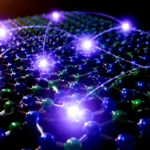
Scientists have designed a new type of “metasurface”—an ultra-thin, engineered material that can control light with incredible precision. The breakthrough reported in Advanced Photonics, from a team of researchers in China and Australia, overcomes a major limitation of previous designs and could pave the way for a new generation of advanced optical devices.
Metasurfaces are a hot area of research because they offer a way to bend, focus, or filter light in ways that aren’t possible with natural materials. However, many current designs are inefficient, leak energy, and perform poorly at wide angles.
This new design is different. It employs a “nonlocal” approach, where the interactions between numerous tiny elements on the surface collectively create a distinct optical effect. This allows the material to trap light much more efficiently.
The researchers were able to create a metasurface that possesses two highly desirable properties simultaneously: “photonic flatbands” and a “chiral response.” Flatbands indicate that the material’s optical properties remain constant across a wide range of viewing angles.
A chiral response means it can distinguish between left- and right-handed circularly polarized light. Achieving both of these at once has been a major challenge until now.
By combining two different design principles, the team created a metasurface with carefully tuned, weakly linked “waveguides” for light. This design slows the light down to a near standstill, which enhances its interaction with the material and ensures the optical effects are consistent and powerful.
The work could open up new possibilities in fields like quantum optics, advanced sensing, and communications.