Key Points
- Scientists have discovered a previously unknown “acidic nanolayer” on the outer surface of lysosomes, the cell’s recycling centers.
- The discovery was made using a new “DNA nanodevice” that can measure pH on the surface of an organelle.
- This outer acidic layer, not the acid inside, controls how the lysosome moves around the cell.
- In Parkinson’s disease models, the lysosomes had a more acidic nanolayer, suggesting a link to the disease.
Scientists in China have discovered a previously unknown “acidic nanolayer” that surrounds the recycling centers of our cells, a finding that could open new avenues for treating diseases such as Parkinson’s.
The recycling centers, called lysosomes, are like little acid-filled balloons inside our cells. They break down and recycle old or damaged parts. We’ve known for a long time that the acid inside the lysosome is crucial for this process. But what scientists didn’t know is that a thin layer of acid also exists on the outside of the lysosome.
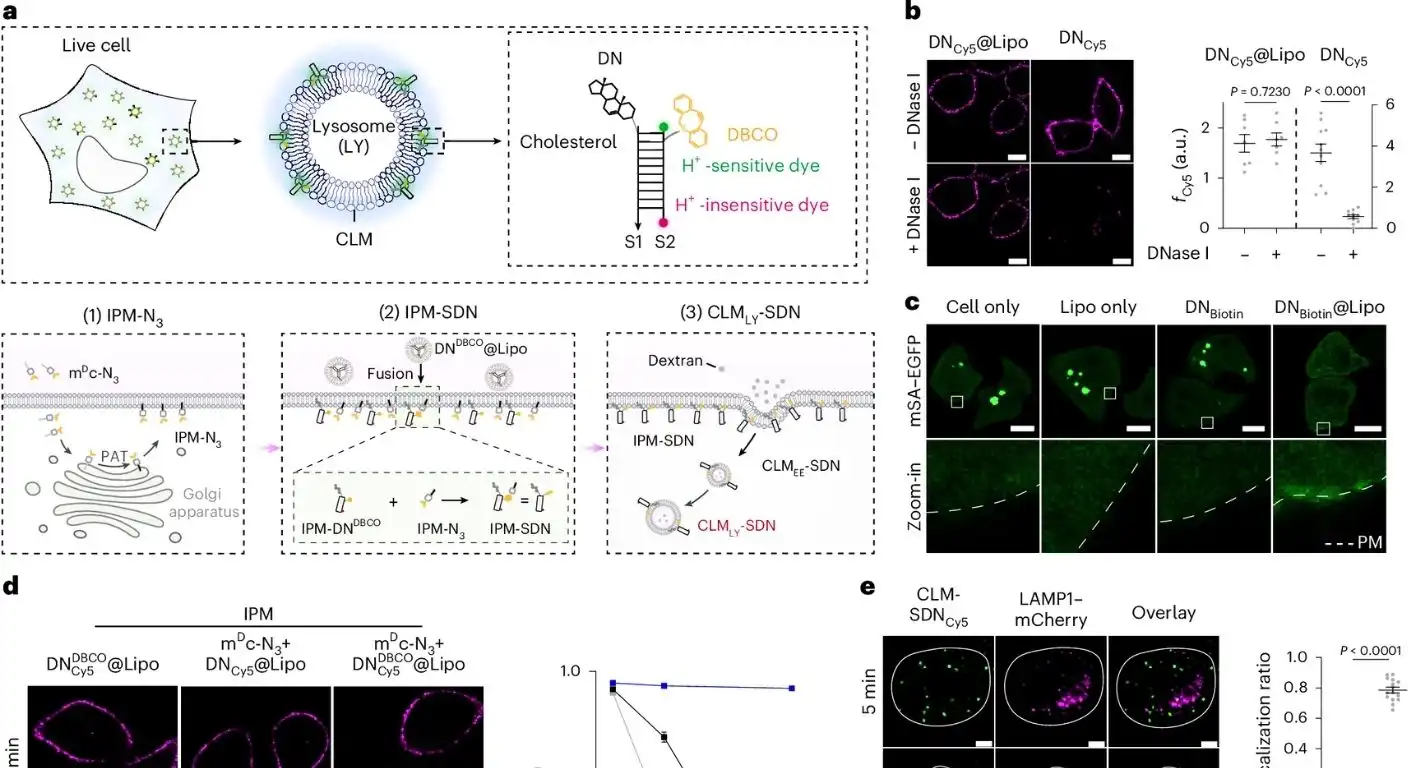
This discovery was made by a team of researchers who developed a new tool, a tiny “DNA nanodevice,” that can measure the pH level right on the surface of the lysosome in a living cell. Using this tool, they found a steady, acidic layer, just 21 nanometers thick, on the outer surface of every lysosome they examined.
This “acidic nanolayer” is more than just a curiosity; it plays a vital role in lysosomal function. The researchers found that it’s this outer layer of acid, not the acid inside, that controls how the lysosome moves around the cell.
They also identified a specific protein that acts as a sensor for this outer acidic layer, helping to guide the lysosome’s movement.
The implications of this discovery are huge. In models of Parkinson’s disease, the researchers found that the lysosomes had a significantly more acidic nanolayer, suggesting a potential link to the disease. The acidic layer also seems to play a role in how lysosomes interact with other parts of the cell.
This study has uncovered a whole new layer of complexity in how our cells work. By understanding this hidden acidic world, scientists may be able to develop new therapies for a wide range of diseases.
Source: Nature Cell Biology (2026).