

Key Points:
- Perovskites match silicon solar efficiency despite having many structural defects.
- Researchers found that these defects actually help transport electricity.
- Internal boundaries called “domain walls” prevent energy loss.
- A new silver staining technique allowed scientists to see these networks.
For years, scientists have tried to solve a confusing puzzle in the world of solar energy. The industry standard, silicon solar cells, requires ultra-pure materials to work well. Any impurity usually ruins the flow of electricity. However, a cheaper alternative material called lead-halide perovskites performs almost as well as silicon, even though it is full of microscopic defects and impurities.
Now, physicists at the Institute of Science and Technology Austria (ISTA) have finally explained why this happens. In a study published in Nature Communications, researchers reveal that the “messy” structure of perovskites is actually the secret to their success. While silicon needs perfection, perovskites rely on their imperfections to harvest energy efficiently.
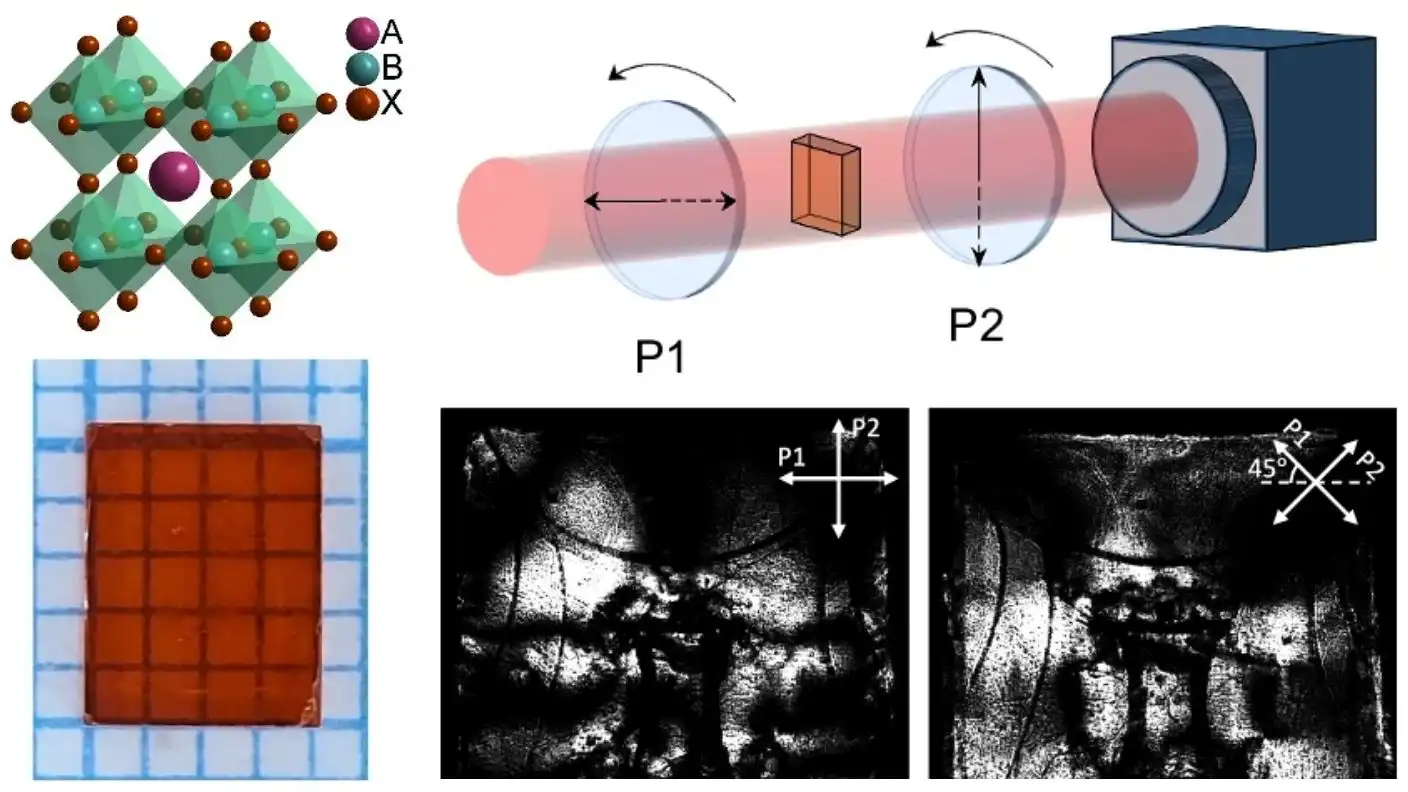
Postdoc Dmytro Rak and Assistant Professor Zhanybek Alpichshev led the research. They discovered that the material is filled with a network of structural boundaries known as “domain walls.” In most materials, these walls would block electricity. In perovskites, they do the opposite.
When a solar cell absorbs light, it creates positive and negative charges. These charges need to travel to the edges of the cell to create a current. If they bump into each other too soon, they cancel out, and the energy is lost. The ISTA team found that the domain walls pull these charges apart immediately. Once separated, the charges travel along these walls like cars on a highway, allowing them to move long distances without getting lost.
To prove this, Rak used his background in chemistry to create a new imaging method. He used silver ions to stain the crystal, similar to how doctors use dye to see blood vessels during an angiography. This technique lit up the domain walls under a microscope, revealing a dense network spanning the entire material.
This discovery changes how we understand solar materials. Instead of trying to remove every defect, engineers can now focus on managing these domain walls. This breakthrough could help manufacturers build the next generation of solar panels that are both highly efficient and incredibly cheap to produce.
Source: Nature Communications (2026).






