Key Points
- Scientists have discovered how to control energy flow at the nanoscale using molecules.
- The research focuses on “plasmons,” which are electron vibrations in metal that concentrate light energy.
- Molecules attached to the metal surface can drain this energy in two distinct ways.
- One of these energy-draining methods is directly linked to the material’s electrical resistance.
Scientists have discovered how to control the flow of energy at the nanoscale, a breakthrough that could lead to new technologies in light-driven catalysis, advanced sensors, and more energy-efficient chemical reactions.
The research focuses on nanoscale metal structures that concentrate light to such an extent that they can trigger chemical reactions. The key to this process is something called a “plasmon,” which is a collective vibration of electrons in the metal. When these plasmons are excited by light, they confine a huge amount of energy into an extremely small space.
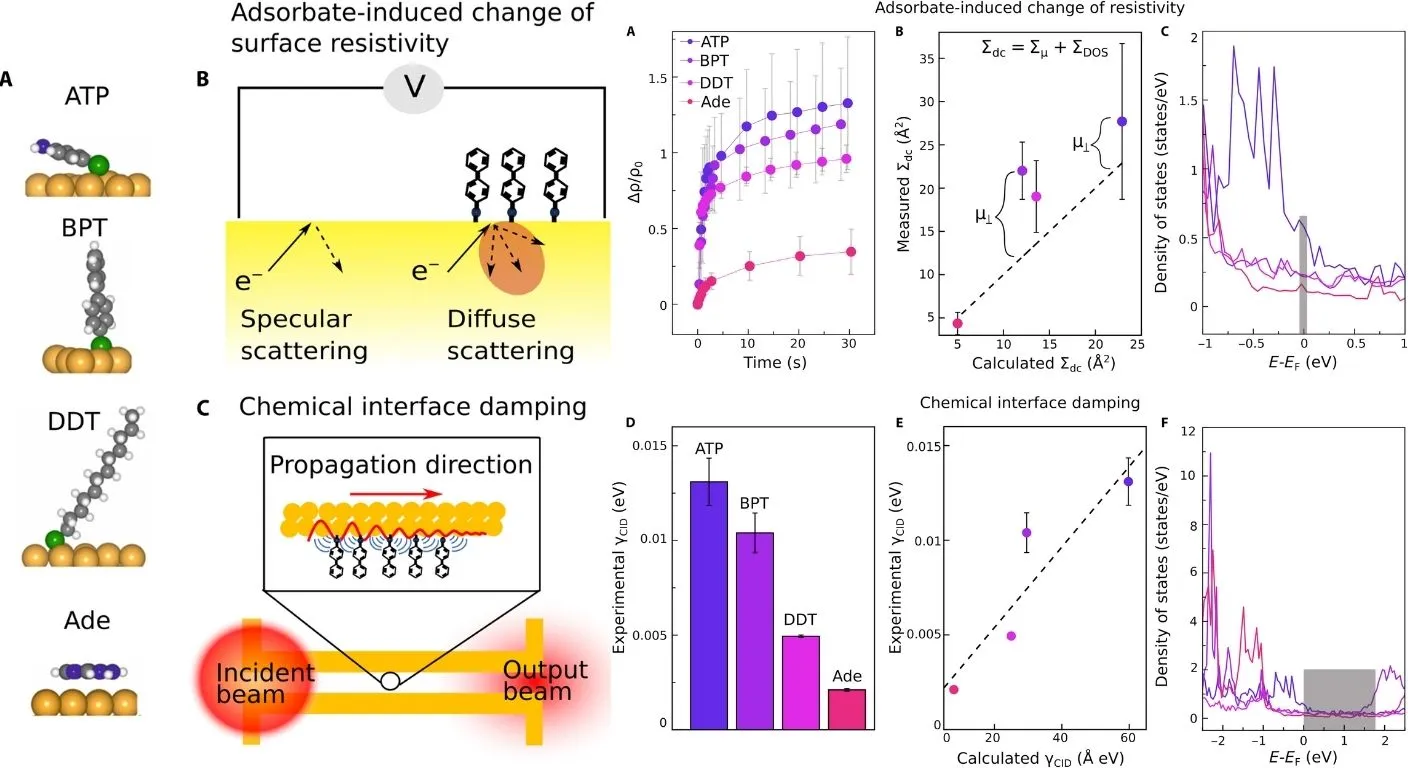
A new study reveals that molecules attached to the metal surface play a crucial role in determining how this energy is used. A team of nanophysicists has identified two distinct mechanisms by which these molecules can dissipate energy from plasmons.
The first way is a direct, lightning-fast transfer of energy from the plasmon to the molecule. The second is a more subtle process in which electrons scatter at the interface between the metal and the molecule, causing the plasmons to lose energy. Surprisingly, the scientists found that this second process is directly linked to the material’s electrical resistance.
This discovery is a major step forward because it shows that by simply choosing which molecules to attach to the surface, scientists can precisely control the flow of energy. “These insights show that nanoscale energy flow can be tuned through molecular design,” said Professor Emiliano Cortés.
This opens up exciting new possibilities for using sunlight to power chemical reactions, such as sustainably creating fuels or valuable chemicals.
Source: Science Advances (2025)