Key Points
- Scientists have developed a new technique to spot tiny malfunctions in the body’s protein-building machinery.
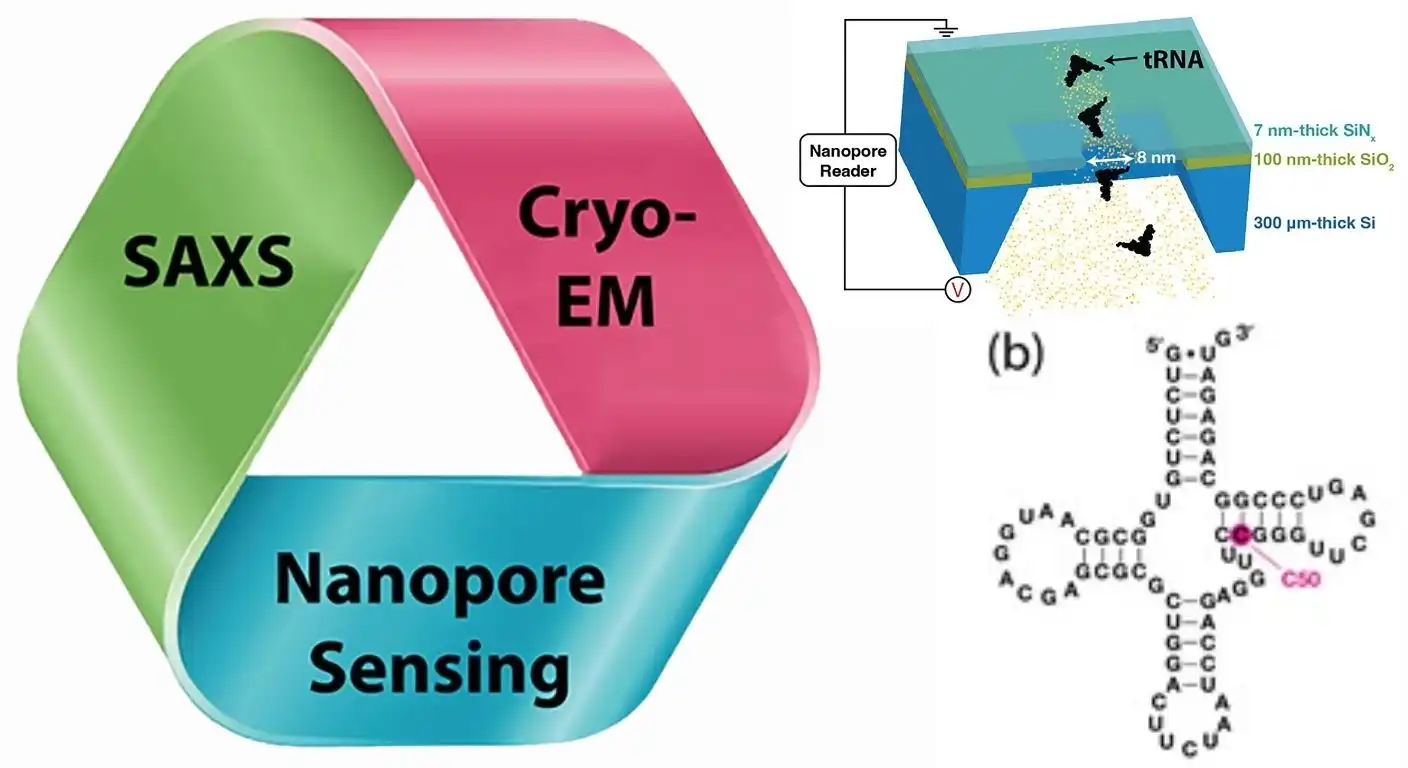
- The method works by squeezing tRNA molecules through a tiny hole in a silicon membrane.
- It can detect single-letter mutations that distort the shape of the tRNA and disrupt protein production.
- The new technology could lead to earlier diagnosis and more effective treatments.
An international team of scientists has developed a new technique that allows them to see the tiny, molecular-level malfunctions that can lead to devastating diseases like Alzheimer’s, Parkinson’s, and cancer. By squeezing molecules through a tiny hole in a silicon membrane, they can now spot the earliest signs of trouble in the body’s protein-building machinery.
The new method focuses on a molecule called transfer RNA, or tRNA. These molecules are like tiny messengers that carry the building blocks of proteins to the cell’s “assembly line.” A single, tiny mutation in a tRNA molecule can distort its shape, which can throw the whole protein-building process into disarray.
“We are examining the machinery that builds proteins in the first place,” said one of the lead researchers. “It’s like checking the assembly line rather than inspecting finished products—allowing us to catch and understand problems much earlier.”
Using their new technique, the team was able to analyze over 3 million individual tRNA molecules. They found that the mutated molecules can get permanently “stuck” in unusual shapes, which is what triggers the onset of disease.
“We can directly detect and measure changes in mutant tRNA in real-time and see how they change their shape from one form to another, at scale—something which has been impossible until now,” said the study’s lead author.
This is a major breakthrough because it gives scientists a new window into the very earliest stages of disease. By understanding how these tiny glitches happen, they can start to develop new and more effective treatments.
The technology could also be used to screen for new drugs that can stabilize the tRNA molecules and prevent them from getting stuck in their disease-causing shapes. This could lead to massive advances in the treatment of a wide range of neurodegenerative diseases and cancers.
Source: Nucleic Acids Research (2026).