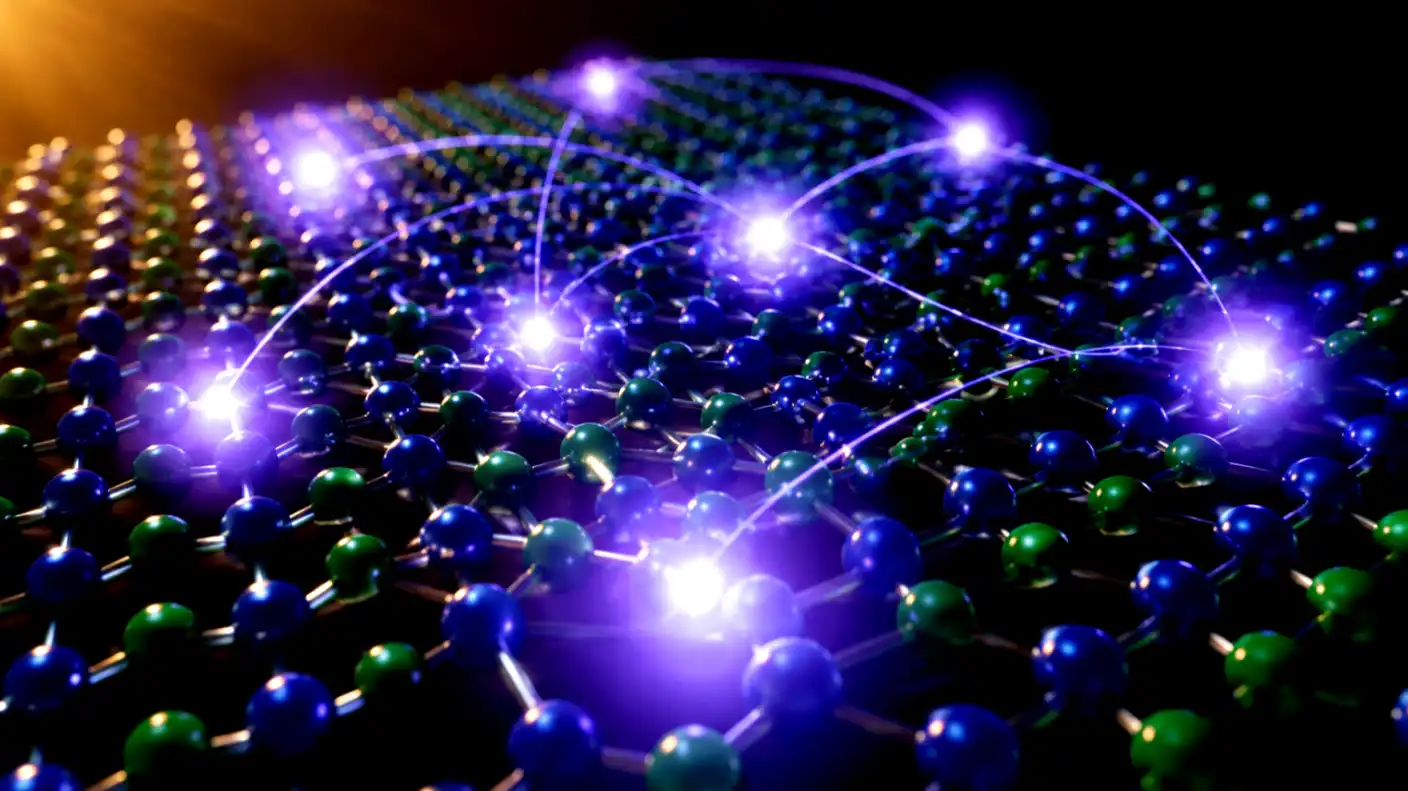
Our modern world is built upon a silent, unspoken, and deeply frustrating pact with impermanence. We accept that our smartphone screens will crack, that our roads will develop potholes, and that our concrete bridges will inevitably decay. We live in a culture of repair and replace, a linear existence where entropy is the victor and wear and tear is the inescapable tax on progress. This constant battle against decay is not just an inconvenience; it is a colossal drain on our resources, our finances, and our environment. But what if we could break this pact? What if we could imbue our inanimate world with one of the most remarkable properties of the living one: the ability to heal?
As we accelerate, this is no longer the realm of science fiction. We are standing at the dawn of a materials science revolution, a paradigm shift driven by the emergence of practical, scalable Self-Healing Materials. Inspired by the elegant efficiency of biological systems, scientists and engineers are designing a new generation of polymers, composites, metals, and even concrete that can autonomously detect damage and initiate repair, mending themselves without human intervention. These remarkable materials will be moving out of the laboratory and into the real world, beginning to reshape two of the most critical sectors of our global economy: the fragile, high-tech world of electronics and the massive, foundational domain of public infrastructure. This definitive guide will explore the science, applications, and profound implications of a future that doesn’t just break but brilliantly heals itself.
The Tyranny of Decay: Why We Desperately Need a Self-Healing Revolution
To understand the profound promise of self-healing materials, we must first confront the staggering, often hidden, costs of the status quo. The traditional materials that form the backbone of our society were designed for strength and performance, but rarely for longevity or resilience. Their inevitable degradation has created a set of interconnected crises that have become unsustainable.
The Fragility of Our Digital Lives: The Electronics Dilemma
Our relationship with our electronic devices is one of intimate reliance and constant peril. The very technologies that have become extensions of our minds are housed in shockingly brittle materials, leading to a cycle of damage, expensive repair, and premature replacement that has enormous economic and environmental consequences.
This cycle is driven by a fundamental mismatch between the sophisticated internal components and their fragile external shells. The result is a culture of disposability that is choking the planet in electronic waste.
- The Cracked Screen Epidemic: A dropped smartphone and a shattered screen is a near-universal experience. These repairs are costly and inconvenient, and for many devices, a cracked screen is the beginning of the end, leading to the premature disposal of an otherwise functional device.
- The E-Waste Mountain: The short lifespan of our electronics, often dictated by minor physical damage, has created the world’s fastest-growing and most toxic waste stream. This e-waste is a squandered resource of precious metals and a source of hazardous materials that pollute our soil and water.
- The Limits of Miniaturization: As electronic components, like the conductive pathways on a circuit board, become ever smaller, they also become more susceptible to failure from microscopic cracks caused by thermal stress or physical vibration. These tiny, often invisible, failures can be catastrophic for the device’s function.
The Slow Crumbling of Our World: The Infrastructure Crisis
On a much grander and longer timescale, the infrastructure that supports our civilization—our bridges, roads, tunnels, and buildings—is locked in a constant battle with the elements. The materials we have relied on for centuries, particularly concrete and steel, are incredibly strong but inherently vulnerable to the slow, relentless forces of degradation.
The global cost of combating this decay, primarily through inspection, maintenance, and repair, runs into the trillions of dollars annually. This is a silent crisis that threatens our economic prosperity and public safety.
- The Concrete Cancer: Concrete, the most widely used construction material on Earth, is prone to cracking. Water inevitably seeps into these cracks, where it can freeze and expand, widening the crack. More dangerously, it can reach the steel rebar embedded within, causing it to rust and expand, a process that acts like a “cancer,” breaking the concrete apart from the inside.
- The Unseen Threat of Corrosion: Steel corrosion is a multi-trillion-dollar global problem. It weakens the structural integrity of bridges, compromises pipeline safety, and degrades reinforced concrete structures, leading to a constant, expensive cycle of repair and replacement.
- The Pothole Plague: Asphalt roads are prone to cracking due to traffic loads and temperature fluctuations. Water intrusion and freeze-thaw cycles turn these small cracks into the bone-jarring potholes that damage vehicles and necessitate constant, disruptive roadwork.
The Science of Self-Repair: Decoding the Mechanisms of Healing
Inspired by the remarkable ability of biological systems to heal wounds, scientists have developed several ingenious strategies to imbue synthetic materials with self-repairing properties. These mechanisms will have moved from theoretical concepts to a mature toolkit of approaches, each with its own strengths and weaknesses.
Extrinsic Self-Healing: The Embedded Healer
Extrinsic systems are those in which the healing agent is pre-embedded in the material, ready to be released when damage occurs. This is analogous to the way our blood platelets are held in reserve until a cut triggers them to form a clot.
This is the most mature and commercially advanced category of self-healing technology. It is based on the simple and robust concept of containing and releasing a healing agent.
Capsule-Based Self-Healing
In this approach, the material is embedded with millions of microscopic capsules. Each capsule contains a liquid healing agent (a monomer). A catalyst is also dispersed throughout the material’s matrix. When a crack forms, it ruptures the microcapsules in its path, releasing the healing agent. The agent then flows into the crack via capillary action and contacts the catalyst, triggering a chemical reaction (polymerization) that solidifies the liquid, effectively “gluing” the crack shut and restoring the material’s structural integrity.
Vascular Self-Healing
This more advanced approach takes its inspiration directly from a biological circulatory system. Instead of discrete capsules, the material is permeated with a network of tiny, interconnected channels or hollow fibers, much like a network of blood vessels. This “vascular” network is filled with a healing agent. When damage occurs, the network ruptures, and the healing agent is wicked into the crack to initiate repair. The key advantage of this system is that it can be “recharged” by pumping more healing agent into the network, enabling multiple healing events at the same location.
Intrinsic Self-Healing: The Material That Remembers
Intrinsic self-healing materials do not rely on an embedded healing agent. Instead, the material’s chemistry is engineered to have the latent ability to heal. An external stimulus, such as heat, light, or pressure, triggers the repair.
This approach offers the potential for near-infinite healing cycles, as there is no finite supply of a healing agent to be used up. The material’s chemical bonds themselves are the source of the repair.
- Reversible Covalent Bonds: This involves designing polymers with special chemical bonds that can break and reform under specific conditions. For example, some materials use the Diels-Alder reaction, a type of chemical bond that can be broken with heat and will then automatically re-form as the material cools, allowing a cut to be “healed” by simply applying warmth.
- Supramolecular Chemistry: This approach uses weaker, non-covalent bonds, like hydrogen bonds. These materials are often softer and more rubber-like. When the material is cut, the hydrogen bonds across the interface can reform if the pieces are brought back into contact, sometimes even at room temperature, allowing the material to mend itself.
The Materials Toolkit: The Building Blocks of a Resilient Future
The scientific principles of self-healing are being applied across a wide range of materials. Ssignificant progress will have been made in developing and scaling these materials for practical applications.
Self-Healing Polymers and Elastomers
This is the most advanced and commercially viable category of self-healing materials. The flexible nature of polymer chemistry makes it relatively easy to incorporate both extrinsic and intrinsic healing mechanisms. These materials are at the heart of the revolution in consumer electronics.
Self-Healing Metals and Alloys
Creating self-healing metals is a much greater challenge, as metals are crystalline and lack the mobile polymer chains that enable easy repair. However, significant progress is being made. One approach involves creating metal matrix composites embedded with low-melting-point metal alloys. When a crack forms, the heat from the stress can melt the alloy, allowing it to flow into and seal the crack.
Self-Healing Ceramics and Concrete
Ceramics and concrete are inherently brittle, making self-healing a particularly valuable property. As we will explore, the most promising approaches for concrete involve embedding either polymer-filled capsules or, more revolutionary, dormant bacteria that can be awakened by water to produce limestone and seal cracks.
Self-Healing Composites
Composites, such as carbon fiber-reinforced polymers used in aircraft and high-performance cars, are incredibly strong but susceptible to hard-to-detect internal damage (delamination). Embedding these composites with vascular networks or microcapsules enables autonomous repair of internal damage, enhancing safety and extending the lifespan of these critical components.
The Electronics Revolution: A Future of Resilient and Flexible Devices
The application of self-healing materials in the electronics sector is poised to fundamentally change our relationship with our devices, moving from a culture of fragility and disposability to one of durability and longevity.
The Self-Healing Screen: The End of the Crack
This is the most eagerly anticipated consumer application. Self-healing polymers will be integrated into the top layers of smartphone screens and as standalone screen protectors.
While not yet able to mend catastrophic damage, these materials can autonomously repair everyday scratches and microcracks that plague our devices. This dramatically improves the screen’s appearance, longevity, and resistance to deeper fractures.
- How it Works: The top layer of the screen is a transparent polymer that uses an intrinsic healing mechanism, often triggered by the slight heat generated by the phone’s operation or even sunlight. When a scratch occurs, the polymer chains can slowly flow and re-bond, causing the scratch to visibly “disappear” over hours.
The Rise of Flexible and Wearable Electronics
The dream of truly foldable phones, rollable tablets, and “smart” clothing that is both comfortable and durable is becoming a reality through self-healing conductive polymers. Traditional metal conductors will inevitably fatigue and break after repeated bending and stretching. Self-healing electronics are the key to making these futuristic devices robust enough for everyday use.
This is a core enabling technology for the next generation of personal computing.
- Self-Healing Conductors: Scientists have developed stretchable, polymer-based materials embedded with conductive nanoparticles (like silver nanowires or liquid metal droplets). When the material is cut or stretched to the point of failure, the liquid metal can flow to bridge the gap, or the polymer matrix can heal itself, restoring electrical function by bringing the conductive pathways back into contact.
- Smart Textiles: These self-healing conductive materials are being woven into fabrics to create “e-textiles” with integrated sensors that can monitor a person’s vital signs. The self-healing property ensures that these circuits continue to function even after the garment is repeatedly washed, stretched, and worn.
Longer-Lasting Batteries: Self-Healing for Energy Storage
One of the primary failure modes for rechargeable batteries, particularly lithium-ion batteries, is the formation of “dendrites.” These are tiny, needle-like lithium structures that can grow inside the battery, eventually piercing the separator between the anode and cathode, causing a short circuit and killing the battery.
Self-healing materials are being used to create more resilient battery components that can suppress dendrite growth and repair internal damage. This promises to significantly extend the lifespan and improve the safety of the batteries that power everything from our phones to our electric vehicles.
- Self-Healing Electrolytes: Researchers have developed polymer-based electrolytes with intrinsic self-healing properties. If a small dendrite forms and creates a microcrack, the electrolyte can flow and re-polymerize, sealing the crack and stopping the dendrite in its tracks.
- Self-Healing Anodes: Silicon anodes used in next-generation batteries have a much higher energy density than graphite, but they swell and crack during charging. By incorporating self-healing polymers into the anode’s structure, the material can better accommodate this stress and autonomously repair the micro-cracks, leading to a much longer cycle life.
The Infrastructure Revolution: Building a World That Mends Itself
On a far grander scale, self-healing materials are poised to transform the construction and maintenance of our built environment, leading to safer, more resilient, and vastly more sustainable infrastructure.
Self-Healing Concrete: The Living Building Material
This is one of the most impactful and well-developed applications of self-healing technology. Self-healing concrete is moving from large-scale demonstration projects into the early stages of commercial use in high-value infrastructure.
The goal is to create concrete structures that can autonomously heal cracks, which are the primary cause of their degradation. This could extend the lifespan of concrete structures by decades and dramatically reduce the multi-trillion-dollar annual repair costs.
Bioconcrete: The Power of Bacteria
This revolutionary approach involves embedding the concrete mix with dormant limestone-producing bacteria (such as Bacillus pasteurii) and their food source (calcium lactate), both sealed within biodegradable capsules. The process is elegant and simple:
- A crack forms in the concrete.
- Water seeps into the crack, dissolving the capsules and “awakening” the dormant bacteria.
- The bacteria consume their food source and, through their metabolic process, precipitate calcium carbonate (limestone), which crystallizes and seals the crack.
Polymer-Based Healing
An alternative approach uses the extrinsic, capsule-based method. The concrete is embedded with glass capillaries or polymer capsules containing a low-viscosity polymer resin. When a crack forms, it breaks the capsules, and the resin flows into the crack and hardens, bonding the structure back together.
The End of Rust: Self-Healing Coatings for Corrosion Protection
The fight against corrosion is a constant and costly battle. Self-healing coatings are a powerful new weapon in this fight, providing an active, intelligent layer of protection for steel and other metals.
These coatings can autonomously repair scratches or damage that would otherwise expose the underlying metal to the elements. They are a game-changer for protecting everything from steel rebar in concrete to oil and gas pipelines.
- How it Works: The coating is a polymer matrix containing microcapsules that release a corrosion inhibitor or a film-forming healing agent. When the coating is scratched, the capsules rupture and release their payload, which then forms a new protective layer over the exposed metal, stopping corrosion before it can even begin.
Self-Healing Asphalt for Smarter, Longer-Lasting Roads
Potholes are the bane of drivers and road maintenance departments everywhere. Self-healing asphalt offers a proactive solution to this chronic problem.
The goal is to heal the small microcracks that are precursors to potholes before they grow. This promises to reduce maintenance costs, improve driver safety, and minimize traffic disruptions.
- The Technology: One of the leading approaches involves mixing the asphalt with small steel wool fibers. To heal the road, a large induction coil is passed over the surface. The induction energy heats the steel fibers, which in turn melts the surrounding bitumen (the asphalt’s binder), allowing it to flow into and seal the micro-cracks. Other approaches involve embedding the asphalt with capsules of rejuvenating oil.
The Key Enablers: Technologies Accelerating the Self-Healing Future
The rapid progress in self-healing materials is not happening in a vacuum. It is being accelerated by a powerful set of enabling technologies that allow us to design, manufacture, and understand these materials with unprecedented speed and precision.
Nanotechnology: Engineering at the Atomic Scale
Nanotechnology is the essential toolkit for creating the key components of many self-healing systems. It enables the fabrication of polymer microcapsules and nanofibers at the heart of extrinsic healing systems, with precise control over their size, shell thickness, and release properties.
AI and Materials Informatics: Designing the Future in a Computer
The traditional process of discovering new materials has been slow and driven by trial and error. A new field called Materials Informatics is using artificial intelligence and machine learning to accelerate this process dramatically.
- AI models can be trained on vast databases of chemical structures and their properties to predict a new, theoretical material’s self-healing capability before it is ever synthesized.
- This in silico design process allows scientists to rapidly screen thousands of potential candidates and focus their lab work only on the most promising ones.
Advanced Manufacturing: 3D Printing the Healers
Technologies like 3D printing (additive manufacturing) are enabling the creation of complex material structures that were previously impossible.
- For vascular self-healing systems, 3D printing can be used to create intricate, bio-inspired networks of channels directly within a component, optimizing the delivery of the healing agent.
The Hurdles on the Road to a Self-Healing World
While the promise is immense, the widespread adoption of self-healing materials is not without significant challenges that the industry is actively working to overcome.
- The Cost Factor: Self-healing materials are currently more expensive to produce than their traditional counterparts. Bringing the cost down through economies of scale and more efficient manufacturing processes is the single biggest barrier to mass adoption.
- Performance and Repeatability: A key question for any self-healing material is: how well does it heal? Does it fully recover its original strength? And how many times can it heal in the same location? Ensuring that the healing process is robust and repeatable is a major area of R&D.
- The Challenge of Scale: It is one thing to demonstrate a self-healing material in a small lab sample. It is another thing entirely to produce it at the scale required for a highway or a large building, and to ensure its performance is consistent across massive batches.
- Testing and Standardization: How do you test and certify the “healability” of a material? A new set of industry standards and testing protocols is needed to enable engineers and regulators to confidently specify and use these materials in critical applications.
- The Perverse Incentive of Durability: In some industries, like consumer electronics, the business model has been built on a cycle of planned obsolescence. A shift to ultra-durable, self-healing products may require a fundamental rethinking of these business models towards a service or subscription-based approach.
Conclusion
The recent innovations mark a crucial and exciting inflection point in the story of materials science. The passive, brittle, and disposable materials that have defined our modern world are beginning to give way to a new generation of intelligent, adaptive, and resilient materials. The emergence of self-healing technologies is more than just a scientific curiosity; it is a fundamental answer to some of the most pressing economic and environmental challenges of our time.
From the smartphone in your pocket that can erase its own scratches to the bridge that can mend its own cracks, this revolution promises a future with less waste, lower maintenance costs, and greater safety and reliability. The journey to this self-healing world is still in its early stages, and significant technical and economic hurdles remain to be overcome. But the trajectory is clear. By learning from the elegant, four-billion-year-old engineering masterpiece that is the natural world, we are finally beginning to build a human world that is not designed to be thrown away, but to endure.