In the vast, pulsating network of the global economy, millions of financial transactions occur every single second. A latte purchased in Seattle, a subscription renewed in London, a stock trade executed in Tokyo. For decades, banks and financial institutions viewed these transactions simply as “movement”—the mechanical transfer of funds from Account A to Account B. This data was stored in cold, dusty servers, retrieved only for monthly PDF statements or mandatory compliance checks. It was a record of the past, static and uninspiring.
Today, that paradigm has been shattered. In the modern fintech ecosystem, transaction data is no longer just a ledger entry; it is a goldmine of behavioral insight. It is a predictive map of a customer’s future.
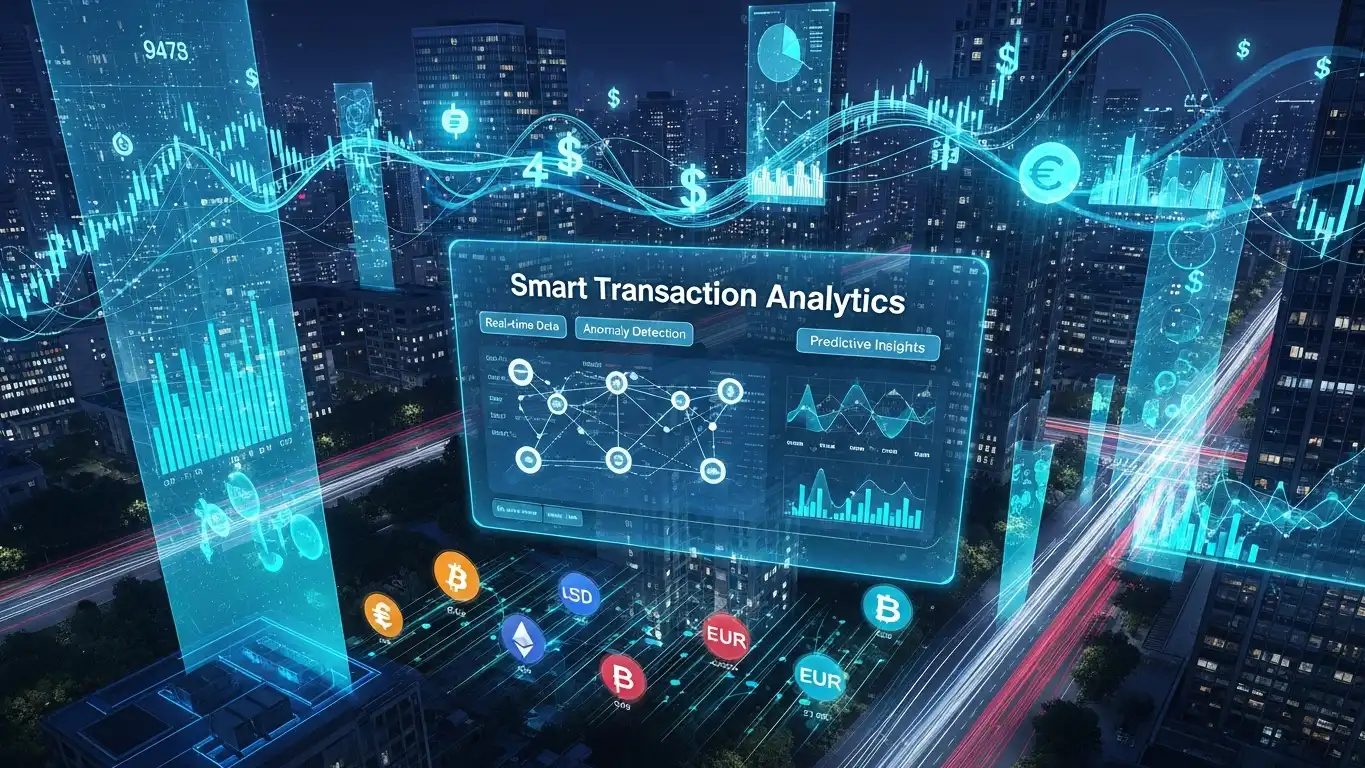
This is the era of Smart Transaction Analytics. By applying cutting-edge Artificial Intelligence (AI), Machine Learning (ML), and Natural Language Processing (NLP) to raw financial data, forward-thinking banks and fintech companies are turning “movement” into “meaning.” They are enriching confusing bank statements with clean logos and merchant names, automatically categorizing spending habits, and using this enriched data to offer hyper-personalized financial advice that genuinely improves users’ lives.
This comprehensive guide delves deep into the technology powering this revolution, explores the transformative use cases for consumers and businesses, and analyzes why data enrichment has become the new battleground for customer loyalty in the financial sector.
The Problem: The “Gibberish” of Raw Data
To understand the value of smart analytics, we must first confront the messiness of the status quo. If you open your traditional bank statement right now, you might see a line item that looks something like this:
POS DEBIT 04-22 14:32 SBUX 998234 CA #4432
To the human eye, this is financial gibberish. It is a code that needs deciphering. “SBUX” likely means Starbucks. “CA” probably refers to California. But was it the Starbucks on 4th Street or Main Street? Was it a coffee purchase, a reload of a gift card, or a breakfast sandwich? The raw data doesn’t say.
This “dirty” data creates significant friction:
- Customer Confusion: It leads to unnecessary anxiety and customer support calls (“I don’t recognize this charge! Is it fraud?”).
- Ineffective Budgeting: Budgeting apps cannot categorize spending correctly if they don’t know who the merchant is.
- Missed Engagement: The bank cannot offer a relevant reward (like a discount on coffee) if it doesn’t know you just spent $50 at a café.
The Solution: Data Enrichment and Cleansing
Smart Transaction Analytics acts as the translator and the cleaning crew. It takes that raw, cryptic string of text and runs it through sophisticated engines to output structured, enriched, and human-readable data.
Merchant Identification and Branding
The system translates SBUX 998234 into Starbucks. But it goes further. It appends the merchant’s official logo, their website URL, and their precise location on a map (using geolocation cross-referencing). Suddenly, the transaction is instantly recognizable.
Intelligent Categorization
The engine automatically tags the transaction. Is Starbucks “Dining,” “Groceries,” or “Coffee Shops”? Advanced engines are categorized based on context. A purchase at a gas station (e.g., Shell) might be tagged as “Fuel” if the amount is $40, but as “Snacks” or “Convenience Store” if the amount is $4.50. This nuance is critical for accurate financial tracking.
Recurring Payment Detection
Smart analytics engines are trained to identify patterns over time. If you pay NTFLX $15.99 on the 14th of every month, the system flags it as a Subscription. This capability powers the “subscription management” features found in modern banking apps, helping users identify and cancel “zombie subscriptions” they no longer use.
The Technology Stack: How It Works
Turning gibberish into clarity requires a potent blend of advanced technologies working in concert.
- Machine Learning (ML): Models are trained on billions of historic transactions. They learn patterns, such as that “AMZN MKTPLC,” “Amazon.com,” and “AMZ*Prime” are all different representations of the same entity: Amazon.
- Crowdsourcing and Human-in-the-Loop: Some challenger banks (like Monzo or Revolut) allow users to manually correct a transaction name or logo. This human feedback is fed back into the algorithm, training it to be smarter for every other user in the network.
- Geolocation Services: By cross-referencing the transaction timestamp with the GPS location of the user’s smartphone (if permissions are granted), the app can confirm exactly which store location was visited. This drastically reduces false positives in fraud detection.
Use Cases: Why This Data Is Digital Gold
Enriched data is not just an aesthetic upgrade; it powers the features that modern consumers have come to expect from their financial apps.
Next-Gen Personal Financial Management (PFM)
You cannot manage what you cannot measure. Clean data allows apps to build beautiful, intuitive visualizations. A user can see a pie chart showing exactly how much they spent on “Uber” vs “Lyft” last month. It enables “Spend Forecasting,” where the app predicts that you will likely run out of money by the 25th of the month based on your historical spending velocity at specific merchants.
Hyper-Personalized Rewards
Instead of generic “1% cash back on everything,” banks can offer Card-Linked Offers (CLO). Because the bank knows you shop at Whole Foods every Sunday morning, they can push a notification on Saturday night: “Get 10% off at Whole Foods tomorrow.” This increases conversion rates for merchants and deepens loyalty for the bank.
Reducing “Friendly Fraud”
“Friendly Fraud” occurs when a customer disputes a legitimate charge simply because they didn’t recognize the cryptic name on their statement (e.g., seeing the parent company name “Toasting Inc.” instead of the brand name “Joe’s Coffee”). By showing the clean name, logo, and map location, banks can reduce chargebacks and customer service inquiries by up to 30%, saving millions in operational costs.
Carbon Footprint Tracking
This is a rapidly growing trend in Green FinTech. By identifying the specific merchant and the category (e.g., Airline vs. Train, Steakhouse vs. Vegan Cafe), analytics engines can estimate the carbon footprint of every dollar spent. This empowers users to make greener choices and aligns their spending with their values.
The Business Intelligence Advantage
For businesses and lenders, smart transaction analytics offers a window into market trends that was previously impossible to open.
- Market Share Analysis: Hedge funds and investment firms buy anonymized transaction data to see if McDonald’s is gaining market share over Burger King in real-time, weeks before quarterly earnings reports are released.
- Credit Risk Modeling: Lenders use cash-flow data (income stability, recurring spending habits) alongside traditional FICO scores to assess borrowers. A borrower who consistently pays utility bills on time might be a lower risk than their credit score suggests, allowing lenders to approve more loans safely.
Privacy and Ethics: The “Creepiness” Factor
The power to analyze every purchase brings significant ethical responsibility. There is a fine line between “helpful” and “creepy.”
- Privacy First: Users must explicitly consent to this level of analysis. Open Banking regulations (like GDPR in Europe and burgeoning rules in the US) ensure users own their data and can revoke access at any time.
- Anonymization: When banks sell data insights to third parties, the data must be rigorously aggregated and anonymized to prevent the re-identification of individuals. Trust is the currency of the future; if users feel spied upon, they will leave.
Conclusion
Smart Transaction Analytics is the vital bridge between the legacy banking infrastructure of the 20th century and the user experience demands of the 21st. It turns a bank statement from a list of debts into a narrative of a user’s life.
As AI models become more sophisticated, this layer of intelligence will become invisible and ubiquitous. We will stop looking at “transactions” and start looking at “insights.” The banks and fintechs that win the next decade will not be the ones with the most branches, but the ones that can tell the most compelling, helpful, and accurate stories with the data flowing through their pipes.