

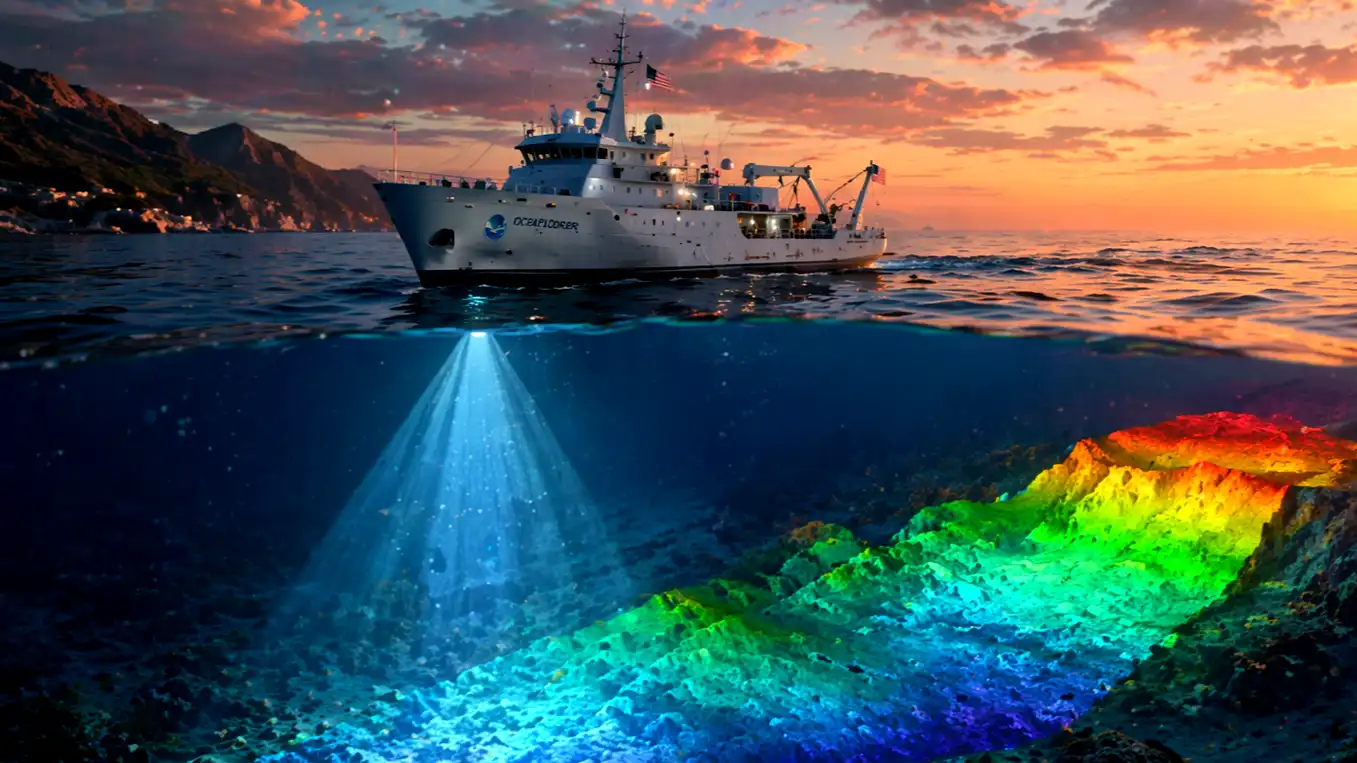
Sonar technology, an acronym for Sound Navigation and Ranging, has revolutionized our understanding of the underwater world and transformed various industries. This insightful analysis delves into the significance of sonar technology, its impact across domains, the challenges it faces, and the promising future it holds in unlocking the mysteries of the deep.
Significance of Sonar Technology
Sonar technology holds immense significance due to the following key aspects:
- Underwater Mapping and Navigation: Sonar enables precise mapping of underwater terrain, supporting navigation for submarines, ships, and autonomous underwater vehicles (AUVs).
- Marine Biology and Ecology: These fields enable researchers to study marine life and ecosystems, thereby facilitating conservation efforts and advancing understanding of biodiversity.
- Defense and Security: Sonar plays a crucial role in naval defense, detecting submarines and underwater threats to enhance national security.
- Commercial Applications: Industries like fishing, offshore oil and gas, and underwater construction benefit from sonar’s ability to locate fish, resources, and structures beneath the ocean’s surface.
Impact across Domains
It has had a profound impact across various domains:
- Military and Defense: Sonar systems are pivotal for naval forces worldwide, as they detect and track submarines, mines, and other potential threats.
- Oceanography and Marine Research: Researchers use sonar to study ocean currents, seafloor geology, and marine life behavior, providing invaluable data for scientific advancement.
- Fisheries and Aquaculture: Fishermen utilize sonar to locate schools of fish, optimizing catch and minimizing environmental impact.
- Offshore Industry: Sonar aids in underwater inspections, maintenance, and construction of offshore structures and pipelines.
Challenges in Sonar Technology
Sonar technology faces certain challenges:
- Noise Pollution: Increased human activities have contributed to underwater noise pollution, which degrades sonar performance and disrupts marine life.
- Resolution and Clutter: Achieving high-resolution imagery and distinguishing between targets and environmental clutter remain technical challenges.
- Environmental Impact: Sonar can disturb or harm marine species, necessitating careful usage and impact assessment.
- Cost and Accessibility: Advanced sonar systems can be expensive, limiting accessibility for smaller research organizations and developing countries.
The Future of Sonar Technology
The future of sonar technology holds exciting possibilities:
- Advancements in Imaging and Resolution: Ongoing research aims to enhance imaging and resolution, providing clearer, more detailed underwater imagery.
- Integration with AI and Big Data: Integration with AI and big data analytics will enable real-time data processing, improving target identification and reducing false alarms.
- Underwater Communication: Innovations in sonar technology may enable advances in underwater communication systems, thereby enhancing connectivity in the deep ocean.
- Environmental Monitoring: It will continue to evolve to enable more precise and less intrusive monitoring, thereby aiding marine conservation efforts.
Conclusion
Sonar technology is a testament to human ingenuity in exploring and understanding the vast expanses of our oceans. Its impact spans defense, research, commerce, and beyond, shaping how we interact with and benefit from the world beneath the waves. Overcoming challenges and embracing advancements promise a future where we unravel the mysteries of the deep, balancing progress with responsible and sustainable use to safeguard our oceans for generations to come.






