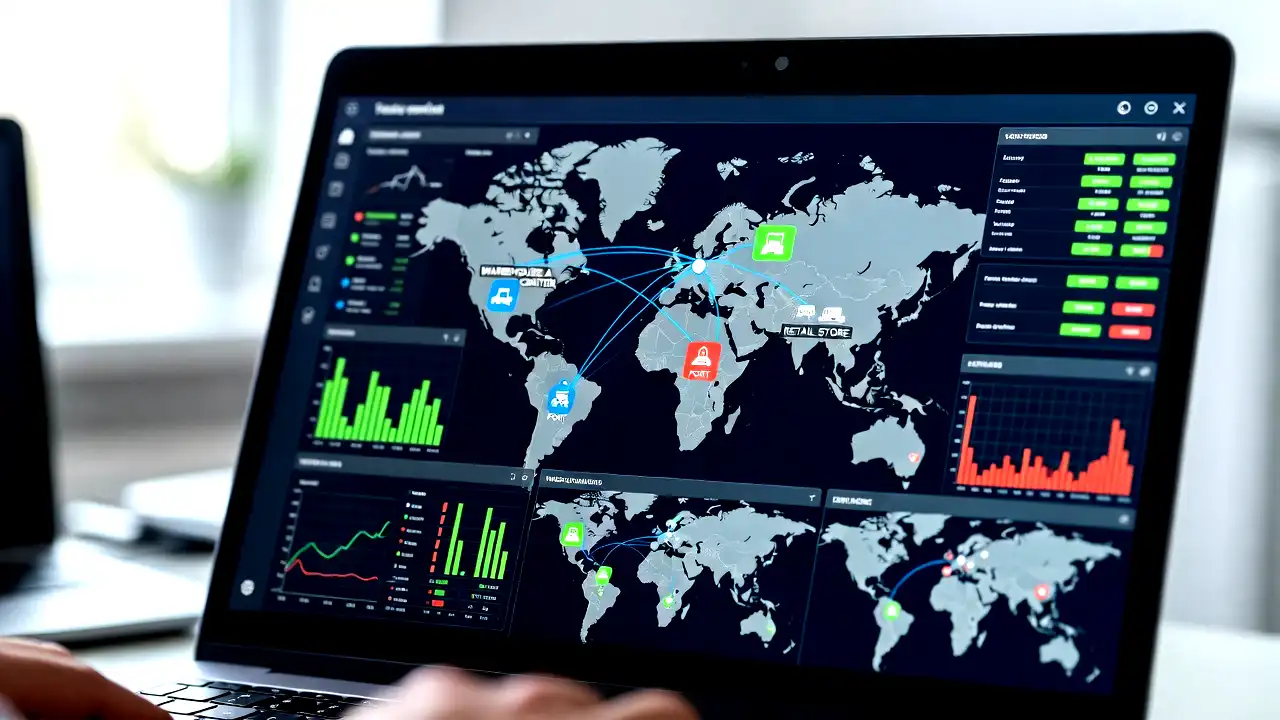
We once viewed the global supply chain as a fragile, invisible web. A ship left a port, a truck picked up a container, and a store shelf eventually filled up. We trusted this system to work perfectly, but we barely understood how it functioned. Then, the world suddenly stopped. Empty shelves, stranded cargo, and panicked manufacturers proved that our reliance on slow, manual systems carried a massive hidden risk. Today, we have officially moved beyond that old, reactive model. We are building a massive, self-correcting global network driven by smart automation. This new market does not just move goods; it thinks, reacts, and heals itself in real-time.
The Death of the Manual Spreadsheet
For decades, middle managers spent their entire days typing data into massive, error-prone spreadsheets. They manually updated inventory logs, called shipping companies to ask for status updates, and guessed how much product they needed to order next month. Human error causes millions of dollars in lost profit every single year. That slow, manual era is dead. Automated supply chains now run on “continuous data.” Every pallet, every box, and every individual component communicates its status instantly. The software manages the flow of goods with perfect precision. Humans no longer spend time counting boxes; they spend time managing the network’s high-level strategy.
Robots Taking the Heavy Burden
The physical act of moving goods was always the most dangerous part of the global market. Human workers risked back injuries, crushed limbs, and deep exhaustion moving heavy crates in massive warehouses. Automation transformed these dangerous zones into clean, quiet hubs. Autonomous mobile robots now zip around the floor, picking up heavy loads and delivering them to human workers with perfect accuracy. These machines never get tired, never complain about working the night shift, and never make mistakes with heavy inventory. By automating physical labor, we stop treating human bodies like disposable tools and start using them for work that requires genuine judgment.
Predicting Disasters Before They Happen
The old supply chain only told you what was already broken. You knew a shipment was late only after the truck failed to arrive. Automated global markets use predictive power to stop the failure before it starts. Smart software watches global weather patterns, political instability, and factory output simultaneously. If a massive storm forms in the middle of the ocean, the system automatically reroutes cargo ships days before the waves become too high. If a factory in one country slows down, the system instantly notifies a supplier in a different country to ramp up production. We move from a world of frantic firefighting to one of calm, quiet digital prevention.
The Rise of the Self-Healing Network
We used to build supply chains like long, straight chains. If one link snapped, the entire chain fell to the ground. This rigid design made us incredibly vulnerable to sudden shocks. The automated global market of today looks much more like a web. If one path gets blocked, the network instantly identifies an alternative route. It doesn’t need a human boss to give permission. The software recalculates the fastest path, updates the shipping labels, and informs the customers. This “self-healing” capability means that global trade survives even when the world faces chaotic, unpredictable events.
Transparency as the New Standard
We all want to know that our products were made fairly and shipped responsibly. In the past, companies hid their supply chains behind complex layers of mystery. They simply told us to trust them. Automation demands total honesty. Every step of the journey now carries a permanent, unchangeable digital record. You scan a product code and see the exact farm that grew the raw material and the exact factory that processed it. Automation requires this level of transparency because you cannot automate a process without tracking every detail. Trust is no longer a marketing slogan; it is a physical requirement of the digital system.
The Warehouse Moves Closer to You
Speed used to depend on how fast a truck could drive across a country. Now, speed depends on how close you place the goods to the customer. We see a global trend of “micro-fulfillment.” Giant, automated warehouses now sit in the middle of our biggest cities, often hidden in basements or old parking garages. These hyper-local hubs use high-speed robotic sorting to get items to your doorstep in hours. We are shrinking the distance between desire and delivery. This shift also lowers the carbon footprint of our shopping habits because goods don’t travel thousands of miles just to reach your house.
The Ethical Imperative of Automation
We must look at the human impact of this massive shift. Automation replaces dangerous, dull, and dirty jobs. We have a massive ethical duty to ensure that the people displaced by robots find better work. We cannot simply dump millions of workers into the streets in the name of efficiency. Corporate leaders and government officials must commit to genuine retraining programs that teach people how to manage, fix, and optimize these new automated systems. We must use the wealth generated by this massive boost in productivity to support the people who spent their lives building our global economy. Automation should empower people, not erase them.
The Security of the Digital Path
Connecting our entire global trade system to the internet brings a terrifying risk. If a cyberattack hits the network, it could freeze the flow of food, medicine, and fuel. Protecting these automated systems is now a matter of national security. We have to design “cyber-resilient” supply chains. This means building in manual overrides, disconnected backups, and extremely tough encryption for every single node in the web. We cannot afford a single point of failure in a system that moves billions of dollars of goods every day. Security is no longer an IT project; it is the absolute foundation of global trade.
Conclusion
The automated global market represents a massive upgrade for humanity. We finally possess the tools to move goods with incredible speed, transparency, and resilience. We are building a world where waste disappears, shortages become a memory, and products move with the efficiency of a clock. But we must manage this transition with deep care for the people who do the work. If we balance our love for efficiency with a strong commitment to human dignity and digital safety, we will build a global trade system that supports everyone, not just the people at the top.