For millennia, humanity has looked to nature for healing. We have scoured the Earth’s forests, harvested roots, and analyzed leaves to create the pharmacopeia that modern medicine relies upon today. From the aspirin derived from willow bark to the quinine found in cinchona trees, the terrestrial world has been our primary source of drugs. However, as the fight against drug-resistant bacteria, cancer, and chronic pain intensifies, scientists are turning their gaze away from the rainforests and toward the vast, blue unknown: the ocean.
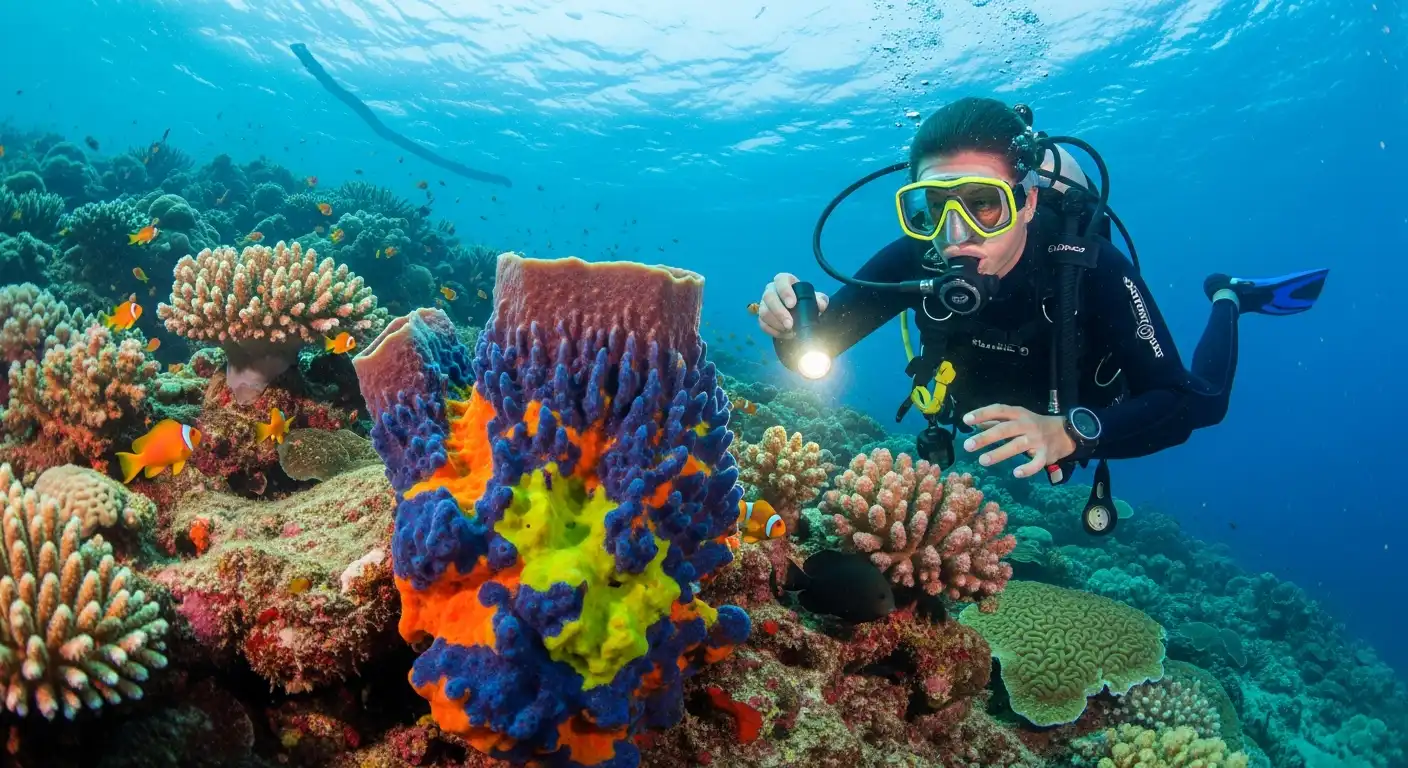
Covering more than 70% of the Earth’s surface, the ocean represents the largest habitat on the planet, yet it remains the least explored frontier in drug discovery. This ecosystem is home to a level of biodiversity that dwarfs that of land, housing organisms that have evolved over hundreds of millions of years in extreme environments. Within the chemical makeup of sponges, corals, snails, and deep-sea bacteria lies the potential for the next generation of life-saving medicines.
This article delves deep into the science of marine pharmacology, exploring why the sea is such a potent source of bioactive compounds, the drugs that are already saving lives, and the technological and ethical challenges of harvesting the ocean’s chemical bounty.
The Evolutionary Edge: Why Marine Organisms Make Better Drugs
To understand why a sea sponge or a cone snail would harbor a cure for cancer, one must understand the brutal evolutionary pressures of the marine environment. Life in the ocean is a constant battle for survival, fought not just with teeth and claws, but with chemistry.
Chemical Warfare in the Deep
Unlike terrestrial animals, many marine organisms are sessile (immobile). Sponges, corals, tunicates (sea squirts), and bryozoans are stuck to the sea floor. They cannot run from predators, hide, or physically fight back. To survive, they have evolved sophisticated chemical defense mechanisms. They produce highly potent toxins—secondary metabolites—to repel fish, kill invading larvae, or inhibit bacterial growth on their surfaces.
Because the ocean rapidly dilutes chemicals, these compounds must be exceptionally potent to be effective. Furthermore, because marine life evolved in a “soup” of viruses and bacteria, these organisms have developed robust antiviral and antibacterial defenses. When scientists isolate these chemicals, they often find that the very mechanism used to stop a cell from dividing in a starfish can be adapted to stop a tumor cell from dividing in a human.
Diversity of Chemical Structures
The chemical environment of the sea is fundamentally different from that of land. It is rich in halogens, such as chlorine, bromine, and iodine. Marine organisms incorporate these elements into their organic molecules, creating chemical structures that are rarely, if ever, seen in terrestrial plants. These unique structures allow marine-derived drugs to interact with human biological targets (like enzymes or receptors) in novel ways, offering new mechanisms of action for treating diseases that have developed resistance to standard drugs.
The Pioneers: Marine Drugs Already Saving Lives
While the field is relatively young compared to terrestrial botany, “Blue Biotechnology” has already produced several FDA-approved blockbuster drugs. These success stories serve as proof of concept that the ocean is a viable reservoir for modern medicine.
Ara-C: The First Miracle from a Sponge
The grandfather of all marine-derived drugs is Cytarabine (Ara-C). In the 1950s, scientists isolated unique nucleosides from the Caribbean sponge Cryptotethya crypta. These compounds were found to inhibit viral and cancer cell replication.
Developed into Cytarabine, this drug became a cornerstone in the treatment of Acute Myeloid Leukemia (AML) and non-Hodgkin lymphoma. A related compound from the same sponge, Vidarabine (Ara-A), became a potent antiviral agent used to treat herpes simplex infections. The discovery of these sponge-derived compounds revolutionized chemotherapy and proved that marine invertebrates were chemical goldmines.
Prialt: The Painkiller from a Snail
One of the most fascinating stories in marine pharmacology comes from the magician’s cone snail (Conus magus). Cone snails are predatory mollusks that hunt fish by firing a harpoon-like tooth loaded with a paralyzing neurotoxin.
Researchers analyzing this venom isolated a peptide called ziconotide. In humans, this compound acts as a powerful non-opioid painkiller. Approved by the FDA under the name Prialt, it is used to treat severe chronic pain in patients who do not respond to morphine. Unlike opioids, Prialt is not addictive and does not lead to tolerance buildup. It works by physically blocking calcium channels in the spinal cord, effectively shutting the gate on pain signals before they reach the brain.
Yondelis: Hope from a Sea Squirt
Trabectedin, marketed as Yondelis, is derived from the sea squirt Ecteinascidia turbinata, a humble tunicate found in the mangroves of the Caribbean and Mediterranean. This compound works by binding to the DNA of cancer cells and inducing strand breaks, thereby preventing tumor replication. It was the first marine-derived anticancer drug approved in Europe and is now used globally to treat soft tissue sarcoma and ovarian cancer.
The Treasure Chest: Key Marine Sources
Although the ocean is vast, certain groups of organisms are particularly prolific producers of bioactive compounds.
Sponges: The Drug Factories
Sponges (Porifera) are arguably the most productive source of marine pharmaceuticals. They are simple filter feeders, yet their chemical complexity is staggering. Interestingly, research suggests that sponges themselves do not produce many of the medicinal compounds found in sponges; rather, these compounds are produced by the symbiotic bacteria and fungi living within their porous tissues. Sponges are currently being mined for compounds to treat breast cancer (such as Eribulin, derived from Halichondria okadai), asthma, and inflammation.
Cnidarians: Soft Corals and Jellyfish
Soft corals, gorgonians, and sea fans are rich sources of anti-inflammatory agents. Pseudopterosins, extracted from the Caribbean sea whip Pseudopterogorgia elisabethae, are currently used in skincare products for their potent anti-inflammatory and wound-healing properties, and clinical trials are exploring their use in treating contact dermatitis and other skin conditions.
Marine Bacteria: The New Frontier
For decades, scientists focused on macro-organisms (things you can see). Today, the focus is shifting to the microscopic. Marine actinobacteria, found in deep-sea sediments, show considerable promise. Since terrestrial actinobacteria have yielded many of our current antibiotics (such as streptomycin), researchers are hopeful that their marine counterparts will provide a solution to the global crisis of antibiotic-resistant “superbugs.”
The Horseshoe Crab: An Unsung Hero of Medical Safety
In discussions of marine medicines, it is impossible to overlook the Atlantic Horseshoe Crab (Limulus polyphemus). While not a source of a drug that cures disease, its blue blood is the guardian of all injected medicines.
Horseshoe crab blood contains a clotting agent called Limulus Amebocyte Lysate (LAL). This substance is exquisitely sensitive to endotoxins (bacterial toxins). If even a trace amount of bacteria is present in a vaccine, an IV drip, or a surgical implant, LAL will clot instantly. Every vaccine and injectable drug produced today is tested using LAL to ensure safety. While the pharmaceutical industry is moving toward synthetic alternatives to protect crab populations, modern medicine currently owes a massive debt to this ancient marine arthropod.
The Supply Problem: From Ocean to Lab
If the ocean is so full of cures, why aren’t there more marine drugs in our pharmacies? The answer lies in the “Supply Problem.”
The Biomass Bottleneck
In the early days of marine discovery, researchers often required large quantities of raw material to extract a small amount of the active compound. For example, to obtain just 1 gram of the anticancer agent ET-743, one might need to collect a metric ton of sea squirts. This is ecologically devastating and economically unviable. You cannot trawl the ocean floor to produce a mass-market drug.
The Synthesis Solution
To overcome this, chemists must determine how to synthesize these complex molecules in the laboratory. This is often incredibly difficult. Marine molecules are complex, 3D structures with intricate “chirality” (handedness). Recreating them requires advanced synthetic chemistry.
A prime example is Halaven (Eribulin), used for breast cancer. The molecule found in the sponge was too complex to manufacture. Japanese chemists spent years simplifying the structure, creating a synthetic analogue that retained biological activity while being easier to manufacture.
Aquaculture and Fermentation
Another solution is aquaculture. If the organism can be farmed, the supply chain stabilizes. The sea squirt Ecteinascidia turbinata is now farmed in underwater plantations in the Canary Islands and the Mediterranean to produce the raw material for Yondelis.
For drugs derived from marine bacteria, fermentation is the key. If the bacteria can be cultured in large-scale vats (similar to beer brewing), the compound can be mass-produced without ever touching the ocean ecosystem.
Technology and the Future: Mining the Genome
We have entered a new era of “Gene Mining” or metagenomics. Historically, 99% of marine bacteria could not be studied because they died when removed from the ocean and placed in a Petri dish. They needed the specific pressure, temperature, and nutrients of the deep sea to survive.
Metagenomics bypasses the need to maintain bacterial viability. Scientists simply collect seawater or sediment, extract all the DNA present, and sequence it. By using computer algorithms to scan this genetic code, they can identify gene clusters that appear to code for interesting medicinal compounds. They can then insert these genes into a common laboratory bacterium (such as E. coli), turning the laboratory bacterium into a factory that produces the marine drug. This enables us to measure the chemical potential of the deep sea without disrupting the habitat.
Legal and Ethical Currents: Biopiracy and Conservation
The quest for marine drugs operates in complex legal waters. Who owns the rights to a cure for cancer found in a sponge in international waters?
The Nagoya Protocol
The Nagoya Protocol is an international agreement that aims to ensure the fair and equitable sharing of benefits arising from genetic resources. It was designed to prevent “biopiracy,” where wealthy nations or corporations harvest genetic material from the waters of developing nations, patent the resulting drugs, and share none of the profits with the country of origin. Compliance with these regulations is now a major part of marine drug discovery.
Conservation is Self-Preservation
The most pressing issue is the health of the ocean itself. Coral reefs, which support the highest biodiversity, are dying due to ocean acidification and warming. Mangroves, home to medicinal tunicates, are being cleared for coastal development.
When we destroy a coral reef, we are not just losing a tourist attraction; we are burning down a library of genetic information before we have read the books. Protecting marine biodiversity is not just an environmental charity; it is a medical necessity. The cure for the next pandemic could be extinct before it is even discovered.
Conclusion
The field of marine-derived drugs is transitioning from its infancy to a golden age. With advancements in deep-sea submersible technology, robotic collection, and synthetic biology, the barriers that once prevented us from utilizing the ocean’s pharmacy are falling away.
From the potent painkillers found in the venom of snails to the cancer-fighting agents hiding in the DNA of deep-sea sponges, the ocean offers a hope that is as deep as it is vast. As we face an era of aging populations and evolving diseases, the medicines of the future will likely not come from the soil beneath our feet, but from the mysterious, dark, and pressure-crushed depths of the blue planet. The ocean has long fed us and regulated our climate; now, it is poised to heal us.