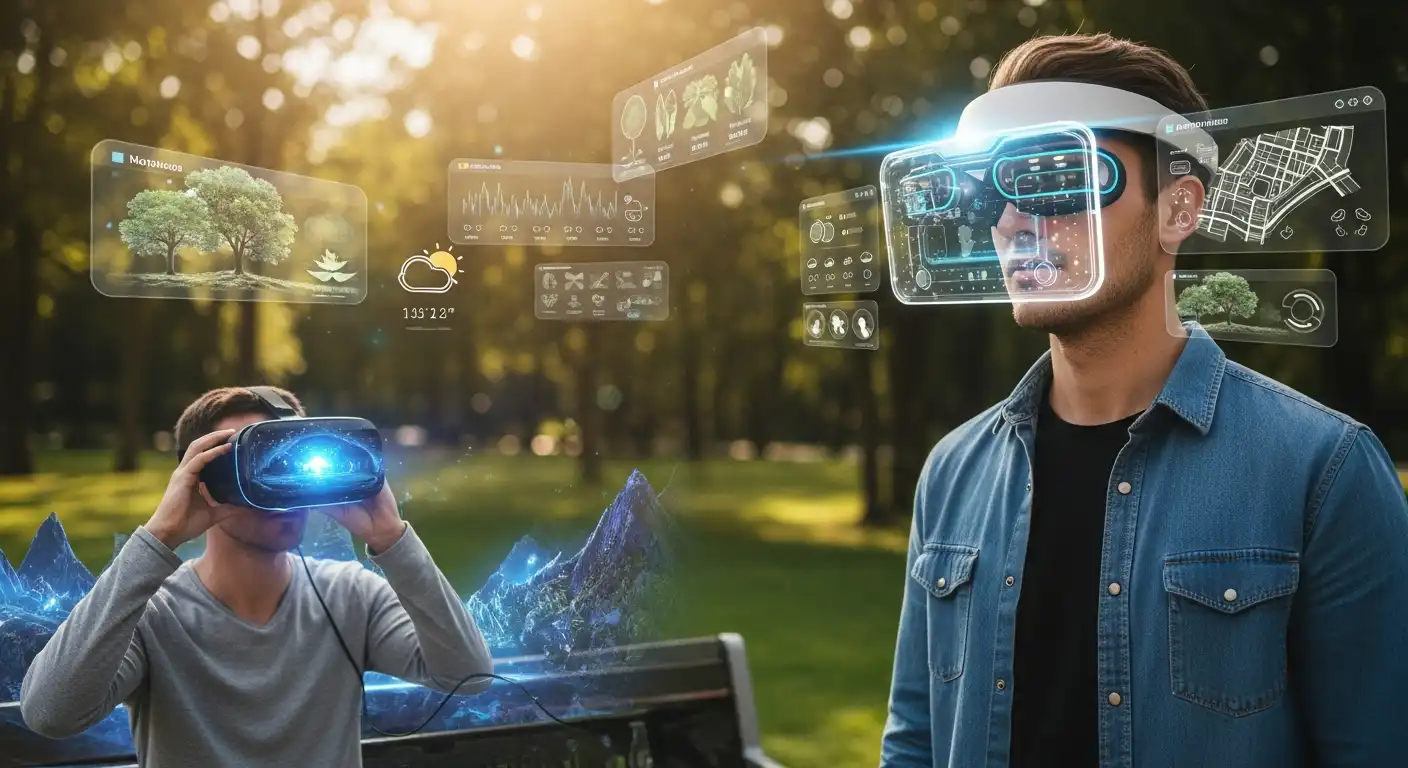
The promise is intoxicating. A world of augmented and virtual reality where our work, entertainment, and social lives blend seamlessly with a digital overlay. Apple’s Vision Pro and Meta’s Quest are just the first whispers of this coming age. We are being sold a future of infinite screens, magical interactions, and boundless new worlds. But behind this sleek vision of progress, a new and dangerous form of inequality is taking shape, and it has a name: “reality privilege.”
The Luxury of Logging Off
What is reality privilege? It’s the ultimate luxury of the future: the ability to live and thrive in the real, unmediated, physical world. It’s the privilege of having a spacious, beautiful home, meaningful in-person relationships, and access to nature and culture so rich and fulfilling that you do not need to escape into a digital substitute. The wealthy will use AR/VR as a tool, an accessory to their already wonderful lives. For everyone else, it will become an escape, a necessity, and a cage.
The Two-Tiered Workforce
This divide will be most evident in the workplace. For the privileged, AR will be a high-end tool—an architect visualizing a building on a real-world site, or a surgeon practicing a complex procedure. For the less privileged, VR will become the new cubicle farm. Imagine a future where low-wage remote work is no longer performed on a laptop, but inside a mandatory corporate metaverse. A virtual call center where your avatar is monitored for productivity, or a “gig” job where you spend eight hours a day in a virtual warehouse tagging data for AI models. This isn’t a world of empowerment; it’s a digital factory.
The Gamification of a Grim Reality
For those who lack reality privilege, the digital world will be made intentionally more attractive than their physical one. Corporations will master the art of “gamifying” life for those stuck in the virtual world. You’ll earn points for working longer hours, unlock achievements for good behavior, and be rewarded with digital goods that have meaning only in the metaverse. It will be a carefully designed system to keep people content and productive inside their digital confines, a form of digital bread and circuses to distract from a crumbling physical reality.
The Devaluation of the Real World
This creates a dangerous feedback loop. As more people are forced to spend their lives in a virtual world, our shared physical world will be neglected. Why invest in a real public park when the virtual park is prettier and perfectly safe? Why maintain a community center when everyone socializes in a corporate-owned digital space? For those without reality privilege, the physical world will serve as a transit point between the charging station and the headset. This neglect will make the situation worse, pushing more people to seek refuge online, and the cycle will continue.
A Future We Must Choose to Avoid
This isn’t a distant sci-fi plot; it is the logical extension of the path we are already on. We are building these technologies with a focus on individual escapism rather than collective improvement. The ultimate status symbol of the near future might not be a fancy car or a big house, but the simple ability to take off the headset and enjoy a world worth being present in. We must decide if we are building tools to enhance our shared reality or escape hatches for a chosen few.