

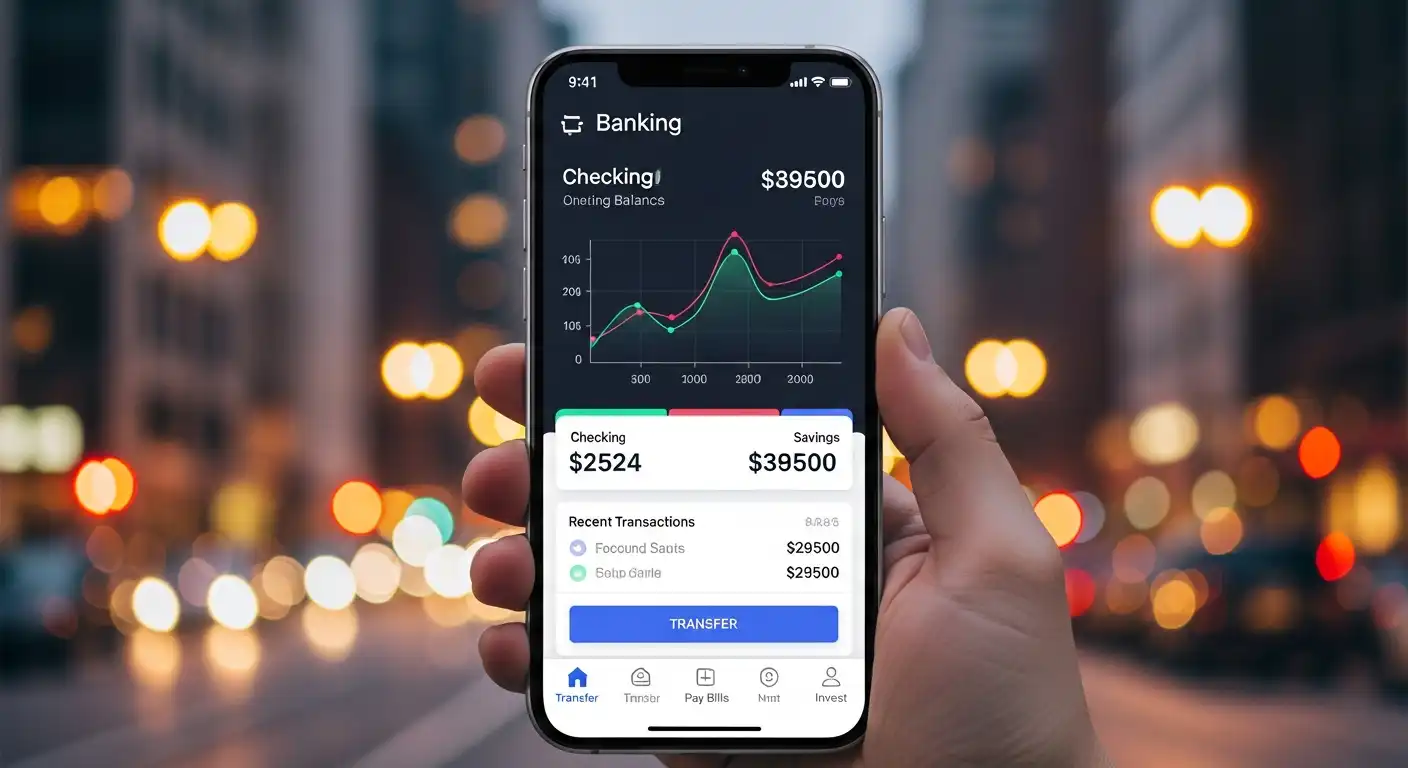
The marble pillars, the quiet hum of the air conditioning, the pens chained to the desk, and the restrictive operating hours—for decades, this was the face of banking. If you wanted to open an account, apply for a loan, or transfer money, you needed to be physically present, provide wet signatures, and be patient. But the financial landscape has undergone a seismic shift. Smartphone screens are replacing physical branches and bank tellers with algorithms and intuitive user interfaces.
Enter the era of the Neobank.
Often referred to as “challenger banks” or “digital-only banks,” these financial technology (fintech) companies are disrupting the centuries-old banking industry. They promise lower fees, higher interest rates, and a user experience that mimics the ease of ordering an Uber or scrolling through Instagram. But are they safe? Can they truly replace your traditional bank account? And is the hype justified?
This comprehensive guide dives deep into the world of neobanks, exploring their mechanics, their advantages over traditional institutions, the potential risks, and why they represent the future of money management.
What is a Neobank?
At its core, a neobank is a financial institution that operates exclusively online, without a traditional physical branch network. They are technology-first companies that offer banking services via mobile apps and web platforms.
However, the definition requires nuance. To the average user, a neobank looks and acts like a bank. You get a debit card, a routing number, and an account number. You can deposit paychecks and spend money. But biologically, they are often different species from the behemoths like Chase or Bank of America.
The Distinction: Fintech vs. Chartered Bank
Most neobanks are not actually banks in the legal sense. Instead, they are financial technology companies. Since obtaining a banking charter (a license to operate as a bank) is an arduous, expensive, and years-long regulatory process, most neobanks partner with regional “sponsor banks” or “partner banks.”
For example, when you deposit money into a neobank app, that money is actually being held in a traditional, FDIC-insured bank in the background. The neobank provides the interface, customer service, and features, while the partner bank handles regulatory compliance and fund custody.
There are exceptions. Some mature challengers, such as Varo in the US or Monzo and Starling in the UK, have obtained their own full banking charters, effectively making them full-fledged technology-driven banks.
How Neobanks Work: The Business Model
Traditional banks make a significant portion of their revenue through lending (mortgages, auto loans) and fees (overdraft fees, monthly maintenance fees). Neobanks have flipped this model on its head. Because they do not have the massive overhead costs of maintaining thousands of brick-and-mortar branches, paying tellers, and keeping the lights on in physical buildings, they can operate on razor-thin margins.
Here is how they typically generate revenue:
Interchange Fees
Every time you swipe your debit card at a store, the merchant pays a small processing fee. Neobanks collect a portion of this fee from the card network (Visa or Mastercard). While it is only pennies per transaction, it adds up across millions of users.
Premium Subscriptions
Many digital banks operate on a “freemium” model. The basic account is free, but they offer “Metal” or “Plus” tiers. For a monthly fee, users might get travel insurance, higher interest rates on savings, exclusive metal cards, or lounge access at airports.
Third-Party Marketplaces
Neobanks often act as aggregators. They might recommend insurance providers, personal loans, or investment platforms within their app. When a user signs up for these services, the neobank receives a referral commission.
The Key Advantages: Why People Are Switching
The migration from legacy banking to neobanking is driven by consumer frustration with the status quo. Neobanks solve specific pain points that traditional banks have ignored for decades.
Superior User Experience (UX)
Legacy banking apps are often clunky, confusing, and slow to update. Neobank apps are built by software engineers and product designers who prioritize usability. Features are intuitive, the design is sleek, and the apps are incredibly responsive. Opening an account with a neobank usually takes less than five minutes and can be done entirely from a smartphone, compared to the hour-long appointment often required at a physical branch.
Minimized Fees
The most significant selling point for neobanks is the fee structure.
- No Monthly Fees: Most standard accounts are free.
- No Overdraft Fees: Many neobanks offer “fee-free overdraft” up to a certain limit (e.g., $200), simply rejecting the transaction if you go over rather than charging a $35 penalty.
- No Foreign Transaction Fees: Travelers flock to neobanks because they often allow spending abroad at the real interbank exchange rate without the typical 3% markup charged by big banks.
Financial Wellness and Budgeting Tools
Neobanks treat your bank account as a financial dashboard. They offer built-in budgeting tools that automatically categorize your spending (e.g., groceries, entertainment, transport).
- Instant Notifications: You receive a push notification the moment a transaction occurs, providing greater security and awareness.
- Savings Vaults: Users can create sub-accounts for specific goals (e.g., “New Car,” “Vacation”) and set up automatic rounding rules that round purchases up to the nearest dollar and save the difference.
Early Direct Deposit
A feature pioneered by neobanks and now being copied by traditional banks is the “get paid early” perk. By making funds available as soon as the employer’s payroll file is received—rather than waiting for the settlement date—neobanks can unlock paychecks up to two days early.
The Risks and Downsides: What You Lose
While the digital-first approach offers convenience, it strips away the safety net of human interaction and full-service banking.
The Cash Problem
If your financial life revolves around physical cash, neobanks can be difficult to use. Because there are no branches, depositing cash usually requires going to a partner retailer (like a pharmacy or convenience store), which may charge a fee. Withdrawing cash is generally easy via ATM networks, but depositing is a friction point.
Limited Service Menu
Neobanks are excellent for checking and savings accounts. However, they rarely offer the full suite of financial products found at a legacy institution. If you need a mortgage, a car loan, a safe deposit box, or a complex wealth management consultation, you will likely need to look elsewhere.
Customer Support Challenges
When things go wrong—your account is frozen for suspicious activity, or a transfer fails—you cannot walk into a branch and demand to speak to a manager. You are at the mercy of in-app chat support, which may be powered by bots or overwhelmed support teams. There have been documented cases of users being locked out of their accounts for days, with no way to contact a human.
Trust and Stability
While most neobanks offer FDIC insurance through their partner banks, the startups themselves can be volatile. If a neobank runs out of venture capital funding and shuts down (which has happened), your money is likely safe. Still, the inconvenience of losing your banking platform and having to transfer funds out can be significant.
Neobanks vs. Traditional Banks: A Comparison
To visualize the differences, here is how they stack up against each other:
| Feature | Traditional Banks (Chase, BofA, Wells Fargo) | Neobanks (Chime, Revolut, Monzo) |
| Physical Branches | Yes, thousands. | No, 100% digital. |
| Fees | High (Overdraft, Monthly maintenance, Wire). | Low or None. |
| Interest Rates | Generally very low (0.01% APY). | Generally higher (High-Yield Savings). |
| Technology | Often legacy systems, slower updates. | Cutting-edge, rapid innovation. |
| Account Opening | Can require in-person visits/paperwork. | Instant, via smartphone. |
| Product Range | Full suite (Mortgages, Loans, Credit Cards). | Limited (Checking, Savings, Debit). |
| Customer Service | In-person, Phone, Chat. | Chat, Email (Phone is rare). |
Segmentation: A Neobank for Every Identity
One of the most fascinating aspects of the neobank revolution is “niche banking.” Because the cost of starting a neobank is lower than that of a traditional bank, companies can target underserved demographics or communities.
The Generalists
These are the giants aiming for mass adoption.
- Chime (USA): The largest player in the US, known for fee-free overdrafts and early direct deposit.
- Revolut (Global): A “financial super-app” offering crypto, stock trading, and currency exchange.
- Monzo (UK/USA): Famous for its coral-pink cards and community-driven development.
Business Banking
Freelancers and startups have historically struggled with traditional business banking fees and rigorous application processes.
- Mercury: Built specifically for tech startups, offering API integration and venture debt.
- Novo: Focuses on small-business owners and freelancers, offering easy invoicing tools.
Banking for Kids and Teens
These apps focus on financial literacy and parental control.
- Greenlight: A debit card for kids that allows parents to set chores, pay allowances, and restrict spending at stores.
- GoHenry: Similar to Greenlight, with a focus on teaching money management skills.
Identity-Based and ESG Banking
These banks appeal to values and communities.
- Daylight: (Now acquired) was designed for the LGBTQ+ community.
- Greenwood: Targeted at Black and Latino individuals and business owners.
- Aspiration: Focuses on eco-friendly banking, promising that deposits won’t fund fossil fuel exploration.
Security: Is Your Money Safe?
Security is the primary concern for any potential neobank user. Since these companies operate only online, they are prime targets for cyberattacks. However, because they are tech companies first, their security infrastructure is often more modern than that of legacy banks.
Features to Look For:
- FDIC Insurance: This is non-negotiable. In the US, check the fine print. The neobank app itself isn’t FDIC insured, but the partner bank holding your money must be. This protects your deposits up to $250,000 if the bank fails.
- Two-Factor Authentication (2FA): Secure login protocols.
- Card Controls: The ability to instantly freeze and unfreeze your card from the app if it is lost or stolen.
- Biometrics: Using FaceID or fingerprint scanning to access the app.
While the technology is secure, users must be vigilant against “phishing” attacks. Scammers often send texts pretending to be from Chime or Cash App to steal login credentials.
The Future of Neobanking: What Lies Ahead?
The first phase of the neobank revolution was about “unbundling.” Fintechs took checking accounts away from big banks. The next phase is “rebundling.”
The Rise of the “Super App”
Neobanks realized that living off interchange fees is hard. To become profitable, they need to offer more. We are seeing a trend in which neobanks are adding stock trading, cryptocurrency purchases, insurance, and lending back into their apps. The goal is to become a “Super App”—a one-stop shop for all financial life.
Artificial Intelligence Integration
The future of digital banking is hyper-personalized. Instead of a generic interface, AI will analyze your spending habits and act as an autonomous financial advisor. Imagine your bank app telling you, “You are spending $50 more on coffee this month than last; if you cut back, you can afford that trip in December.”
Consolidation and Acquisition
There are too many neobanks. The market is oversaturated. In the coming years, we will see significant consolidation. Large traditional banks (such as Chase and Capital One) may acquire successful neobanks to acquire their technology and user bases. Conversely, successful neobanks will acquire smaller competitors to expand their market share.
Embedded Finance
Banking is becoming invisible. “Embedded finance” refers to non-financial companies offering banking services. Think of Uber offering checking accounts to drivers, or Shopify offering loans to merchants. The technology built by neobanks is powering this shift, making banking a feature of other products rather than a standalone destination.
Conclusion
The rise of neobanks is not a fad; it is a permanent evolution of the financial services industry. They have forced traditional banks to modernize their apps, reduce fees, and improve customer service.
So, should you close your Chase or Wells Fargo account and go full digital?
Switch to a Neobank if:
- You live on your smartphone and hate visiting branches.
- You are tired of paying monthly maintenance or overdraft fees.
- You travel frequently and want to avoid foreign transaction fees.
- You want better visibility and control over your daily spending.
Stick with a Traditional Bank if:
- You deal frequently with cash deposits.
- You prefer face-to-face customer service when solving problems.
- You have complex financial needs (including business loans, mortgages, and wealth management).
- You feel safer knowing there is a physical building you can go to.
For many, the best solution is a hybrid approach. Keep a traditional bank account for the “heavy lifting” and occasional cash deposit, but use a neobank for daily spending and travel to take advantage of the superior user experience and low fees. The wallet of the future is digital, and neobanks hold the keys.






