

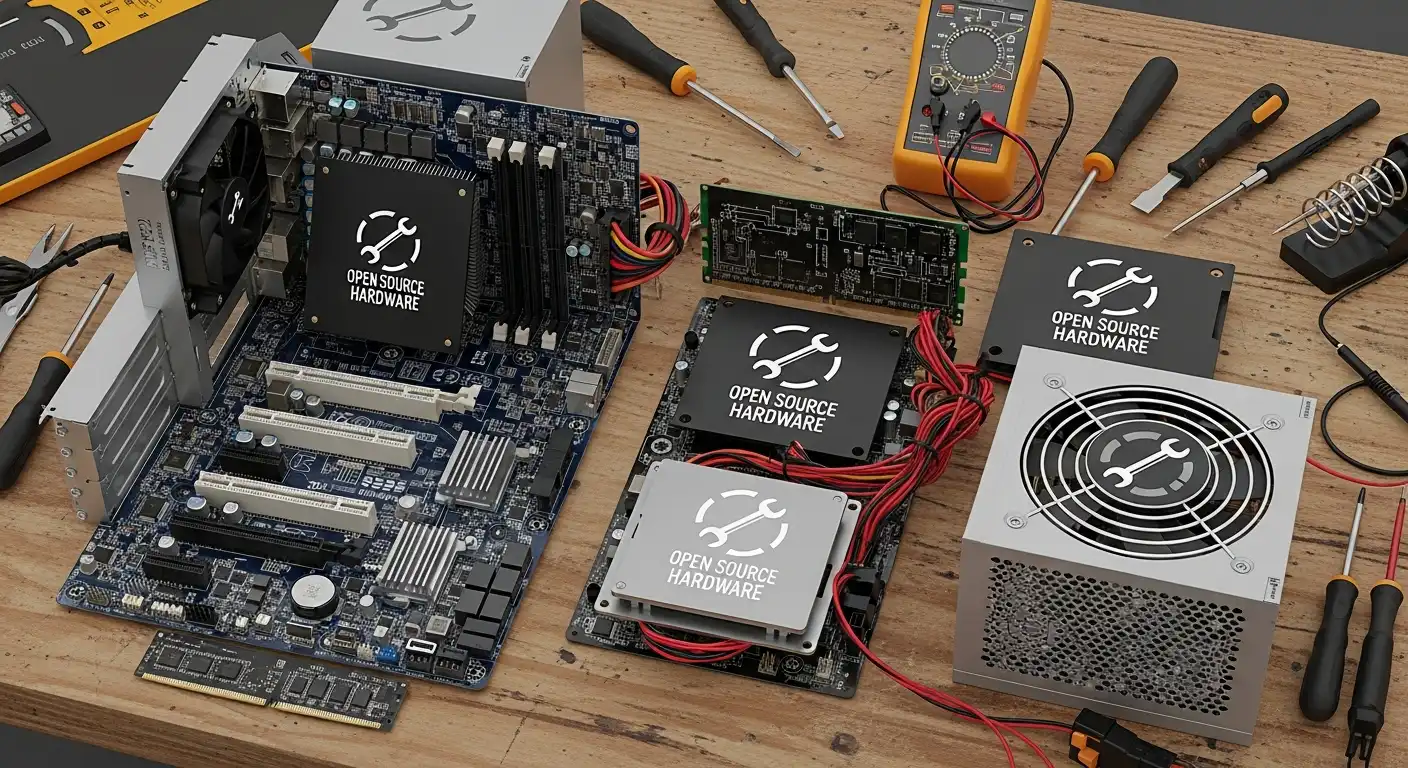
When we hear the term “open source,” we usually think of software. We think of Linux, the operating system that powers much of the internet, or Android, the mobile OS that runs on billions of phones. The idea is simple and powerful: share the source code, let the community improve it, and build better things together. But what if we applied that same philosophy not just to code, but to physical things? This is the core idea behind the open-source hardware movement, and it’s one of the most important, underappreciated trends in technology today.
A Cure for the Black Box Problem
Look at the gadgets that fill your life: your smartphone, your coffee maker, your television. They are sealed black boxes. When they break, you can’t fix them. You don’t have the schematics, the tools, or the replacement parts. This is a deliberate design choice, a philosophy of planned obsolescence that treats you as a consumer, not an owner. Open-source hardware is the perfect antidote. It’s a movement that says, “Here are the blueprints. Here are the designs. You have the right to understand, repair, and modify the things you own.” It’s the ultimate expression of the Right to Repair.
The Engine of Grassroots Innovation
Open-source hardware is a turbocharger for creativity. When a designer or engineer shares their work openly, they are not just giving away a product; they are providing a platform. Others can learn from their work, build upon it, and adapt it to new purposes without having to reinvent the wheel. Consider foundational projects such as Arduino and Raspberry Pi. These open-source microcontrollers have become the building blocks for countless inventions, from home automation systems to scientific research tools, created by students, hobbyists, and entrepreneurs who couldn’t have afforded to start from scratch.
Building a More Resilient World
The last few years have shown us just how fragile our global supply chains are. When a single factory shuts down on the other side of the world, it can cause shortages of critical products. Open-source hardware offers a path to a more resilient, localized future. During the early days of the COVID-19 pandemic, when medical supplies were scarce, a global community of makers used open-source 3D printer designs to produce face shields and other essential equipment right in their own communities. This is a powerful model: when blueprints are available to everyone, manufacturing can be decentralized, reducing our dependence on a few distant suppliers.
It’s a Tough Road, But a Worthy One
Of course, hardware is harder than software. You can’t just copy and paste a tractor. There are real costs for materials, manufacturing, and shipping that don’t exist in the world of code. This makes the business model for open-source hardware challenging, which is why the movement hasn’t grown as quickly as its software counterpart. But companies like Prusa Research (3D printers) and Adafruit (electronics) have proven that you can build a thriving business on a foundation of openness, selling kits, components, and support to a loyal community.
How You Can Help Build the Future
The open-source hardware movement is about more than just gadgets; it’s a philosophy. It’s about building a more sustainable, repairable, and collaborative world. You can support it by buying products from companies that embrace open-source principles. You can learn about the projects that are changing the world, from open-source prosthetics to DIY science equipment. This is a movement that empowers individuals over corporations and champions collaboration over secrecy. It deserves our attention, our curiosity, and our support.






