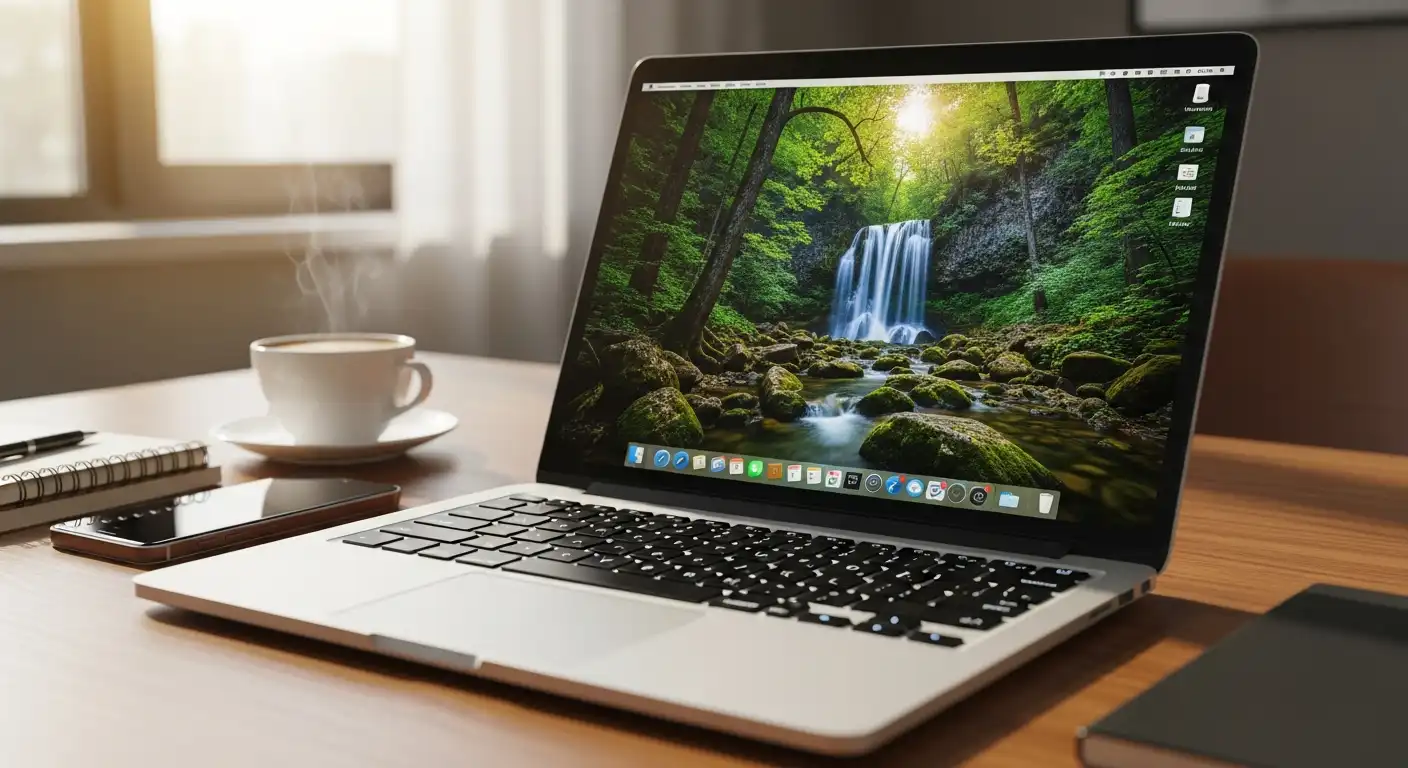
There’s a moment of magic when you first pick up a modern, ultra-thin laptop. It feels impossibly light, like a slab of futuristic metal that shouldn’t exist. For years, tech companies have been locked in an arms race to shave off every possible millimeter, selling us the idea that thinner is always better. But this obsession has gone too far. In the quest for an impossibly thin profile, we have sacrificed almost everything that makes a laptop a useful, reliable tool.
Living the Dongle Life
The first and most obvious casualty in the war on thickness is the port. Remember when your laptop just had the plugs you needed? A couple of USB-A ports for your mouse and thumb drive, an HDMI port for a monitor, and an SD card slot for your camera. They have all but vanished, replaced by one or two minimalist USB-C ports. This has forced us into the absurd reality of “dongle life,” where we have to carry a bag of expensive, easy-to-lose adapters just to perform the most basic tasks. We’ve traded built-in convenience for a sleeker look when the machine is sitting closed on a desk.
Typing on a Lifeless Slab
To make a laptop thinner, something has to give, and that something is often the keyboard. The space for the keys to travel up and down has shrunk to almost nothing. This has given us a generation of keyboards that are a misery to type on. Instead of a satisfying, tactile click, we get a shallow, unsatisfying tap. This isn’t just about comfort; it affects reliability. Apple’s infamous “butterfly” keyboard is the perfect example—a design so focused on thinness that it was notoriously prone to failure from a single speck of dust.
The Curse of Thermal Throttling
Inside that impossibly thin chassis is a powerful processor that generates a lot of heat. But there’s no room for a proper cooling system. The result is a phenomenon called thermal throttling. When you push the laptop to do any serious work, it gets hot so quickly that it has to intentionally slow itself down to keep from melting. You end up with a machine that has a super-fast engine on paper, but can only drive at 20 miles per hour in reality. We are paying for performance that we can’t actually use.
Fragile, Sealed, and Impossible to Fix
A decade ago, you could often upgrade your laptop. You could add more RAM or swap in a bigger hard drive. If the battery died, you could buy a new one and pop it in yourself. Today’s ultra-thin laptops are sealed shut. The RAM is soldered to the motherboard, the battery is glued in place, and getting inside without special tools is nearly impossible. This design doesn’t just prevent upgrades; it makes repairs a nightmare. A single dead component can turn your expensive machine into a paperweight, forcing you to buy a whole new device.
A Call for Sensible Thickness
This isn’t a plea for a return to the clunky, five-pound bricks of the past. It’s a call for balance. We’ve chased the marketing dream of thinness past the point of diminishing returns and straight into a land of compromises. A laptop that’s a few millimeters thicker could give us back our ports, our comfortable keyboards, and performance that doesn’t throttle. It’s time to stop judging our tools by how they look in a marketing photo and start valuing them for how they actually work.