

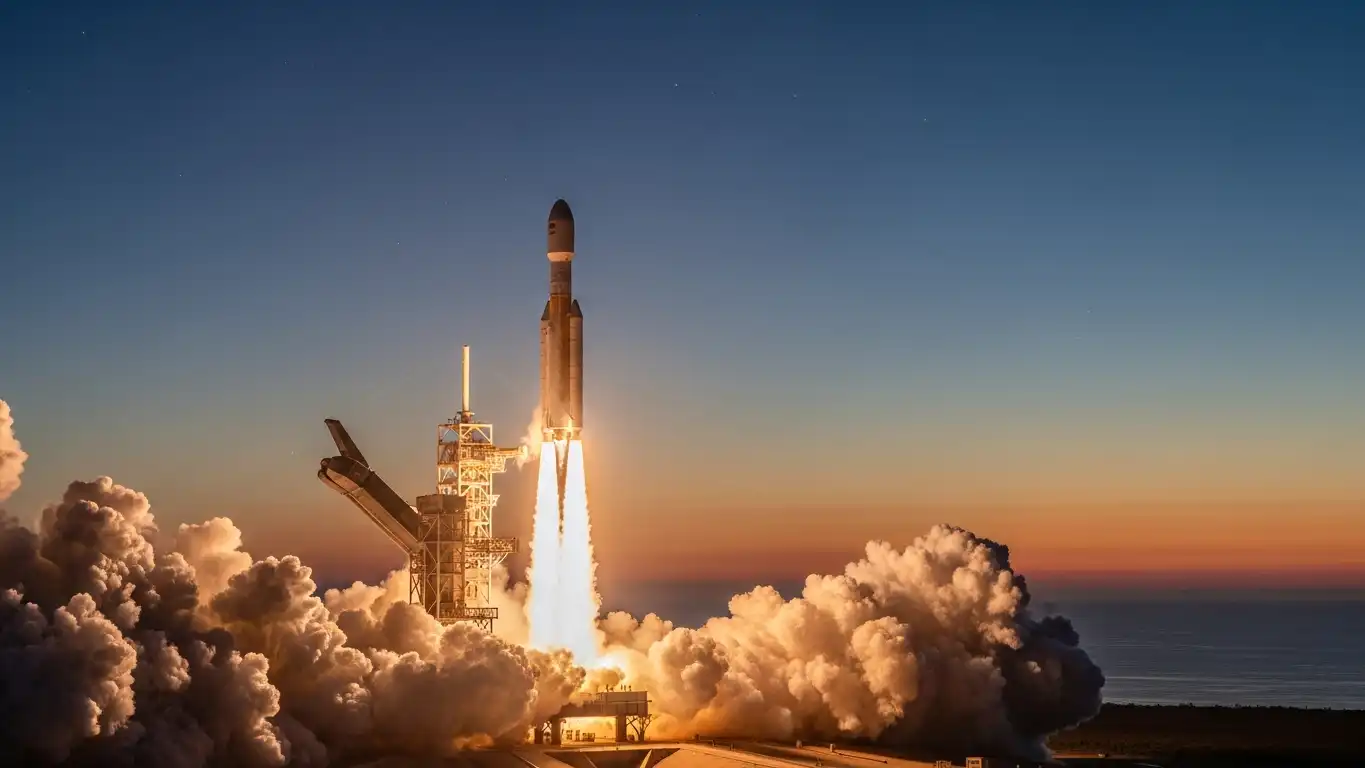
For decades, space was the exclusive domain of governments. Today, a new commercial space race is underway, led by visionary entrepreneurs and innovative technology companies. From reusable rockets and satellite internet to space tourism and asteroid mining, the “space economy” is rapidly moving from science fiction to a tangible and investable reality.
The Revolution of Reusable Rockets
The single biggest catalyst for the new space economy has been the development of reusable rockets, pioneered by SpaceX. By landing and reusing the most expensive parts of the rocket, SpaceX has significantly reduced the cost of launching payloads into orbit. This has opened up space to a whole new range of commercial activities that were previously uneconomical.
The Satellite Constellation Boom
The lower launch costs have enabled the deployment of massive “constellations” of small satellites in low Earth orbit. The most prominent example is SpaceX’s Starlink, which aims to provide high-speed internet to every corner of the globe. Other companies are building satellite constellations for applications like Earth observation, climate monitoring, and secure communications.
Investing in the Space Ecosystem
Investing directly in the renowned space company SpaceX is not yet possible for most people, as it remains private. However, there is a growing number of publicly traded companies in the space ecosystem. This includes satellite operators, launch providers such as Rocket Lab (RKLB), and companies that manufacture critical components, including satellite parts and ground station equipment. There are also space-themed ETFs that offer diversified exposure to the sector.
The “Picks and Shovels” of Space
A prudent way to invest in this nascent industry is to focus on the “picks and shovels” players. These are the companies that will benefit from the growth of the entire space economy, regardless of which specific satellite or launch company emerges as the winner. This could include companies that manufacture the specialized materials and electronics for rockets and satellites, or companies that provide the software for mission control and data analysis.
The Risks are Astronomical
It’s important to be realistic about the risks. Space remains an incredibly challenging and capital-intensive business. Missions can and do fail. The path to profitability for many of these companies is long and uncertain. This is a high-risk, high-reward sector that is only suitable for investors with a long time horizon and a high tolerance for volatility.
Conclusion
The commercialization of space represents one of the most exciting and potentially transformative long-term growth stories in the technology sector. The dramatic reduction in launch costs is unlocking a new frontier for innovation and investment. While the risks are significant, the companies that successfully build the infrastructure and services of the new space economy are poised for out-of-this-world returns.






