

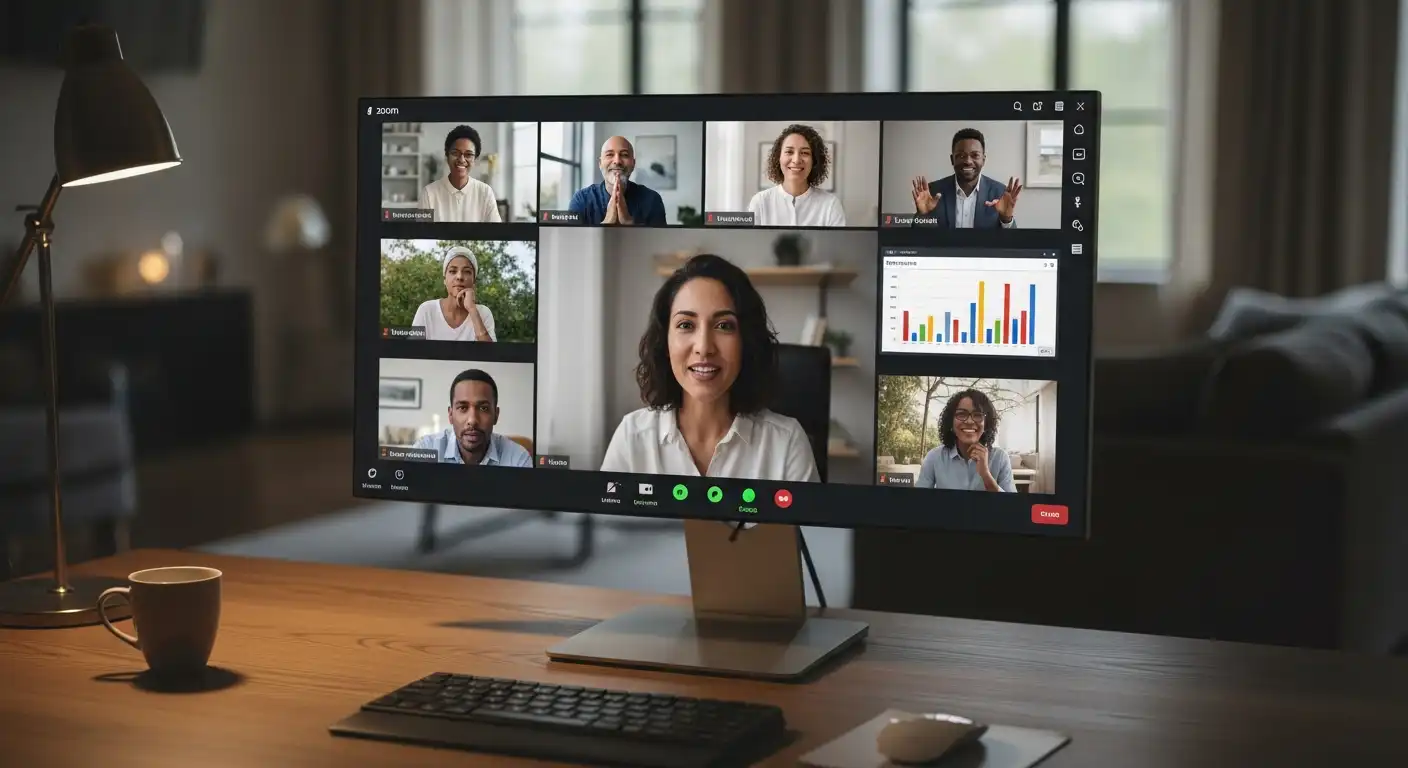
By 2026, video conferencing will have evolved from a simple grid of faces into a sophisticated, immersive workspace. The days of “Zoom fatigue” are being combatting by spatial audio, real-time AI translation that creates a seamless language-free environment, and holographic presence that brings remote colleagues into the room with you. The software we use to connect is no longer just a communication tool; it is the primary operating system for the hybrid workforce.
The leading platforms of this year are defined by how well they integrate Generative AI to handle note-taking, project management, and live sentiment analysis. Whether you are running a global enterprise or a creative workshop, choosing the right platform determines the fluidity of your teamwork. Here are the top 5 video conferencing platforms defining the corporate landscape in 2026.
Microsoft Teams (with Mesh & Copilot)
Microsoft Teams remains the heavyweight champion of the corporate world, fully integrating the immersive 3D capabilities of Microsoft Mesh and the intelligence of Copilot. It has transformed meetings from 2D video calls into shared holographic workspaces where avatars and digital twins collaborate on virtual whiteboards.
This platform is the ultimate ecosystem play, turning every video call into a productive work session where documents are drafted, and decisions are logged automatically by AI.
- Immersive Mesh Spaces: Users can switch from standard video to 3D immersive environments, allowing for “spatial” hallway conversations and more natural interactions using VR/AR headsets or standard screens.
- Advanced Copilot Actions: The AI doesn’t just transcribe; it actively participates, flagging unresolved agenda items, suggesting tasks based on the conversation, and drafting follow-up emails in real-time.
- Intelligent Recap 2.0: Automatically generates “chapters” for the meeting recording based on topics discussed and creates personalized highlights for attendees who joined late.
- Cross-Language Live Translation: Provides instant, subtitle-free voice translation that mimics the speaker’s tone, effectively breaking down language barriers in global teams.
Best For: Large enterprises, organizations using the Microsoft 365 stack, and teams embracing the metaverse for collaboration.
Zoom Workplace
Zoom has successfully rebranded from a video chat app to “Zoom Workplace,” an AI-first collaboration platform that prioritizes speed and ease of use. In 2026, Zoom’s “AI Companion” is widely regarded as the most user-friendly assistant on the market, included at no extra cost to paid subscribers.
It continues to offer the highest fidelity video and audio quality even on low-bandwidth connections, making it the most reliable choice for external client calls.
- Zoom AI Companion: A pervasive assistant that summarizes long chat threads, composes responses, and can answer questions like “Was my name mentioned?” during a live meeting.
- Intelligent Director: A feature for hybrid rooms that uses multiple cameras to find the best angle of in-room participants, ensuring remote attendees get a face-to-face view rather than a wide shot of a conference table.
- Zoom Huddles: Permanent, audio-video virtual coworking spaces that replicate the “open office” feel, allowing for spontaneous, drop-in conversations without scheduling.
- Smart Notes & Action Items: The system automatically identifies decisions made during the call and pushes them directly to project management tools like Asana or Jira.
Best For: Flexible organizations, external client meetings, and companies that value reliability and high-quality video above all else.
Google Meet
Google Meet has leveraged the immense power of the Gemini AI model to become the most proactive video platform available. In 2026, Meet is less about managing settings and more about the “Project Starline” technology filtering down to consumer levels, creating a sense of depth and presence without 3D glasses.
This platform shines in its browser-based simplicity, requiring zero software installation while delivering powerful, cloud-native AI features.
- Gemini Integration: The AI can “attend” meetings for you, taking notes and capturing action items even if you are double-booked or on vacation.
- Adaptive Audio & Lighting: Uses on-device AI to relight your face professionally and isolate your voice from chaotic background noise, like coffee shops or airports, better than any competitor.
- Live Sharing & Co-Watching: Seamless integration with YouTube, Spotify, and Docs allows for real-time collaboration where everyone controls the media or document simultaneously.
- Picture-in-Picture Everywhere: Deep integration with Chrome allows you to keep your meeting visible and active while navigating any other tab or application.
Best For: Google Workspace users, startups, and teams that prioritize a lightweight, browser-first experience.
Cisco Webex
Cisco Webex remains the gold standard for security-conscious industries and has pioneered the integration of holographic technology for engineering and design. The Webex Suite in 2026 is a fortress of encryption combined with high-end hardware integration that turns any glass surface into a display.
It is the preferred choice for healthcare, finance, and government sectors where data privacy and call stability are non-negotiable.
- Webex Hologram: Compatible with various AR headsets, this feature allows users to beam realistic, 3D holograms of physical objects into a meeting for collaborative review.
- Real-Time Health & Well-being: The platform monitors meeting fatigue, prompting users to take breaks or shorten calls if the “meeting load” for the week becomes unsustainable.
- Audio Watermarking: An advanced security feature that embeds an inaudible sonic signature into the audio, allowing leaks of confidential meetings to be traced back to the specific source device.
- Vidcast Integration: A powerful asynchronous video messaging tool built into the platform, encouraging teams to send video updates instead of booking live meetings.
Best For: Healthcare, government, engineering firms, and enterprises requiring military-grade security and hardware integration.
Butter
While the giants fight for enterprise dominance, Butter has captured the creative market by focusing on energy, interactivity, and workshop facilitation. In 2026, it is the go-to platform for facilitators, trainers, and design sprints who find Teams and Zoom too rigid and corporate.
This software treats meetings as “sessions” designed to keep energy high, utilizing bright interfaces and built-in engagement tools that prevent participants from zoning out.
- Built-in Agenda & Timer: Keeps meetings strictly on track with a visible agenda that ticks down, preventing the dreaded “meeting that should have been an email.”
- Native Miro & Mural Integration: Whiteboards open directly within the video interface, allowing for seamless brainstorming without users having to switch tabs or log in separately.
- Flashcards & Polls: Offers a suite of pre-loaded engagement tools, soundboards, and reaction emojis that make workshops feel like a game show rather than a lecture.
- Recap & Energy Analytics: Provides hosts with data on participant engagement levels throughout the session, helping facilitators understand which parts of the workshop resonated most.
Best For: Design sprints, educational workshops, creative agencies, and facilitators who need high engagement.
Conclusion
In 2026, the best video conferencing platform is the one that disappears into the background, allowing human connection to take center stage. Microsoft Teams and Google Meet leverage their massive ecosystems for seamless AI integration. Zoom remains the reliability king, Webex secures the high-end market, and Butter brings the fun back to collaboration.
By adopting these advanced platforms, you aren’t just making a video call; you are stepping into a virtual office equipped with an army of AI assistants ready to do the heavy lifting.






