Key Points:
- Top U.S. and Chinese economic officials held “remarkably stable” talks in Paris on Sunday.
- The two nations discussed potential agreements on agriculture, critical minerals, and managed trade.
- China showed a willingness to buy more American farm goods, such as poultry and beef.
- U.S. officials pushed for China to increase purchases of Boeing jets and American energy.
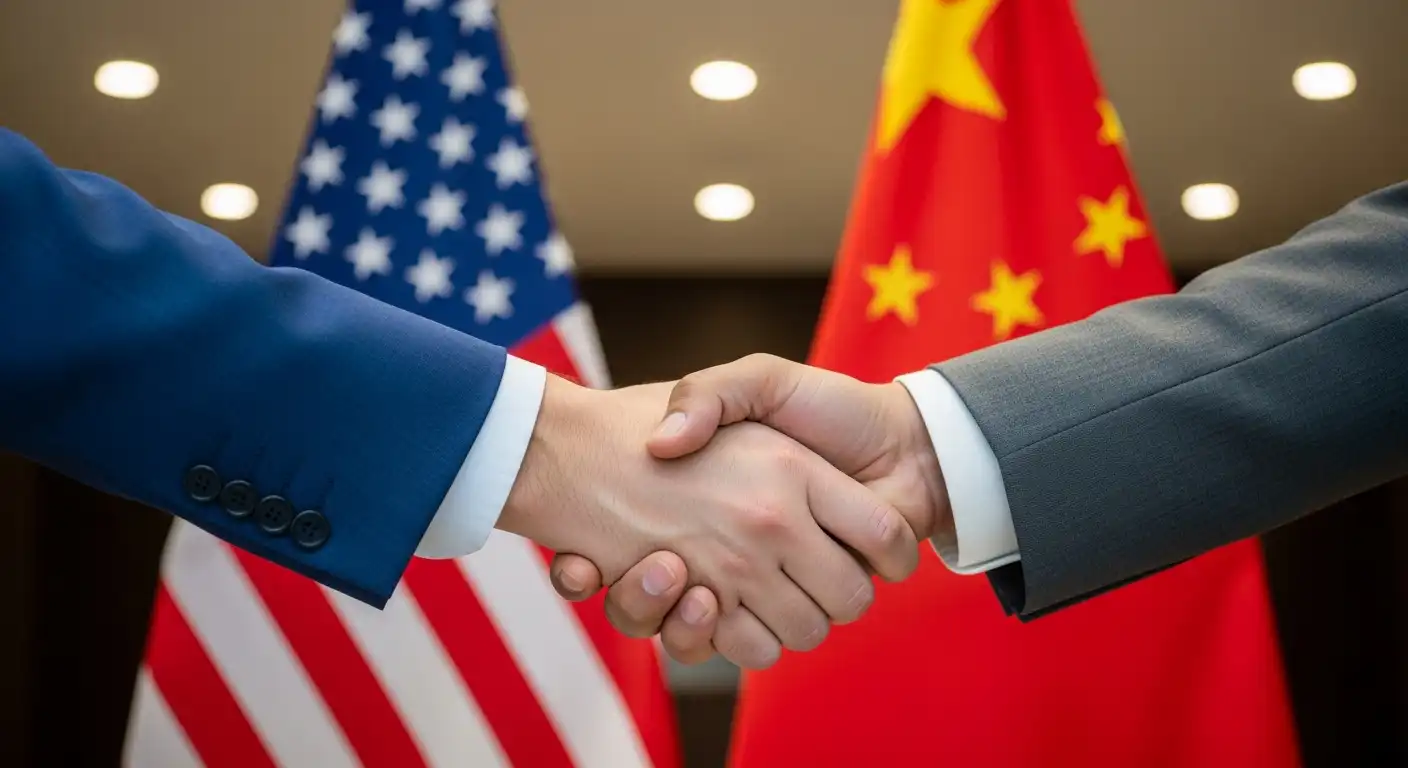
Top economic officials from the United States and China met in Paris on Sunday for a series of highly important discussions. According to two sources familiar with the event, the talks remained “remarkably stable” throughout the day. The representatives focused on finding potential areas of agreement regarding agriculture, critical minerals, and managed trade.
U.S. Treasury Secretary Scott Bessent and Chinese Vice Premier He Lifeng led the meetings. The sources described the conversations as “candid and constructive.” The primary goal of this gathering was to prepare a list of possible “deliverables” or concrete agreements that U.S. President Donald Trump and Chinese President Xi Jinping can formally review when they meet in Beijing at the end of March.
However, the sources made it very clear that the two presidents will have the absolute final say on any proposed deals. During the Paris talks, the Chinese delegation showed a strong openness to buying more American agricultural products. One source noted that China is willing to purchase additional poultry, beef, and various row crops in addition to soybeans. Furthermore, China remains fully committed to buying 25 million metric tons of American soybeans every single year for the next 3 years.
The Chinese officials left the OECD headquarters in Paris without speaking to the press. These weekend discussions follow several previous meetings between Bessent, He Lifeng, U.S. Trade Representative Jamieson Greer, and Chinese chief trade negotiator Li Chenggang. Both nations spent much of last year trying to ease intense economic tensions. One source summarized the mood of the Paris meeting by stating, “All these meetings were to create stability, and today was remarkably stable.” Spokespersons for the U.S. Treasury and the U.S. Trade Representative declined to comment officially on Sunday’s talks.
A major topic of discussion involved creating a new “managed trade mechanism.” The two sides explored establishing formal structures to help govern trade and investment between the world’s two largest economies. Trump and Xi will likely review these specific proposals during their upcoming Beijing summit. Technical experts plan to hold deeper discussions on Monday regarding a proposed U.S.-China “Board of Trade” and a separate “Board of Investment.”
According to one source, the Board of Trade proposal is currently the more developed of the two ideas. This board would specifically aim to identify products and sectors where the U.S. and China can grow their trade in a balanced, mutually beneficial way. The key requirement is that any new trade must not compromise either nation’s national security or disrupt critical supply chains.
The proposed Board of Investment would take a different approach. Rather than setting broad, sweeping investment policies for both countries, this board would focus on solving “discrete investment issues” that pop up unexpectedly between American and Chinese businesses.
The supply of critical minerals also took center stage during the talks. U.S. officials raised serious concerns about the flow of Chinese-produced minerals to American manufacturing companies. Specifically, the U.S. representatives highlighted the American aerospace industry’s current lack of access to yttrium from China. Jet engine manufacturers rely heavily on yttrium to build durable turbines.
One source mentioned that the two sides actually “found some ways to loosen up” the restrictions surrounding these challenging critical minerals. However, the source declined to provide exact details on the potential solution. Finally, Greer and Bessent used the meeting to emphasize a strong U.S. desire for China to drastically increase its purchases of Boeing jetliners and American energy products, including coal, oil, and natural gas.