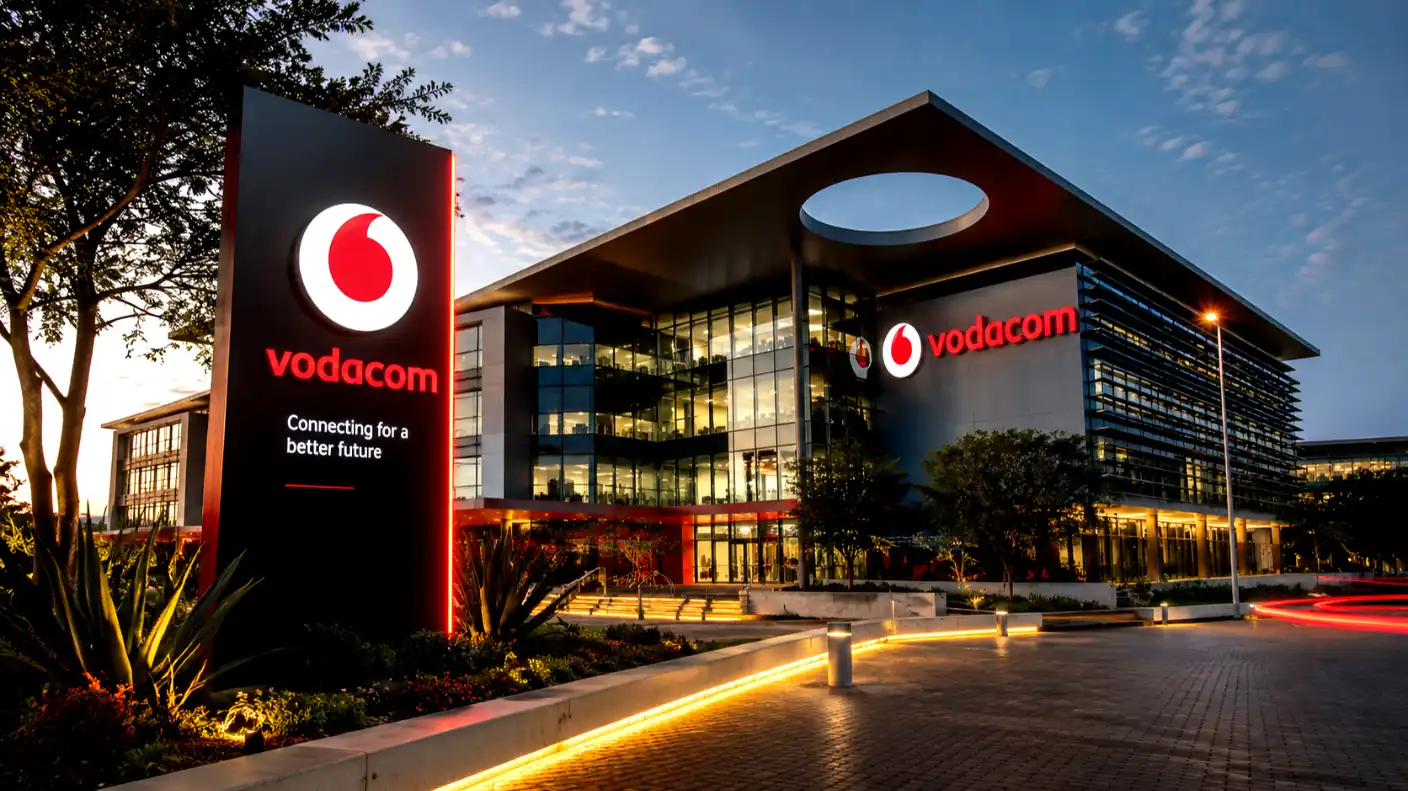
In the sprawling, dynamic, and diverse continent of Africa, few companies have woven themselves as deeply into the socio-economic fabric as Vodacom Group Limited. What began as a bold venture to introduce mobile telephony to a newly democratic South Africa has morphed into a pan-African technology communications (TechCo) giant, a titan of connectivity, a pioneer in financial technology, and a crucial enabler of the continent’s digital transformation. Vodacom is far more than a provider of calls and data; it is an architect of opportunity, a bank for the unbanked, and a critical piece of infrastructure powering the future for over 185 million customers.
This is the definitive story of Vodacom. We will journey back to its ambitious origins in the early 1990s, charting its explosive growth and its iconic “Yebo Gogo!” marketing that captured a nation’s imagination. We will dissect its complex corporate evolution under Vodafone’s stewardship and explore its vast, ever-expanding ecosystem of services—from 5G and fiber to the world-renowned M-Pesa mobile money platform. This deep dive will analyze Vodacom’s strategic expansion across the continent, its transformation from a traditional telco to a modern TechCo, its profound social impact, and the challenges it faces in one of the world’s most exciting and demanding markets. This is the story of how a company didn’t just connect a continent, but helped to redefine its future.
The Dawn of a New Era: Vodacom’s Founding and Early History
To understand Vodacom’s monumental success, one must first appreciate the context of its birth. The South Africa of the early 1990s was a nation on the cusp of profound transformation. The dismantling of apartheid was underway, and the country was preparing for its first-ever democratic elections. In this climate of unprecedented change and optimism, the telecommunications landscape was archaic, dominated by the state-owned monopoly, Telkom, which provided fixed-line services that were largely inaccessible and unaffordable for the majority of the population.
The Political and Technological Landscape of Pre-1994 South Africa
The telecommunications infrastructure starkly reflected the country’s inequalities. A telephone in the home was a luxury reserved for a privileged few. For millions of South Africans, communication was a challenge, hindering social connection, economic activity, and access to information. The government recognized that liberalizing the telecoms sector was essential for economic growth and social upliftment. In 1993, the decision was made to issue two licenses to operate Global System for Mobile Communications (GSM) networks, breaking Telkom’s long-held monopoly and paving the way for a communications revolution.
The Birth of a Partnership: Telkom, Vodafone, and the Rembrandt Group
The race to secure one of these coveted licenses was intense. A powerful consortium was formed, bringing together local and international expertise. This consortium was Vodacom (Pty) Ltd.
Here is a breakdown of the initial key shareholders who came together to create the company. This strategic alliance was crucial for blending local market knowledge with global technological prowess.
- Telkom (50%): The state-owned fixed-line operator was a mandatory partner, providing the foundational infrastructure and local regulatory knowledge.
- Vodafone Group Plc (35%): The UK-based mobile communications giant brought invaluable technical expertise, global best practices in network rollout, and significant financial backing.
- The Rembrandt Group (15%): A respected South African conglomerate (now Remgro Limited), Rembrandt provided local business acumen and investment credibility.
This public-private, local-international partnership was a masterstroke. It had the government’s backing through Telkom, Vodafone’s global industry leadership, and the local private-sector legitimacy of Rembrandt. Upon receiving its license in 1993, Vodacom, under the leadership of its founding CEO, Alan Knott-Craig, faced a monumental task: building a national mobile network from scratch in record time.
“Yebo Gogo!” – The Launch and Rapid Ascent
Vodacom officially launched its GSM network on June 1, 1994, just weeks after South Africa’s historic first democratic election. The company’s launch was a cultural and marketing phenomenon. It needed to introduce the very concept of mobile telephony to a population that had never experienced it. The result was the iconic “Yebo Gogo!” (“Yes, Grandma!”) advertising campaign. Featuring the beloved actor Bankole Omotoso and a comical, tech-savvy granny, the campaign was vibrant, humorous, and deeply resonant. It cut across racial and cultural divides, embedding the Vodacom brand into the national consciousness.
The public response was overwhelming. Initial projections for subscriber numbers were shattered within months. The demand for mobile phones, once seen as a niche product for business elites, was insatiable. Vodacom was not just selling a service; it was selling freedom, connection, and social mobility. The ability to make a call from anywhere, without being tied to a landline, was transformative for individuals and small businesses alike.
Early Innovations: Prepaid, SMS, and Democratizing Communication
A key driver of this explosive growth was Vodacom’s early focus on making mobile technology accessible to the masses. The masterstroke was the introduction of prepaid services. Instead of requiring lengthy contracts and credit checks, which excluded the vast majority of the population, prepaid allowed users to buy “airtime” vouchers and top up their phones as needed. This “pay-as-you-go” model democratized communication, putting a mobile phone within the financial reach of millions for the first time.
Alongside prepaid, the popularization of the Short Message Service (SMS) provided a cheap and effective way for people to communicate. These early innovations were not just business decisions; they were powerful tools for social inclusion, connecting families and enabling commerce on a scale never seen before.
Corporate Evolution: From Joint Venture to Pan-African Behemoth
The Vodacom of today is a vastly different corporate entity from the joint venture launched in 1994. Its journey has been marked by significant shifts in ownership, a major public listing, and strategic acquisitions that have expanded its footprint and capabilities far beyond South Africa’s borders.
The Vodafone Era: Increasing Stakes and the JSE Listing
For years, Vodacom operated as a successful but somewhat ring-fenced joint venture. Vodafone, a global giant, saw the immense potential in taking a more direct role.
Here is a summary of the key corporate maneuvers that solidified Vodafone’s control and transformed Vodacom’s structure. These events were pivotal in setting the stage for the company’s future growth.
- VenFin Acquisition (2006): Vodafone bought a 15% stake in Vodacom from VenFin, the investment arm that had inherited the Rembrandt Group’s holding, increasing its total shareholding to 50%. This gave Vodafone joint control of the company alongside Telkom.
- The Telkom Buyout and JSE Listing (2009): This was the watershed moment. In a massive R22.5 billion deal, Vodafone acquired a 15% stake from Telkom, raising its ownership to 65%. The remaining 35% of Telkom’s stake was unbundled and listed on the Johannesburg Stock Exchange (JSE). This blockbuster listing was one of the largest in the JSE’s history. It turned Vodacom into a publicly-traded company, giving investors direct access to one of Africa’s premier growth stories. Telkom, in turn, used the capital to focus on its own fixed-line and data-centric strategy.
This consolidation under Vodafone provided Vodacom with deeper access to global resources, technology, and procurement scale, as well as a streamlined strategic vision.
Strategic Acquisitions and Expansion
With a new corporate structure and a clear mandate for growth, Vodacom embarked on a series of acquisitions to bolster its capabilities, particularly in the enterprise sector. A landmark deal was the 2008 acquisition of Gateway Telecommunications. Gateway was a major provider of carrier and business network services across Africa, giving Vodacom access to a vast network of fiber, satellite, and subsea cable connectivity. This acquisition was the foundation of what would become Vodacom Business, the company’s enterprise-focused division.
The Vodacom-Safaricom Deal: A Game-Changer in East Africa
Perhaps the most significant strategic move in Vodacom’s recent history was the 2017 deal that redefined its relationship with Safaricom, East Africa’s telecoms jewel. Safaricom, the dominant operator in Kenya, is the home of the globally celebrated M-Pesa mobile money service. While Vodafone held a significant stake in Safaricom, Vodacom had no direct exposure to it.
In a clever asset swap, Vodafone transferred a 35% stake in Safaricom to Vodacom in exchange for additional Vodacom shares, increasing Vodafone’s ownership in Vodacom to 69.6%. This deal was transformative, as it gave Vodacom direct exposure to the highly profitable Kenyan market and, more importantly, a strategic stake in the M-Pesa ecosystem, which Vodacom was already successfully operating in its other markets. It aligned the African assets under a single, African-led entity, simplifying the group structure and creating a true pan-African powerhouse.
The Core Pillar: Vodacom’s Mobile and Connectivity Services
At its heart, Vodacom remains a connectivity company. Its primary mission is to provide reliable, high-quality voice and data networks that serve as the foundation for all its other services. The scale of this operation is immense, involving continuous investment in network infrastructure across a range of technologies.
Mobile Voice and Data: The Foundation of the Empire
Vodacom operates extensive mobile networks across its markets, constantly upgrading them to keep pace with soaring data demand. This technological evolution is a continuous journey.
Here’s a look at the generations of mobile technology that underpin Vodacom’s service offering. Each generation has unlocked new capabilities for customers and the economy.
- 2G (GSM): The original technology, now primarily used for voice calls and SMS, especially in deep rural areas. It remains a critical layer for ensuring universal voice coverage.
- 3G (UMTS): This was the generation that brought the mobile internet to the masses, enabling basic web browsing, email, and social media on feature phones and early smartphones.
- 4G (LTE): The current workhorse of the data network. 4G/LTE provides the high speeds necessary for video streaming, online gaming, video conferencing, and the modern app economy. Vodacom’s 4G network coverage is extensive in its major markets.
- 5G (New Radio): The next frontier. 5G offers ultra-high speeds, incredibly low latency (lag), and the ability to connect a massive number of devices simultaneously. Vodacom has been a pioneer in 5G on the continent, launching the first commercial 5G network in South Africa. Its applications extend beyond faster consumer downloads, promising to enable industrial automation, smart cities, and advanced IoT solutions.
Fiber and Fixed Wireless Access: Connecting Homes and Businesses
Recognizing that the future of connectivity is multifaceted, Vodacom has invested heavily in fixed-line solutions to complement its mobile network. This is crucial for providing high-speed, high-capacity internet to homes, housing estates, and businesses. The company offers “Fiber-to-the-Home” (FTTH) and “Fiber-to-the-Business” (FTTB) services, either by laying its own fiber optic cables or through wholesale agreements with other fiber network operators.
In areas where fiber deployment is not economically viable, Vodacom uses Fixed Wireless Access (FWA). This technology uses its 4G and 5G mobile networks to deliver home or office internet via a dedicated router, providing a fiber-like experience without the physical cable.
Vodacom Business: Serving the Enterprise Sector
Vodacom Business is the company’s dedicated division serving corporate, enterprise, and public-sector clients. It leverages Vodacom’s vast infrastructure to offer a comprehensive suite of solutions that go far beyond basic connectivity.
This B2B division provides the digital tools that power modern enterprises. Its services are designed to enhance productivity, security, and efficiency for organizations of all sizes.
- Managed Connectivity: Providing secure, dedicated internet access, Wide Area Networks (WANs), and Software-Defined Networking (SD-WAN) to connect multiple office locations.
- Cloud and Security Services: Offering cloud hosting, data center services, and a robust portfolio of cybersecurity solutions to protect businesses from evolving digital threats.
- Internet of Things (IoT): A major growth area, providing solutions for connecting devices and assets, which will be explored in more detail later.
- Unified Communications: Integrating voice, video conferencing, and messaging services to facilitate seamless collaboration for businesses.
Beyond Connectivity: Vodacom’s Financial Services Revolution
Arguably, the most exciting and transformative part of the Vodacom story is its deep foray into financial services. Recognizing that mobile phones are the most ubiquitous technology in Africa, Vodacom has leveraged them to provide financial tools to millions of people previously excluded from the formal banking system. This strategy is a cornerstone of its “Vision 2025” plan to deepen customer engagement.
M-Pesa: The Unlikely Story of the World’s Most Successful Mobile Money
M-Pesa (M for mobile, pesa meaning ‘money’ in Swahili) is a global phenomenon, and while it originated with Safaricom in Kenya, Vodacom has been instrumental in its expansion. It is the world’s most successful mobile money platform, a case study taught in business schools worldwide.
M-Pesa transformed the very concept of banking for millions of people. It allows users to perform a wide range of financial transactions directly from their mobile phones, without needing a traditional bank account.
- Core Functionality: At its simplest, M-Pesa allows users to deposit, withdraw, and transfer money using a network of agents (typically small shopkeepers). This enables secure peer-to-peer transfers, replacing the risky practice of sending cash to bus drivers or relatives.
- Ecosystem Expansion: Over time, the M-Pesa ecosystem has grown exponentially. Users can now pay utility bills, purchase goods at merchant stores (via “Lipa na M-Pesa”), receive their salaries, access small loans, and even purchase insurance.
- Economic Impact: The impact of M-Pesa cannot be overstated. It has empowered small businesses, enabled seamless commerce, provided a crucial safety net for families through remittances, and has been credited with lifting a significant portion of the population out of poverty by providing access to financial services.
Vodacom operates M-Pesa with immense success in its international markets, including Tanzania (where it is the market leader), the DRC, Mozambique, and Lesotho. These operations generate a substantial and fast-growing portion of the company’s service revenue.
VodaPay: The Super App Ambition for South Africa
While M-Pesa dominates in its international markets, the South African financial landscape is different, with a more developed (though not fully inclusive) banking sector. To capture the financial services opportunity here, Vodacom launched VodaPay, a “super app” developed in partnership with Ant Group (the fintech affiliate of Alibaba).
A super app is a single application that offers a vast array of services beyond a company’s core offering. VodaPay aims to be a digital mall, marketplace, and bank all in one.
Here are the key components that make VodaPay a central part of Vodacom’s strategy. It is designed to be a one-stop shop for a customer’s digital life.
- Payments and Transfers: The app facilitates easy QR code-based payments, P2P transfers, and bill payments.
- V-Commerce: It integrates a wide range of “mini-programs” from third-party merchants, allowing users to shop for groceries, fashion, and electronics, order food, or buy bus tickets, all from within the VodaPay app.
- Financial Products: VodaPay is a gateway to a suite of financial services, including small loans (VodaLend), insurance products, and savings tools, all designed to be accessible and easy to understand.
VodaPay is Vodacom’s strategic play to build a massive digital and financial ecosystem in its largest market, leveraging its brand trust and vast customer base to create new revenue streams.
The Broader Financial Ecosystem: Insurance, Lending, and V-Commerce
Across all its markets, Vodacom is systematically building out a portfolio of financial products. It offers a range of micro-insurance products covering funeral expenses and device protection, often bundled with its mobile services. Its lending platforms provide much-needed credit to individuals and small businesses who may not qualify for traditional bank loans. This entire strategy is designed to increase customer loyalty, reduce churn, and generate revenue streams independent of the hyper-competitive mobile data market.
The Transformation to a “TechCo”: Digital Services and the Internet of Things (IoT)
Vodacom’s ambition extends beyond being a telco that also offers financial services. The company is actively transforming itself into a fully-fledged “TechCo” – a technology company that leverages its connectivity platform to offer a broad range of digital solutions that touch every aspect of a customer’s life and a business’s operations.
The Connected World: Vodacom’s IoT Solutions
The Internet of Things (IoT) refers to the network of physical devices, vehicles, appliances, and other items embedded with sensors, software, and other technologies to connect and exchange data. Vodacom is the leading IoT provider in Africa, with millions of devices connected to its network.
Vodacom’s IoT solutions are creating smarter, more efficient systems for industries and society. These applications are diverse and have a tangible impact on everyday life.
- Vehicle Tracking and Fleet Management: A massive market in Africa, where logistics and security are paramount. Vodacom’s IoT SIMs are used in tracking devices for personal cars and large commercial fleets.
- Smart Metering: Vodacom partners with utility companies to deploy smart water and electricity meters. These devices provide real-time consumption data, reduce waste, and enable more efficient billing and resource management.
- Asset Tracking: Helping businesses monitor the location and condition of valuable assets, from shipping containers to sensitive medical equipment.
- Connected Health: Enabling remote patient monitoring and other e-health solutions, which are critical in a continent with vast distances and limited healthcare infrastructure.
Digital Lifestyle Services: Music, Video, and Gaming
To capture a larger share of consumers’ digital wallets, Vodacom has created a suite of digital lifestyle services. These are typically offered as value-added services (VAS) to its mobile customers. They include partnerships with music streaming services (MyMuze), video-on-demand platforms (Video Play), and mobile gaming portals. These services not only generate direct revenue but also drive network data consumption, creating a virtuous cycle.
Education, Health, and Agriculture: Leveraging Technology for Social Good
A core part of Vodacom’s TechCo strategy is to use its platform to address key societal challenges. The company has developed specific solutions for crucial sectors. In education, its e-school platforms provide free curriculum content to millions of learners. In health, it has developed solutions for clinic stock management and the dissemination of public health information. In agriculture, the “Connected Farmer” platform provides smallholder farmers with access to information, markets, and financial services, thereby improving crop yields and boosting rural economies.
A Pan-African Footprint: Vodacom’s Operations Across the Continent
Vodacom Group’s success is a story of pan-African expansion. While South Africa remains its largest and most profitable market, its international operations are a critical engine of growth, often delivering higher growth rates and showcasing the power of its fintech and digital services strategies.
South Africa: The Heart of the Operation
South Africa is Vodacom’s home market, contributing the majority of its revenue. It is the most technologically advanced of its operations, with widespread 4G coverage, a growing 5G network, and a significant fiber business. The market is mature and highly competitive, forcing Vodacom to innovate with new products like VodaPay constantly and to focus on customer value management to maintain its leadership position.
Tanzania: A Market of Strategic Importance
Vodacom Tanzania is one of the group’s crown jewels. It is a market leader with a highly successful M-Pesa operation that is deeply embedded in the Tanzanian economy. The financial services ecosystem here is arguably the most developed outside Kenya, contributing a very significant share of local service revenue. Tanzania serves as a prime example of Vodacom’s “System of Advantage” strategy, in which connectivity and financial services work in tandem to create a powerful, sticky customer proposition.
DRC, Mozambique, Lesotho: Navigating Diverse Markets
Vodacom also holds leading or strong number-two positions in the Democratic Republic of Congo (DRC), Mozambique, and Lesotho. Each of these markets presents unique opportunities and challenges. The DRC, with its vast population and low digital penetration, offers immense growth potential. Mozambique has shown strong data and M-Pesa uptake. These markets are critical for diversifying the group’s revenue base and capturing the growth from Africa’s emerging digital economies.
The Safaricom Connection: Powering Growth in Kenya and Ethiopia
Through its strategic stake, Vodacom has significant exposure to Safaricom, Kenya’s undisputed leader. Safaricom’s performance, driven by its unparalleled M-Pesa ecosystem and strong data growth, is a major contributor to Vodacom Group’s overall financial results.
Furthermore, Safaricom is leading a consortium that was awarded a new telecommunications license in Ethiopia, one of Africa’s largest and most promising markets, yet historically closed off. This expansion into Ethiopia represents one of the most significant growth opportunities for the entire Vodacom/Safaricom/Vodafone family in the coming decade.
Purpose-Led Growth: Vodacom’s Commitment to ESG and Social Impact
Vodacom defines its strategy as being “purpose-led.” The company firmly believes that its commercial success is intrinsically linked to its ability to create a positive social and environmental impact. This commitment is formalized in its Environmental, Social, and Governance (ESG) framework, which is integrated into its core business operations.
Connecting for Good: The Vodacom Foundation
The Vodacom Foundation is the company’s dedicated corporate social investment arm. For decades, it has run high-impact programs across its markets, focusing on its three key pillars:
Here is an overview of the foundation’s core focus areas. These initiatives leverage Vodacom’s technology and resources to address pressing societal needs.
- Education: Providing access to digital learning platforms, connecting schools to the internet, and running teacher training centers.
- Health: Using mobile technology to improve healthcare delivery, from maternal health programs to vaccine awareness campaigns.
- Gender Empowerment: Running programs aimed at closing the digital gender gap and providing resources and support for female entrepreneurs and survivors of gender-based violence.
Environmental Sustainability: A Greener Network
Recognizing the threat of climate change, Vodacom has set ambitious environmental targets. The company is committed to reducing its carbon footprint and improving its energy efficiency. Key initiatives include powering its network sites with renewable energy sources such as solar, implementing energy-saving software on its base stations, and running e-waste management programs to recycle old devices responsibly. Vodacom has pledged to source 100% of its electricity from renewable sources by 2025.
Digital Inclusion and Education Initiatives
A core part of Vodacom’s purpose is to ensure that no one is left behind in the digital economy. This involves more than just building networks; it involves making services affordable and accessible. The company runs specific programs to provide low-cost connectivity options for underserved communities. It offers a range of digital literacy training programs to equip people with the skills they need to thrive in a digital world.
Navigating the Headwinds: Challenges, Competition, and Controversies
Vodacom’s journey has not been without significant challenges. Operating in emerging markets across Africa entails unique regulatory, economic, and social pressures. The company has also faced its share of public criticism and controversy.
The “Data Must Fall” Movement and Pricing Pressures
In South Africa, Vodacom has been at the center of the “Data Must Fall” movement, a public outcry over the high cost of mobile data. Consumers and advocacy groups have argued that data prices were a barrier to economic and educational opportunities. This pressure led to investigations by competition authorities. It forced Vodacom and its competitors to significantly reduce data prices and offer more affordable, smaller data bundles to appease regulators and the public.
Regulatory Hurdles and Geopolitical Risks
Operating across multiple countries means navigating a complex and ever-changing web of regulations. These can range from new tax laws levied on mobile money transactions to requirements for local ownership and data localization. Geopolitical instability in some of its markets also presents a constant operational risk that must be carefully managed.
Intense Competition in a Crowded Market
In every one of its markets, Vodacom faces fierce competition. In South Africa, MTN is the main rival, creating a powerful duopoly that is constantly challenged by smaller, more agile players such as Telkom Mobile and Cell C. In its international markets, it competes with other pan-African giants like MTN, Orange, and Airtel Africa. This intense competition puts constant pressure on prices and margins, requiring Vodacom to innovate to maintain its market share continually.
The “Please Call Me” Saga: A Lingering Controversy
One of the most persistent and damaging controversies for Vodacom has been the “Please Call Me” saga. This long-running legal dispute involves Nkosana Makate, a former employee who claims he invented the “Please Call Me” service. This free message allows a user without airtime to request a callback. After years of litigation, the Constitutional Court of South Africa ordered Vodacom to compensate Makate. However, the dispute over the compensation amount has dragged on for years, generating negative publicity and becoming a symbol of a corporate giant’s battle with an individual.
Charting the Future: Vodacom’s Vision for the Next Decade
Vodacom is not a company that rests on its laurels. It is acutely aware that the landscape is shifting rapidly and that it must continue to evolve to secure its future growth. The company’s strategy is clearly articulated in its “Vision 2025,” which aims to transition it from a telco to a leading pan-African TechCo.
The Road to 2025: Deepening Financial and Digital Services
The primary strategic thrust is to move beyond connectivity and become the central platform for its customers’ digital and financial lives. This means aggressively growing its financial services revenue, with a particular focus on making VodaPay the dominant super app in South Africa and continuing to expand the M-Pesa ecosystem in its international markets. The goal is for these “new services” to contribute a much larger share of the group’s total revenue.
5G and the Future of Connectivity
While diversifying, Vodacom will continue to invest heavily in its core connectivity business. The rollout of 5G is a key priority. While consumer applications like faster streaming are important, the real long-term value of 5G is seen in the enterprise and industrial sectors. Vodacom aims to be the leading 5G provider for businesses, enabling smart factories, autonomous vehicles, and other next-generation IoT applications that will drive economic growth.
The Untapped Potential of Africa’s Digital Economy
The long-term outlook for Vodacom is inextricably linked to Africa’s future. The continent has the world’s youngest population, rapidly growing internet penetration, and a burgeoning digital economy. As more people come online and embrace digital services, the demand for Vodacom’s products—from connectivity and mobile money to entertainment and cloud services—is set to grow exponentially. Vodacom is strategically positioned to be both a primary beneficiary and an enabler of this historic transformation.
The Architect of Africa’s Digital Future
From its audacious launch in a newly democratic South Africa to its current status as a pan-African technology powerhouse, Vodacom’s story is one of remarkable vision, relentless execution, and profound impact. It began by giving people a voice, then gave them access to the internet, and is now giving them a bank in their pocket and a universe of digital services at their fingertips.
The company has navigated immense challenges—from political transitions and regulatory pressures to intense competition and public scrutiny—to become a linchpin of the African economy. It is a testament to the power of technology to drive social inclusion and economic development. While the red of its logo is a familiar sight on billboards and storefronts across the continent, its true presence is felt in the seamless M-Pesa transaction that pays for a child’s school fees, the reliable 4G connection that allows a small business to reach new customers, and the IoT solution that helps a city manage its precious water resources.
Vodacom is no longer just a telecommunications company. It is an engine of growth, a platform for innovation, and a committed partner in the continent’s journey towards a more prosperous and connected future. The next chapter in its story will focus on building on this powerful foundation, further blurring the lines among connectivity, finance, and technology to become the indispensable architect of Africa’s digital destiny.