
Key Points:
- Chinese autonomous driving leader WeRide, U.S. ride-hailing giant Uber, and Spanish operator AVOMO announced a joint commercial robotaxi pilot in Madrid.
- Customers will be able to book automated rides directly through the Uber app, marking Spain’s first public commercial robotaxi service.
- The initial phase will require trained safety operators in the vehicles to comply with strict Spanish regulatory requirements before transitioning to fully driverless models.
- Spain represents WeRide’s fifth European market, reinforcing its global expansion strategy alongside existing operations in the Middle East and East Asia.
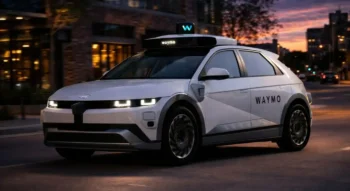
The global landscape of urban transportation is witnessing another major shift as autonomous driving technology expands its footprint across Southern Europe. On Tuesday, June 2, 2026, Chinese autonomous driving pioneer WeRide announced a landmark partnership with U.S.-based ride-hailing giant Uber Technologies Inc. and Spanish mobility operator AVOMO to launch a commercial robotaxi pilot service in Madrid. Scheduled to begin operations later this year, the collaborative project will stand as Spain’s first-ever commercial robotaxi service open to the general public, signaling a massive leap forward for driverless mobility in Europe.
The upcoming service promises a seamless, highly integrated booking experience for everyday commuters and tourists in the Spanish capital. Once the pilot program formally launches, users will be able to hail WeRide’s autonomous vehicles directly through the standard Uber smartphone app. This frictionless integration ensures that passengers do not have to download separate, specialized software to experience autonomous travel. By opening its massive digital booking platform to WeRide’s fleet, Uber is continuing its transition into the world’s primary gateway for autonomous passenger transportation.
Under the terms of the trilateral agreement, the three companies have established a clear, highly efficient division of labor to manage the fleet’s daily operations. WeRide will supply its cutting-edge Level 4 autonomous driving technology and its highly advanced vehicle platform. At the same time, Uber will provide its proprietary ride-hailing software and its massive, pre-existing user base. Meanwhile, AVOMO—a specialized subsidiary of Spain’s leading mobility group, Moove Cars—will oversee local fleet management, vehicle maintenance, and strict regulatory compliance, ensuring the fleet operates safely and legally on public roads.
To comply with current Spanish transport regulations, the initial phase of the Madrid pilot program will require trained safety operators to remain seated inside the vehicles at all times. These safety drivers will monitor the system’s real-time decisions and stand ready to take physical control of the vehicle in the rare event of an anomaly. However, the consortium has outlined a clear path to phase out these human safety drivers. As the vehicles log millions of successful, incident-free test kilometers and the regulatory framework evolves, the companies plan to transition gradually toward fully driverless commercial operations across the core urban zones of Munich and Madrid.
For WeRide, the entry into Spain represents a major milestone in its aggressive, multi-billion-dollar global expansion strategy. Han Xu, the founder and Chief Executive Officer of WeRide, emphasized that Madrid represents a vital testing ground for the company’s advanced software. “Launching driverless robotaxis in Madrid, one of Europe’s fastest-growing urban mobility markets, demonstrates our ability to operate safely in complex real-world environments,” Han stated on Tuesday. He added that Spain officially represents WeRide’s fifth European market, further cementing the company’s position as a highly trusted, globally compliant autonomous vehicle operator.
The consortium selected Madrid as its launchpad due to a highly favorable mixture of demographic, economic, and political factors. The Spanish capital boasts a massive, densely packed urban population of over 3.3 million residents, creating a continuous, high-volume demand for efficient transport services. Furthermore, Madrid’s local and national governments have maintained a highly progressive, pro-innovation stance toward digital transit systems, offering a relatively open regulatory environment compared to the strict, heavily restricted frameworks found in other European capitals.
This Spanish partnership directly supports Uber’s highly successful transition to an “asset-light” autonomous vehicle strategy. In 2020, the San Francisco company sold its own in-house self-driving division, Advanced Technologies Group, to avoid burning through more than $1 billion in cash annually on capital-intensive hardware development. Since then, the firm has functioned primarily as a digital network operator, allowing third-party hardware developers to integrate their fleets directly into its massive global app. While these automated rides currently represent only 1.5% of the country’s total transport network, the market is expanding rapidly, positioning Uber to capture a massive share of the global robotaxi market, which analysts project will reach $118 billion by 2030.
The collaboration with WeRide in Madrid is part of a rapid, global scaling of Uber’s autonomous alliances. Just yesterday, on June 1, 2026, Uber announced a parallel Level 4 robotaxi partnership in Munich with Israeli AI firm Autobrains and Nvidia, building on a previous European pilot with Momenta launched last year. By securing these diverse, regional partnerships across multiple countries, Uber is quickly building a highly resilient, cross-border autonomous transport ecosystem. This aggressive expansion allows the ride-hailing giant to bypass the high-cost manufacturing risks of hardware development while rapidly deploying driverless services to its 150 million active global users.
Ultimately, the upcoming launch of the WeRide Uber Madrid Robotaxi program represents a major milestone for the future of global mobility. By combining WeRide’s highly advanced Level 4 autonomous driving platform with Uber’s massive digital network and AVOMO’s localized operational expertise, the consortium has built a highly efficient model for urban transit. As the first test vehicles prepare to navigate the historic streets of Madrid later this year, the successful execution of this project will serve as a vital case study for the global transport industry. For passengers, the message is clear: the future of comfortable, on-demand driverless travel is rapidly arriving on European roads.