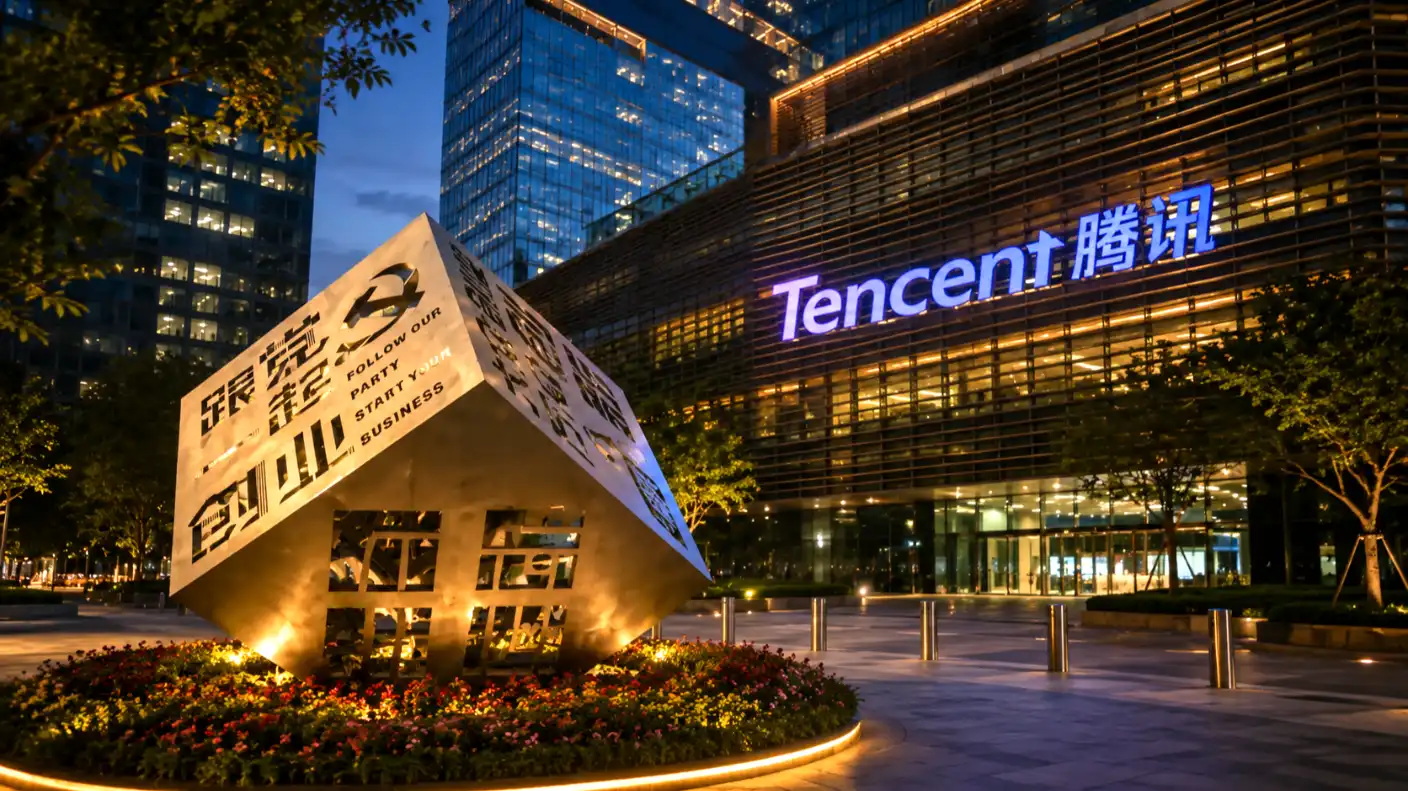
Tencent Holdings Ltd., a global leader in technology and entertainment, is one of China’s most influential and valuable companies. Founded in 1998, Tencent has grown from a small instant messaging service provider into a vast conglomerate with interests spanning social media, online gaming, digital entertainment, fintech, cloud computing, and more. This article explores Tencent’s journey, key milestones, and transformation into a global powerhouse.
Founding and Early Years (1998–2004)
Tencent Holdings Ltd. was founded in 1998 by Ma Huateng (also known as Pony Ma), Zhang Zhidong, and others in Shenzhen, China. The company initially gained prominence with Tencent QQ, an instant messaging service that became immensely popular in China. QQ enabled users to send messages, share files, play games, and send virtual gifts, quickly becoming the preferred communication tool for millions of Chinese internet users.
In its early years, Tencent Holdings Ltd. capitalized on China’s burgeoning internet boom. By 2000, the company had expanded into mobile communication with the launch of a mobile version of QQ, and it began to build its portfolio by acquiring or partnering with other internet service providers. Tencent also ventured into gaming, launching its first online game, “Tencent Games,” marking the beginning of its path toward becoming a leader in the global gaming industry.
Expanding into Gaming and Social Media (2005–2010)
By the mid-2000s, Tencent Holdings Ltd. began diversifying its offerings. In 2005, it launched a social networking platform called “Tencent WeChat” (initially Weixin), which combined instant messaging, voice, video, and social media features. It quickly gained traction, and within a few years, WeChat evolved into a dominant social media app in China, integrating various services, including payment systems (WeChat Pay), mini-programs, and e-commerce features.
Meanwhile, Tencent made significant inroads into the gaming industry. In 2005, the company acquired a controlling stake in Riot Games, the developer behind the massively popular game “League of Legends.” Tencent continued to grow its gaming empire by acquiring or investing in several other gaming companies, including Supercell, the maker of “Clash of Clans,” and Epic Games, known for the “Fortnite” franchise. These investments solidified Tencent’s position as a leader in global gaming.
IPO and International Expansion (2004–2014)
Tencent Holdings Ltd. went public in 2004, listing its shares on the Hong Kong Stock Exchange. The company’s IPO was a significant milestone, enabling Tencent to raise capital to expand its operations further. The funds raised were used to invest in several areas, including gaming, fintech, and cloud computing, and to expand Tencent’s international presence.
In the 2010s, Tencent Holdings Ltd. aggressively expanded its reach beyond China. In addition to investing in Western gaming companies, the company made strategic acquisitions in the global tech and entertainment sectors. Notably, Tencent acquired a significant stake in the American company Tesla and expanded its gaming investments to include companies like Activision Blizzard, Ubisoft, and Frontier Developments. These investments expanded Tencent’s portfolio and helped it cement its status as one of the most prominent players in the global tech industry.
Rise of WeChat and Mobile Ecosystem (2011–2015)
The launch of WeChat in 2011 marked a turning point for Tencent. WeChat rapidly evolved into more than just a messaging platform—it became a comprehensive mobile ecosystem, integrating a wide range of services. From social networking and gaming to payment systems, shopping, and ride-hailing, WeChat has become an indispensable app in daily life in China.
Tencent Holdings Ltd. also invested heavily in mobile gaming, launching titles that became major hits in the domestic and international markets. Tencent’s “Honor of Kings” became one of the highest-grossing mobile games globally, attracting millions of players worldwide.
Meanwhile, Tencent’s digital payment arm, WeChat Pay, grew rapidly and eventually competed with Alibaba’s Alipay to dominate China’s digital payments market. Tencent’s mobile-first strategy for integrating social media, gaming, and payments has set it apart from competitors and further solidified its role as a digital services titan.
Dominance in Gaming and the Rise of Tencent Cloud (2016–2019)
By 2016, Tencent Holdings Ltd. had firmly established itself as the world’s largest gaming company, with an extensive portfolio spanning mobile, console, and PC gaming. Games such as “PlayerUnknown’s Battlegrounds” (PUBG) and “Fortnite” significantly boosted Tencent’s revenues, which are further enhanced by its ownership of Riot Games, Epic Games, and other major gaming entities.
In addition to gaming, Tencent sought to strengthen its position in cloud computing through its Tencent Cloud service. Tencent Cloud sought to compete with giants such as Amazon Web Services (AWS) and Microsoft Azure by offering scalable, reliable cloud solutions to businesses in China and abroad. The company’s cloud infrastructure supports various industries, including e-commerce, finance, and entertainment.
Tencent’s gaming business and cloud computing efforts laid the foundation for long-term growth, helping the company diversify and develop a more sustainable revenue model beyond its traditional businesses.
Regulatory Challenges and Recalibration (2020–2022)
Like many other Chinese tech giants, Tencent Holdings Ltd. began to face increasing regulatory scrutiny in 2020. The Chinese government imposed stricter regulations on online gaming, limiting the amount of time minors could spend playing games and cracking down on addictive features. Tencent had to adapt its gaming business to comply with these new rules, adjusting game designs and introducing parental controls to limit playtime for younger users.
In addition to gaming restrictions, governments in various countries, particularly in the United States, have scrutinized Tencent’s investments in foreign companies. This led to a series of forced divestitures, including the sale of Tencent’s stake in the US-based social media company Reddit and the planned sale of its majority stake in Supercell. Despite these challenges, Tencent continued to grow its domestic business and intensified its efforts in AI, cloud computing, and fintech.
Diversification and Future Strategies (2022–Present)
As of 2022, Tencent Holdings Ltd. continues to diversify its business operations. Its focus has shifted toward artificial intelligence, fintech, and smart retail. Tencent’s ventures into AI have positioned the company to leverage advanced technologies in sectors such as healthcare, entertainment, and automotive.
The company has also prioritized investments in green technologies, including the development of electric vehicles (EVs) and the integration of sustainability measures into its operations. Tencent is working with partners to launch new products and services that will help drive China’s push toward a more sustainable, digital future.
Tencent’s global strategy also emphasizes expanding its presence in international markets, mainly through gaming and digital entertainment. Despite regulatory challenges, the company’s vast portfolio and innovative spirit position it for continued success in the years ahead.
Conclusion
Tencent Holdings Ltd. has transformed remarkably from a simple instant-messaging service into a global technology and entertainment conglomerate. By strategically diversifying into sectors such as gaming, fintech, cloud computing, and AI, Tencent has become one of the most influential technology companies in the world.
Although regulatory challenges pose significant obstacles, Tencent’s ability to innovate, adapt, and expand its business model will continue to shape the future of the global tech industry. With a robust portfolio of products and services, Tencent Holdings Ltd. remains at the forefront of China’s digital revolution and plays a critical role in the global digital economy.