

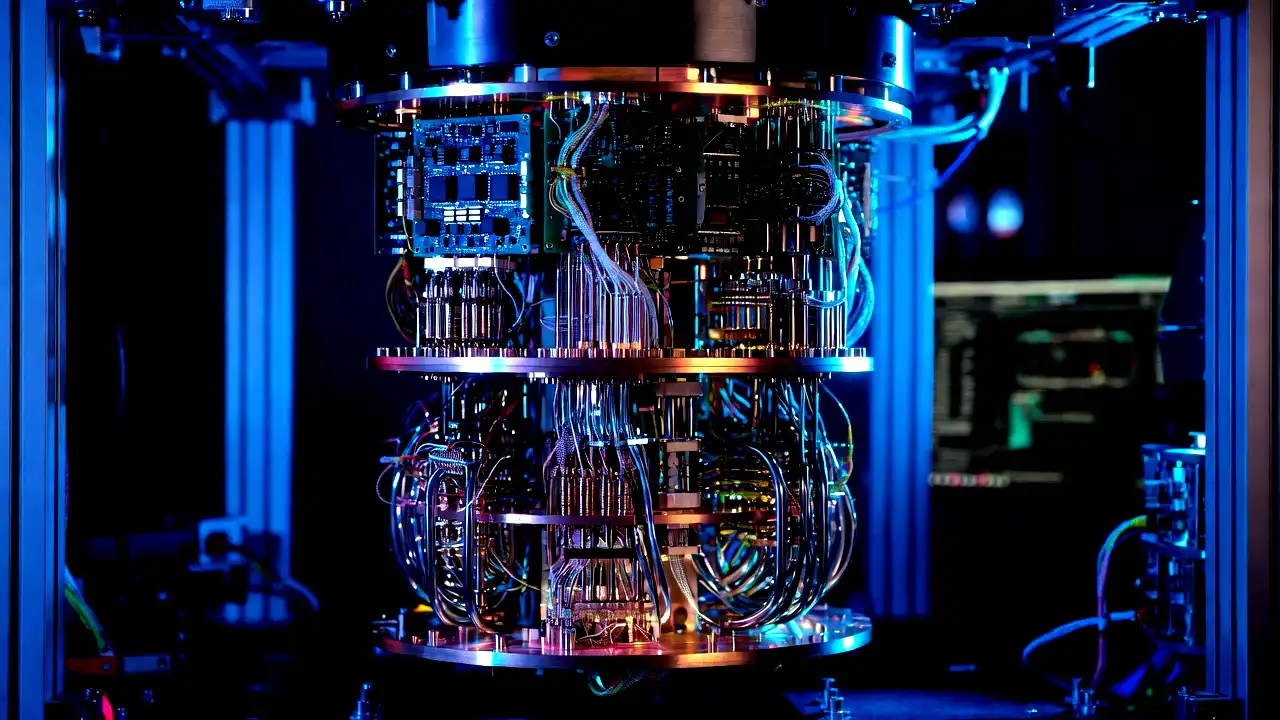
Modern days represent a profound and unsettling turning point in the digital age. It is the year when the theoretical threat of quantum computing to our current cybersecurity infrastructure becomes a tangible, strategic imperative for organizations worldwide. While a cryptographically relevant quantum computer capable of breaking modern encryption in minutes is not yet a reality, the progress is undeniable, and the window for preparation is closing fast. This is the era of “Harvest Now, Decrypt Later,” a looming reality where adversaries are already capturing and storing encrypted data with the confidence that a future quantum computer will unlock it. This makes the development and implementation of robust, quantum-resistant cybersecurity strategies not a futuristic exercise, but an urgent necessity in today’s world.
This in-depth article will explore the state of quantum computing, dissect the precise nature of the quantum threat to our digital world, and provide a comprehensive playbook for the critical cybersecurity strategies that organizations must adopt to secure their future, including Post-Quantum Cryptography (PQC) migration and crypto-agility.
Understanding Quantum Computing: A Snapshot of the Revolution
Before delving into the cybersecurity implications, it is crucial to understand what quantum computing is and where the technology stands. Unlike classical computers, which store and process information as bits—either 0 or 1—quantum computers use quantum bits, or “qubits.” These qubits harness the counterintuitive principles of quantum mechanics to achieve an exponential leap in processing power for specific types of problems, promising to revolutionize fields such as medicine, materials science, and complex optimization.
Beyond Bits: The Power of Qubits, Superposition, and Entanglement
The power of a quantum computer stems from two key quantum phenomena: superposition and entanglement. Understanding these concepts is fundamental to grasping both the promise and the peril of this technology.
Here is a breakdown of the core principles that give quantum computers their power:
- Superposition: A qubit can exist not just as a 0 or a 1, but in a combination of both states simultaneously. Think of a spinning coin before it lands—it’s neither heads nor tails, but a blend of both possibilities. This ability enables a quantum computer with just a few hundred qubits to represent and process an astronomical number of values simultaneously, providing a massive parallel processing capability.
- Entanglement: This is what Einstein famously called “spooky action at a distance.” When two or more qubits are entangled, their fates become intrinsically linked, regardless of the distance separating them. Measuring the state of one qubit instantly influences the state of the other entangled qubits. This interconnectedness allows for complex correlations and information processing that is impossible in the classical world, acting as a force multiplier for the computer’s power.
The State of the Art: Navigating the Noisy Intermediate-Scale Quantum (NISQ) Era
We are firmly in the Noisy Intermediate-Scale Quantum (NISQ) era. This is a critical distinction. It means that today’s quantum computers are powerful but imperfect. They are “intermediate-scale” because they consist of several hundred to a few thousand qubits—not yet the millions required for full-scale fault tolerance. They are “noisy” because qubits are incredibly fragile and susceptible to errors from environmental factors, such as temperature fluctuations or electromagnetic fields. This noise limits the complexity and duration of the calculations they can perform. While NISQ-era machines are not yet capable of breaking RSA-2048 encryption, they are powerful enough to achieve “quantum advantage” on specific, niche scientific problems, demonstrating their potential and accelerating the pace of research and development.
Key Players and the Race for Quantum Supremacy
The global race to build a fault-tolerant quantum computer is well underway, with governments and technology giants investing billions of dollars. The landscape is dominated by a handful of key players who are pushing the boundaries of what’s possible with different qubit modalities.
These are the leading entities and their primary approaches in the quantum race:
- IBM: A leader in superconducting qubits, IBM has a public roadmap that aims for machines with thousands of qubits and has made many of its quantum computers accessible to researchers via the cloud, thereby fostering a growing ecosystem.
- Google: Another pioneer in superconducting qubits, Google famously claimed to have achieved “quantum supremacy” in 2019. It continues to develop more powerful and less noisy processors, focusing on building the components for a future fault-tolerant machine.
- IonQ: A prominent player in the trapped-ion quantum computing space. Trapped-ion qubits generally have higher fidelity (lower error rates) and better connectivity than superconducting qubits, though they have historically been slower. IonQ is working to scale up its systems while maintaining these advantages.
- Rigetti, Quantinuum, and others: A vibrant ecosystem of other companies and startups is exploring various approaches, from superconducting and trapped-ion to photonic and neutral-atom quantum computers, each with its own set of strengths and weaknesses. This diversity of research accelerates progress across the entire field.
The Impending “Q-Day”: Quantum’s Threat to Modern Cryptography
The same quantum principles that promise breakthroughs in science also pose an existential threat to the cryptographic foundations of our digital world. The entire edifice of modern secure communication—from e-commerce and online banking to secure government communications and blockchain technology—is built on mathematical problems that are easy for classical computers to create but impossibly hard for them to solve. Unfortunately, for some of these problems, quantum computers will find the solutions trivially easy. This future moment when a quantum computer can break current encryption standards is often referred to as “Q-Day.”
Shor’s Algorithm: The “Master Key” for Asymmetric Cryptography
The most significant threat comes from an algorithm developed by mathematician Peter Shor in 1994. Shor’s algorithm is a quantum algorithm specifically designed to find the prime factors of very large numbers, the exact mathematical problem that underpins the security of our most widely used asymmetric (public-key) cryptography.
This is what Shor’s algorithm will be able to break and the impact it will have:
- RSA (Rivest-Shamir-Adleman): The backbone of secure websites (HTTPS), digital signatures, and encrypted emails. Its security relies on the difficulty of factoring the product of two large prime numbers. A sufficiently powerful quantum computer running Shor’s algorithm could factor these numbers with ease, revealing the private key and allowing an attacker to decrypt all communication, forge signatures, and compromise the entire system.
- Elliptic Curve Cryptography (ECC): A more modern and efficient form of public-key cryptography used in everything from mobile messaging apps to cryptocurrencies like Bitcoin and Ethereum. While based on a different mathematical problem, it is also vulnerable to a variation of Shor’s algorithm. A quantum computer could break ECC, allowing an attacker to derive private keys from public keys and steal digital assets.
- Diffie-Hellman Key Exchange: A widely used method for two parties to securely establish a shared secret key over an insecure channel. It is also based on mathematical problems that are susceptible to Shor’s algorithm.
Grover’s Algorithm: A Potent Threat to Symmetric Cryptography
While Shor’s algorithm targets asymmetric cryptography, another quantum algorithm, Lov Grover’s algorithm, poses a threat to symmetric cryptography. Symmetric encryption, such as the Advanced Encryption Standard (AES), uses the same key for both encryption and decryption and is generally considered more efficient and secure against classical attacks. Grover’s algorithm provides a quadratic speedup for searching unstructured databases. In the context of cryptography, this means it can be used to brute-force a symmetric key much faster than a classical computer.
The impact of Grover’s algorithm is significant but less catastrophic than Shor’s:
- Weakening, Not Breaking: Unlike Shor’s algorithm, which completely breaks RSA and ECC, Grover’s algorithm only weakens symmetric encryption. It effectively halves the security level of a given key length.
- The Straightforward Solution: Fortunately, the defense against Grover’s algorithm is relatively simple: double the key length. For example, to maintain the same level of security that AES-128 offers today, organizations would need to migrate to AES-256. This is a much less complex migration than replacing the entire public-key infrastructure.
The “Harvest Now, Decrypt Later” Attack: A Clear and Present Danger
The most urgent threat is not Q-Day itself, but the strategy known as “Harvest Now, Decrypt Later” (HNDL). Malicious actors, particularly nation-states with long-term strategic goals, are actively intercepting and storing vast quantities of encrypted data today. This data—which could include government secrets, corporate intellectual property, financial records, and personal health information—is currently secure. However, the attackers are hoarding this data with the full expectation that once a cryptographically relevant quantum computer is built, they will be able to decrypt it all. This means that any data encrypted today with classical algorithms that needs to remain secure for more than 5-10 years is already at risk. This reality transforms the quantum threat from a future problem into an immediate challenge to data security.
The Quantum Counteroffensive: Post-Quantum Cryptography (PQC)
In response to the looming quantum threat, the global cryptographic community has been working for over a decade on a solution: Post-Quantum Cryptography (PQC). PQC refers to a new generation of cryptographic algorithms that are designed to be secure against attacks from both classical and quantum computers. It is the primary defense strategy for securing our digital world in the post-quantum era.
What is PQC? “Quantum-Safe” Classical Algorithms
A common misconception is that PQC requires quantum computers to run. This is incorrect. PQC algorithms are classical algorithms designed to run on the classical computers we use every day. Their innovation lies in the fact that they are based on different mathematical problems that are believed to be extremely difficult for even the most powerful quantum computers to solve. Instead of relying on prime factorization (like RSA), PQC explores a variety of other complex mathematical fields.
The NIST PQC Standardization Process: A Global Effort for a Secure Future
To ensure a globally accepted and rigorously vetted set of quantum-safe algorithms, the U.S. National Institute of Standards and Technology (NIST) initiated a multi-year PQC standardization process in 2016. This public competition invited cryptographers from around the world to submit and scrutinize candidate algorithms. This process is expected to yield its first set of standardized algorithms, providing a clear path forward for organizations to initiate their migration.
The NIST process has resulted in the selection of several primary algorithms for standardization:
- CRYSTALS-Kyber (for Key Encapsulation): A lattice-based algorithm selected as the primary standard for general-purpose public-key encryption and key establishment. It is used to establish a secure shared secret key between two parties.
- CRYSTALS-Dilithium (for Digital Signatures): A lattice-based algorithm chosen as the primary standard for digital signatures, used to verify the authenticity and integrity of digital messages and software.
- SPHINCS+ (for Digital Signatures): A hash-based signature scheme selected as a secondary standard. While it has larger signatures and is slower than Dilithium, its security is based on very well-understood cryptographic hash functions, giving it a more conservative security profile.
- FALCON (for Digital Signatures): Another lattice-based signature algorithm selected for applications that require smaller signatures than Dilithium can provide, although it is more complex to implement correctly.
The Main Families of PQC Algorithms
The NIST candidates were drawn from several different families of mathematical problems. This diversity is intentional, as it hedges against the possibility that a future breakthrough (either classical or quantum) might render one particular approach ineffective.
These are the primary mathematical approaches underpinning the new PQC standards:
- Lattice-Based Cryptography: This approach, which forms the basis of Kyber, Dilithium, and Falcon, relies on problems related to geometric structures called lattices. These problems, such as the “shortest vector problem,” are widely regarded as extremely difficult to solve, even for quantum computers.
- Code-Based Cryptography: Based on error-correcting codes, this is one of the oldest and most trusted approaches to post-quantum cryptography. While often having large key sizes, it has a long history of resisting cryptanalytic attacks.
- Hash-Based Cryptography: This family, represented by SPHINCS+, builds digital signatures using only cryptographic hash functions. Its security is very well understood and directly related to the strength of the underlying hash function.
- Multivariate Cryptography: This approach bases its security on the difficulty of solving systems of multivariate polynomial equations over a finite field.
- Isogeny-Based Cryptography: This newer approach uses problems related to elliptic curve isogenies. While offering small key sizes, a significant attack in 2022 broke one of the leading candidates, highlighting the need for continued research and caution with newer schemes.
The PQC Migration Playbook: A Step-by-Step Guide
With NIST’s standards now finalized, the theoretical discussion has ended, and the practical work of migration must begin. For any large organization, transitioning its entire cryptographic infrastructure is a monumental undertaking that can take years to complete. Starting the process is not only advisable but essential.
Step 1: Inventory and Discovery – Know Your Crypto
The first and most critical step is to understand where and how cryptography is being used across the entire organization. You cannot protect what you don’t know you have. This involves a comprehensive inventory of all cryptographic assets.
This discovery phase requires a thorough audit of the following areas:
- Hardware: Servers, routers, IoT devices, hardware security modules (HSMs).
- Software: Applications (both in-house and third-party), operating systems, databases, and communication protocols.
- Data: Data-at-rest (encrypted databases, file storage) and data-in-transit (TLS, VPNs, secure messaging).
- Code Libraries: Identifying all cryptographic libraries and dependencies used by developers.
Step 2: Risk Assessment and Prioritization
Once the inventory is complete, the next step is to assess the risk associated with each asset. Not all systems are created equal. Organizations must prioritize their migration efforts based on the sensitivity of the data and the expected lifespan of the systems.
Key questions to ask during this phase include:
- Data Shelf-Life: Which data needs to remain secure for 10, 20, or even 50 years? This data is most vulnerable to “Harvest Now, Decrypt Later” attacks and should be prioritized.
- System Criticality: Which systems are most critical to business operations? A failure in these systems would have the greatest impact.
- Ease of Migration: Which systems are easiest to update? Starting with less critical but easier-to-migrate systems can provide valuable experience for the more complex challenges ahead.
Step 3: Embrace Crypto-Agility – Build for the Future
Crypto-agility is one of the most important principles for modern cybersecurity. It is the practice of designing systems, applications, and protocols in a way that allows cryptographic algorithms to be replaced quickly and easily, without requiring a complete system overhaul. Organizations that have already adopted crypto-agility will find the PQC migration much less painful. For those who haven’t, building crypto-agility into all new projects and system updates should be an immediate priority. This ensures that when future cryptographic transitions are needed, the process will be far more streamlined.
Step 4: Testing and Hybrid Implementation
The new PQC algorithms exhibit different performance characteristics compared to their classical predecessors. They often have larger key and signature sizes and may be more computationally intensive. It is crucial to test these new algorithms in a development environment to understand their impact on system performance, latency, and bandwidth.
A key transition strategy is the hybrid approach.
- What it is: A hybrid implementation combines a traditional, classical algorithm (like RSA or ECC) with a new PQC algorithm. For example, a TLS handshake would use both algorithms to establish a shared key.
- Why it’s important: This approach provides a safety net. The connection remains secure as long as at least one of the algorithms is unbroken. It allows organizations to start deploying and testing PQC in production environments while still relying on the proven security of classical cryptography against classical attackers.
Step 5: Phased Deployment and Continuous Management
The final step is the phased rollout of the new quantum-safe standards across the organization, starting with the highest-priority systems identified in the risk assessment. This will be a long-term process that involves close collaboration with vendors, software updates, and the replacement of legacy hardware. Once deployed, the new cryptographic infrastructure will require continuous monitoring and management, just as any other critical security system does.
Beyond PQC: The Quantum-Enabled Cybersecurity Landscape
While PQC is the primary defensive strategy, quantum technology itself offers a new toolkit for enhancing cybersecurity. These quantum-native security solutions work in tandem with PQC to establish a layered, defense-in-depth security posture for the future.
Quantum Key Distribution (QKD): “Physics-Based” Secure Communication
Quantum Key Distribution (QKD) is a method of secure communication that utilizes quantum mechanics to generate and exchange a secure, random key between two parties. Its security is not based on mathematical difficulty but on the fundamental laws of physics.
Here’s how QKD works and where it fits in the landscape:
- The Observer Effect: QKD relies on the principle that the very act of observing a quantum state (like the polarization of a photon) disturbs it. Suppose an eavesdropper tries to intercept the key being transmitted. In that case, they will inevitably alter the quantum states, and the legitimate users will detect their presence.
- Limitations and Niche Applications: QKD is not a replacement for PQC. It requires specialized hardware and is currently limited by distance (requiring trusted nodes for long-haul communication), making it primarily a point-to-point solution. Its applications are focused on high-security, niche use cases, such as securing communications between government data centers, financial institutions, or critical infrastructure nodes.
Quantum Random Number Generators (QRNGs): The Foundation of Strong Cryptography
All cryptography relies on the availability of truly random numbers to generate secure keys. Classical computers use pseudo-random number generators, which are deterministic algorithms that can sometimes have subtle, exploitable patterns. Quantum Random Number Generators (QRNGs), on the other hand, leverage the inherent randomness of quantum phenomena, like the radioactive decay of an atom or the path a photon takes through a beam splitter, to produce truly unpredictable, high-quality random numbers. QRNGs are expected to be integrated into high-security hardware, thereby strengthening the foundation of both classical and post-quantum cryptographic systems.
Conclusion
This is a watershed moment for cybersecurity. The quantum revolution is no longer a distant, academic concept; its implications are here, and the risks are accumulating with every gigabyte of data being harvested by adversaries. While the day a quantum computer breaks our encryption—Q-Day—may still be several years away, the era of quantum vulnerability has already begun. The “Harvest Now, Decrypt Later” threat is real, and the data we encrypt today will likely face the challenges of quantum computers tomorrow.
Fortunately, the path forward is clear. The global cryptographic community has provided us with the tools we need to build a quantum-resistant future in the form of Post-Quantum Cryptography. The NIST standards provide a solid foundation, and the migration playbook offers a structured approach to this complex transition. The journey to a quantum-safe future is a marathon, not a sprint, and it requires a concerted effort of inventory, prioritization, testing, and strategic deployment. Organizations that begin this journey, embracing crypto-agility and a proactive security posture, will not only protect themselves from the coming quantum threat but will also build a more resilient and secure digital infrastructure for decades to come. The question is no longer if a quantum-safe migration is necessary, but how quickly it can be achieved. The time to prepare is over. The time to act is now.






