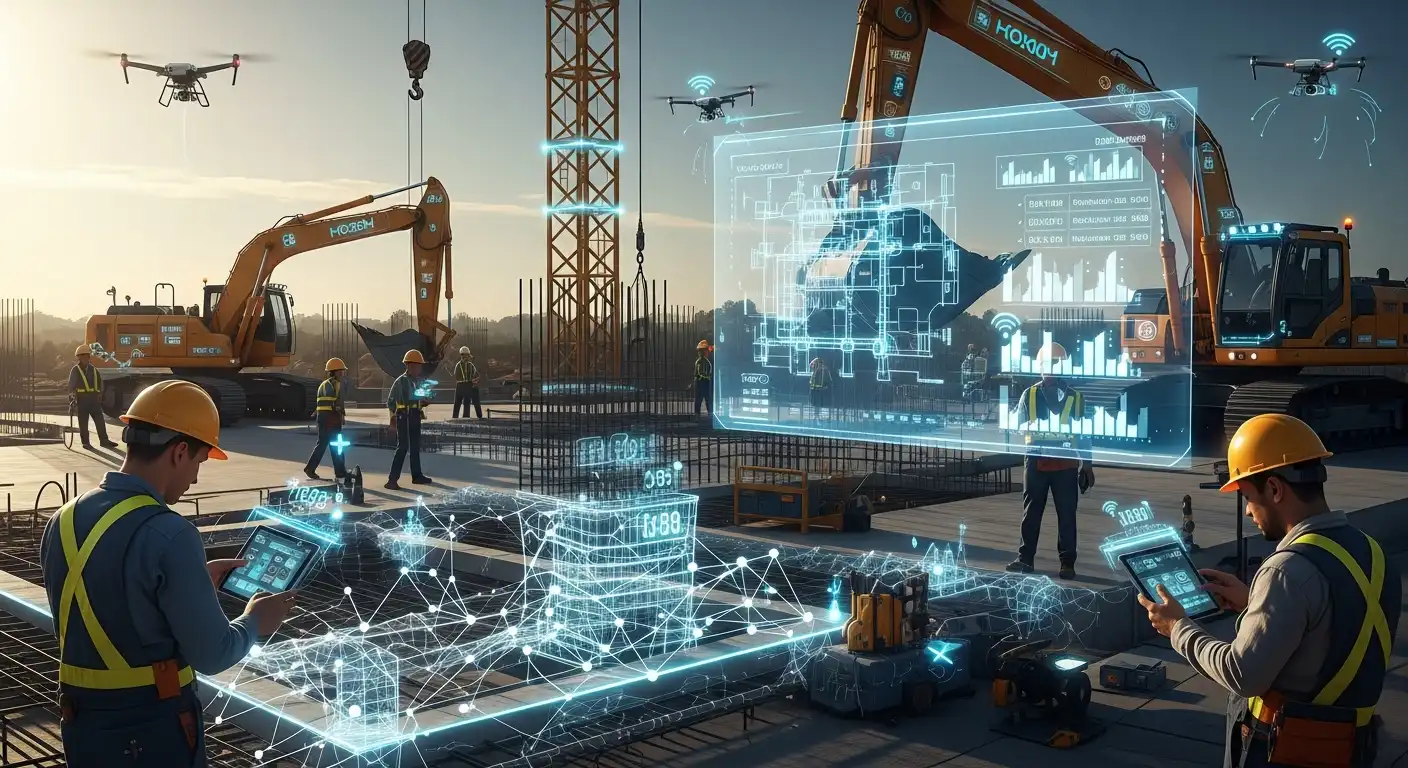
The manufacturing landscape is undergoing a tectonic shift, a revolution as profound as the steam engine or the assembly line. We are firmly in the era of Industry 4.0, where the digital and physical worlds are no longer separate domains but are intricately woven into a single, intelligent fabric. At the heart of this transformation is the Industrial Internet of Things (IIoT), the powerful engine driving the transition from traditional, reactive factories to proactive, data-driven smart manufacturing ecosystems. By 2026, the adoption of IIoT will not be a competitive advantage; it will be the fundamental prerequisite for survival and success. This comprehensive guide will explore every facet of this revolution, detailing how IIoT is poised to unlock unprecedented levels of efficiency, productivity, and innovation in manufacturing.
The promise of the “smart factory” is no longer a futuristic fantasy. It’s a tangible reality being built today, one sensor, one algorithm, and one connected machine at a time. It’s a factory that doesn’t just produce goods but also generates a constant stream of valuable data—data that can predict machine failures before they happen, identify quality defects in microseconds, optimize energy consumption down to the individual asset, and provide unprecedented visibility across the entire supply chain. This is the power of IIoT: transforming inert machinery into intelligent, communicative assets that work in concert to create a self-optimizing, resilient, and highly efficient operation. This article will serve as your roadmap to understanding, implementing, and mastering the IIoT-driven smart factory of 2026.
The Evolution from Traditional to Smart Manufacturing
To fully appreciate the magnitude of the IIoT revolution, we must first understand the limitations of the past. The journey from manual labor to the intelligent, connected factory is a story of escalating complexity and the relentless pursuit of efficiency. This evolution sets the stage for why IIoT is not merely an incremental improvement but a necessary paradigm shift for the modern industrial age.
The Limitations of Traditional Manufacturing
For decades, manufacturing operated on a model defined by silos, opacity, and reactive decision-making. While the introduction of automation (Industry 3.0) brought robotics and computer numerical control (CNC) machines, the core operational philosophy remained largely unchanged. This traditional model was plagued by inherent inefficiencies that capped productivity and stifled growth.
The following points highlight the core challenges that traditional manufacturing models have consistently faced.
These limitations represent significant barriers to agility, cost-effectiveness, and competitiveness in today’s fast-paced global market.
- Data Silos: Information was trapped within individual machines or departmental systems, such as Enterprise Resource Planning (ERP) and Manufacturing Execution Systems (MES). There was no unified view, making it impossible to see the bigger picture of the production floor.
- Reactive Maintenance: Maintenance was performed on a “break-fix” basis or on a rigid, time-based schedule. This led to unexpected and costly downtime when machines failed or to unnecessary maintenance on perfectly healthy equipment.
- Lack of Real-Time Visibility: Plant managers often relied on historical data, daily reports, and manual data entry. They lacked the real-time insights needed to make immediate, informed decisions to address production bottlenecks or quality issues as they occurred.
- Manual Quality Control: Quality assurance often depended on manual inspections and statistical sampling at the end of the production line. This process was labor-intensive, prone to human error, and resulted in defects being only detected after significant resources had already been wasted.
- Opaque Supply Chains: Once raw materials entered the factory and finished goods left, visibility was often lost. This created challenges in inventory management, demand forecasting, and responding to supply chain disruptions.
- Rigid Production Lines: Reconfiguring an assembly line for a new product was a time-consuming and expensive process, making it difficult to accommodate consumer demand for customization or to produce smaller, more varied batches economically.
The Dawn of Industry 4.0: A Paradigm Shift
Industry 4.0, also known as the Fourth Industrial Revolution, marks the next phase in the digital transformation of the manufacturing sector. It is characterized by the fusion of technologies and the blurring of lines between the physical, digital, and biological spheres. It’s a holistic vision where interconnected systems communicate and cooperate with humans in real-time.
This new industrial era is built upon a foundation of several key technological and philosophical principles.
These pillars work in synergy to create a manufacturing environment that is intelligent, autonomous, and deeply integrated.
- Interconnectivity: The ability of machines, devices, sensors, and people to connect and communicate with each other via the Internet of Things (IoT) and the Industrial Internet of Things (IIoT).
- Information Transparency: The creation of a virtual copy of the physical world (a “digital twin”) through sensor data. This allows operators to have a complete and transparent view of every aspect of the operation.
- Decentralized Decisions: The ability of cyber-physical systems to make simple decisions on their own and become as autonomous as possible. Only in cases of exception or conflicting goals are tasks delegated to a higher level of authority.
- Technical Assistance: The ability of assistance systems to support humans by aggregating and visualizing information for making informed decisions and solving urgent problems on short notice. It also involves the ability of cyber-physical systems to physically support humans by conducting a range of tasks that are unpleasant, too exhausting, or unsafe for their human co-workers.
Defining Smart Manufacturing: More Than Just Automation
Smart Manufacturing is the tangible outcome of Industry 4.0 principles applied to the factory floor. It goes far beyond simple automation. While automation involves programming a machine to perform a repetitive task, smart manufacturing involves creating a fully integrated and collaborative system that responds in real-time to meet the changing demands and conditions in the factory, the supply network, and customer needs.
It is an environment where machinery and equipment are enabled with self-optimization and autonomous capabilities.
This intelligence-driven approach yields a manufacturing process that is more efficient, agile, and resilient.
- Connected: All assets—from the smallest sensor to the largest industrial robot—are networked, providing a constant flow of data.
- Optimized: The system utilizes data analytics and AI to analyze this data flow, identifying opportunities to enhance processes, minimize waste, and increase output in real-time.
- Transparent: It provides a clear, end-to-end view of the entire operation, from raw material procurement to final product delivery.
- Proactive: It anticipates problems before they occur, such as predicting machine failure, identifying potential quality deviations, or forecasting supply chain disruptions.
- Agile: It can quickly adapt to changes, whether it’s a sudden change in a customer order, a breakdown in the supply chain, or the need to reconfigure a production line for a new product.
Understanding the Industrial Internet of Things (IIoT) Ecosystem
The Industrial Internet of Things (IIoT) is the central nervous system of the smart factory. It is a network of interconnected sensors, instruments, and other devices networked together with computers for industrial applications, including manufacturing and energy management. This connectivity enables data collection, exchange, and analysis, potentially leading to improvements in productivity and efficiency, as well as other economic benefits. The IIoT ecosystem is a multi-layered architecture, each component playing a critical role in transforming raw data into actionable intelligence.
The Core Components of an IIoT Architecture
An effective IIoT implementation is not a single product but a complex, layered system.
Understanding these layers is crucial for designing a robust and scalable solution for smart manufacturing.
- The Device Layer (Perception Layer): This is the physical foundation where data originates. It consists of cyber-physical systems like sensors, actuators, industrial robots, and other connected machinery. These “things” are responsible for sensing the physical world (e.g., temperature, pressure, vibration, location, visual data) and, in the case of actuators, acting upon it (e.g., opening a valve, adjusting a motor’s speed).
- The Connectivity Layer (Network Layer): This layer is responsible for securely and reliably transporting the vast amounts of data generated by the device layer. It encompasses a range of communication technologies, from traditional wired networks, such as Industrial Ethernet, to wireless technologies, including Wi-Fi, LoRaWAN, Cellular (4G/5G), and Bluetooth Low Energy (BLE). The choice of technology depends on factors such as bandwidth requirements, range, power consumption, and the specific factory environment.
- The Edge Computing Layer: Not all data needs to be sent to the cloud. Edge computing involves processing data closer to its source—on or near the factory floor. This is crucial for applications that require low-latency, real-time responses, such as emergency shutdowns or high-speed quality control. Edge gateways aggregate data from multiple sensors, perform initial processing and filtering, and can execute machine learning models locally.
- The Platform Layer (Cloud/Data Center): This is the central hub for data storage, processing, and advanced analytics. Data from the edge and directly from devices is sent to a public cloud (such as AWS, Azure, or Google Cloud) or a private data center. Here, the data is stored in scalable databases, and powerful computing resources are utilized to run complex algorithms, machine learning models, and big data analytics, uncovering deep insights and trends.
- The Application Layer (Presentation Layer): This is where the processed data is transformed into value. It includes the user-facing applications, dashboards, and control systems that plant managers, engineers, and operators interact with daily. This layer provides visualizations, alerts, reports, and controls that enable data-driven decision-making, such as a predictive maintenance dashboard showing the health of all critical assets or a supply chain visibility portal.
Key Technologies Powering IIoT
The IIoT ecosystem is enabled by a confluence of powerful technologies that have reached a critical level of maturity and affordability.
These technologies are the building blocks that enable the collection, transmission, analysis, and visualization of industrial data.
- 5G Connectivity: The fifth generation of cellular technology is a game-changer for manufacturing. Its key features—ultra-reliable low-latency communication (URLLC), massive machine-type communication (mMTC), and enhanced mobile broadband (eMBB)—are perfectly suited for the factory floor. 5G enables real-time control of mobile robots, wireless high-definition video for quality inspection, and the connection of tens of thousands of sensors in a small area without interference.
- Artificial Intelligence (AI) and Machine Learning (ML): AI and ML are the brains of the IIoT system. These algorithms sift through massive datasets from sensors to perform tasks such as anomaly detection (identifying unusual vibration patterns in a motor), predictive analytics (forecasting when a component will fail), and process optimization (determining the optimal settings for a machine to maximize output while minimizing energy consumption).
- Digital Twins: A digital twin is a virtual replica of a physical asset, process, or system. It is created using IIoT sensor data and is continuously updated in real-time to mirror the state and condition of its physical counterpart. Manufacturers use digital twins to simulate production processes, test new configurations without disrupting the physical line, train operators in a virtual environment, and predict how a machine will perform under different conditions.
- Cloud and Edge Computing: As discussed, this hybrid model provides the best of both worlds. Edge computing enables real-time processing, providing immediate control and decision-making capabilities on the factory floor. Cloud computing provides the massive storage and computational power needed for long-term data analysis, model training, and enterprise-level insights.
- Cybersecurity Technologies: With increased connectivity comes increased risk. Advanced cybersecurity is non-negotiable in an IIoT environment. This includes technologies like network segmentation (isolating critical operational technology from the IT network), end-to-end data encryption, identity and access management (ensuring only authorized personnel and devices can connect), and continuous threat monitoring and intrusion detection systems.
- Blockchain: While not as widespread, blockchain offers unique capabilities for manufacturing, particularly in supply chain management. Its immutable and distributed ledger can be used to create a tamper-proof record of a product’s journey from raw material to consumer, ensuring traceability, authenticity, and compliance, which is especially critical in industries like pharmaceuticals and aerospace.
IIoT vs. Consumer IoT: A Critical Distinction
While both IIoT and consumer IoT (e.g., smart watches, smart home devices) are built on the principle of connecting physical objects to the internet, their design, purpose, and requirements are fundamentally different.
Recognizing these differences is crucial to understanding the unique challenges and opportunities associated with industrial applications.
- Environment and Durability: IIoT devices must operate reliably in harsh industrial environments characterized by extreme temperatures, high humidity, vibrations, and electromagnetic interference. They require ruggedized enclosures and industrial-grade components, unlike consumer devices designed for climate-controlled homes.
- Reliability and Availability: The failure of a smart thermostat is an inconvenience. The failure of a sensor controlling a critical process in a chemical plant or a power grid can be catastrophic, leading to massive financial losses and safety hazards. IIoT systems demand “five-nines” (99.999%) availability and extreme reliability.
- Security Stakes: A hacked smart speaker might compromise personal privacy. A hacked industrial controller could cause physical damage, disrupt a nation’s critical infrastructure, or lead to industrial espionage. The security stakes in IIoT are exponentially higher, requiring a defense-in-depth security posture.
- Scale and Interoperability: An IIoT deployment in a large factory can involve tens of thousands of sensors and devices from hundreds of different vendors. Ensuring these devices can communicate seamlessly (interoperability) and that the system can scale effectively is a major engineering challenge not typically seen in consumer IoT.
- Data Precision and Latency: The data from an industrial sensor (e.g., measuring pressure in a pipeline) must be highly accurate and delivered with minimal delay (low latency) to be useful for real-time control. A consumer fitness tracker’s data, by contrast, can tolerate a much higher degree of imprecision and delay.
How IIoT Directly Supercharges Manufacturing Efficiency
The true power of IIoT lies in its direct and measurable impact on the core metrics of manufacturing: uptime, quality, throughput, safety, and cost. By 2026, companies that leverage IIoT will see transformative gains in these areas, transitioning from incremental improvements to step-change leaps in efficiency. IIoT achieves this by turning the factory into a transparent, responsive, and self-optimizing organism.
Predictive Maintenance: From Reactive to Proactive
Predictive Maintenance (PdM) is perhaps the most well-known and highest-ROI application of IIoT in manufacturing. It represents a fundamental shift from fixing things after they break (reactive) or on a fixed schedule (preventive) to predicting and preventing failures before they occur.
This proactive approach is enabled by a suite of IIoT technologies working in concert.
The result is a dramatic reduction in unplanned downtime, which is the single largest contributor to lost manufacturing revenue.
- How it Works: IIoT sensors are installed on critical equipment to continuously monitor key health indicators like vibration, temperature, acoustics, power consumption, and oil viscosity. This real-time data is streamed to an analytics platform where machine learning algorithms, trained on historical failure data, identify subtle patterns and anomalies that are precursors to a fault.
- The Efficiency Gain: When the algorithm detects a high probability of failure, it automatically generates a work order for the maintenance team, specifying the likely fault and the required parts. Maintenance can be scheduled during a planned shutdown, avoiding catastrophic and costly unplanned downtime. This also extends the life of assets, as components are replaced based on their actual condition, not a conservative time-based schedule. By 2026, leading manufacturers will see a reduction in unplanned downtime by up to 50% and maintenance costs by up to 40% through mature PdM programs.
Real-Time Asset Tracking and Management
In large manufacturing facilities and warehouses, locating tools, equipment, work-in-progress (WIP), and finished goods can be a significant source of inefficiency and lost time. IIoT provides a solution through Real-Time Location Systems (RTLS).
This technology brings a GPS-like experience indoors, providing precise location data for every critical asset.
This visibility eliminates wasted time searching for items and enables sophisticated process optimization.
- Enabling Technologies: A variety of wireless technologies are used, including RFID (Radio-Frequency Identification) for tracking items as they pass through checkpoints, Bluetooth Low Energy (BLE) beacons for cost-effective zone-based tracking, and Ultra-Wideband (UWB) for highly precise, centimeter-level accuracy tracking of moving assets like forklifts and automated guided vehicles (AGVs).
- The Efficiency Gain: Plant managers gain a real-time digital map of the factory floor. They can instantly locate any tagged asset, analyze movement patterns to identify bottlenecks in material flow, and automate inventory counts. This reduces the time workers spend searching for equipment, minimizes the risk of losing valuable tools or WIP, and ensures that the right materials are at the right place at the right time, streamlining production flow.
Enhancing Supply Chain Visibility and Optimization
The efficiency of its supply chain constrains the efficiency of a smart factory. IIoT extends beyond the factory walls to provide unprecedented end-to-end visibility, from raw material suppliers to end customers.
This creates a resilient, transparent, and responsive supply chain that can withstand modern disruptions.
Data from across the supply network is integrated to enable smarter forecasting, inventory management, and logistics.
- How it Works: GPS and cellular-connected IoT sensors are placed on shipping containers and trucks to track the real-time location and condition (e.g., temperature, humidity, shock events) of goods in transit. This data is integrated with data from smart warehouses (using RTLS and automated systems) and the factory’s own production schedule (from the MES).
- The Efficiency Gain: Manufacturers can precisely track incoming shipments, allowing them to optimize production schedules and manage just-in-time (JIT) inventory more effectively, reducing warehousing costs. They can ensure the quality of sensitive raw materials (such as those used in food or pharmaceuticals) by monitoring their condition during transport. Furthermore, by analyzing this holistic data, they can more accurately forecast demand and adjust production and procurement accordingly, reducing both stockouts and excess inventory.
Quality Control and Anomaly Detection
The traditional approach of post-production quality inspection is inherently wasteful. IIoT enables in-line, real-time quality control, catching defects and process deviations the moment they occur.
This move from defect detection to defect prevention significantly reduces scrap, rework, and warranty claims.
It leverages high-fidelity sensor data and AI to achieve a level of quality assurance that is impossible with manual methods.
- Advanced Techniques: High-resolution machine vision cameras, powered by AI, can inspect every single part on a high-speed assembly line, identifying microscopic defects, color variations, or assembly errors that a human inspector might miss. Acoustic sensors can “listen” to a machine’s operation to detect subtle changes that indicate a quality issue. Data from various process sensors (temperature, pressure, flow rate) can be fed into an anomaly detection algorithm that flags any deviation from the “golden standard” process parameters.
- The Efficiency Gain: By catching defects at their source, manufacturers prevent the wasted materials, labor, and machine time that would be spent completing a faulty product. This results in a higher first-pass yield (the percentage of products manufactured correctly the first time). The collected quality data can also be used to perform root cause analysis, helping engineers to permanently fix the underlying process issues, leading to a continuous cycle of quality improvement.
Energy Management and Sustainability
Energy is one of the largest operational costs in manufacturing. With growing pressure to improve sustainability and reduce carbon footprints, effective energy management is a critical priority. IIoT provides the granular data needed to make this possible.
Smart energy management extends beyond simply monitoring overall plant consumption; it also tracks energy use at the individual machine level.
This visibility uncovers significant opportunities for efficiency improvements and cost savings.
- Granular Monitoring: Smart meters and IIoT power sensors are attached to individual machines, production lines, and auxiliary systems, such as HVAC and lighting. These devices track real-time energy consumption and power quality.
- The Efficiency Gain: The data reveals which machines are the most energy-intensive and identifies periods of inefficiency, such as equipment left running during non-productive periods. Analytics can correlate energy consumption with production output, allowing managers to calculate the energy cost per unit produced and identify best practices. This enables targeted initiatives, such as shutting down non-essential equipment during peak demand periods (demand-response), optimizing machine settings for lower energy use, and justifying investments in more energy-efficient equipment. This not only reduces costs but also provides the verifiable data needed for sustainability reporting.
Worker Safety and Augmented Reality
The most valuable asset in any factory is its people. IIoT plays a crucial role in enhancing worker safety by creating a more aware and responsive environment.
This is achieved through connected wearable devices and advanced assistance systems that augment human capabilities.
The goal is to prevent accidents before they occur and provide immediate assistance when they do happen.
- Connected Worker Technology: Workers can be equipped with wearables (e.g., smart helmets, vests, watches) embedded with sensors. These devices can detect falls (man-down alerts), monitor exposure to hazardous gases, and utilize location tracking to create geofences that alert workers when they enter a restricted or dangerous area (e.g., too close to a moving robot).
- Augmented Reality (AR): AR headsets can overlay digital information onto a worker’s view of the real world. A maintenance technician examining a complex piece of machinery can view real-time sensor data, step-by-step repair instructions, or schematics. They could also connect with a remote expert who can see what they see and guide them through a complex task, reducing repair times and improving first-time fix rates. This combination of IIoT and AR dramatically improves safety and empowers the workforce.
The Role of Data Analytics and AI in the IIoT-Driven Factory
Collecting data with IIoT is only the first step. The true transformation comes from making sense of this data. Data analytics and Artificial Intelligence (AI) are the crucial bridge between the raw data generated by sensors and the actionable insights that drive efficiency and effectiveness. In the smart factory of 2026, data is the most valuable raw material, and AI is the advanced machinery that refines it into gold.
From Big Data to Smart Data: The Transformation
The modern factory generates an overwhelming volume, velocity, and variety of data—often referred to as “Big Data.” However, more data is not necessarily better. The key is to transform this flood of big data into “smart data”—data that is clean, contextualized, relevant, and immediately useful for decision-making.
This transformation process is a critical function of the IIoT platform.
It ensures that decision-makers are not drowned in noise but are presented with clear, actionable signals.
- Data Ingestion and Cleansing: The platform ingests data from thousands of disparate sources and protocols. It then cleanses the data by handling missing values, correcting inaccuracies, and filtering out irrelevant noise.
- Contextualization: Raw sensor data (e.g., “75.3 degrees Celsius”) is meaningless without context. The platform enriches this data with metadata, including the machine from which it originated, the product being run at the time, the operator on shift, and the ambient temperature. This creates a rich, contextualized dataset.
- Aggregation and Transformation: High-frequency data (e.g., readings per millisecond) is often aggregated into more meaningful time-series data (e.g., average, minimum, maximum values per minute). Data is transformed into formats suitable for analysis and machine learning models.
Machine Learning Algorithms for Manufacturing
Machine learning (ML), a subset of AI, is the core technology used to uncover patterns and make predictions from IIoT data. Different types of ML algorithms are applied to solve specific manufacturing challenges.
By 2026, the application of these algorithms will be standard practice in leading manufacturing operations.
These models are the engines of prediction, optimization, and automation in the smart factory.
- Supervised Learning: This is used when you have historical data with known outcomes.
- Regression Algorithms: Used for prediction. For example, predicting the Remaining Useful Life (RUL) of a component based on its vibration and temperature data.
- Classification Algorithms: Used for categorization. For example, classifying an image from a vision system as either “Pass” or “Fail,” or diagnosing a machine fault into one of several known categories (e.g., “bearing failure,” “misalignment,” “lubrication issue”).
- Unsupervised Learning: This is used to find hidden patterns in data without pre-existing labels.
- Clustering Algorithms: Used to group similar data points together. For example, clustering production runs to identify different operational modes or to segment products based on their quality characteristics.
- Anomaly Detection Algorithms: As discussed in quality control and predictive maintenance, these algorithms learn the “normal” operating behavior of a machine and flag any deviation from that norm as a potential issue.
- Reinforcement Learning: This is a more advanced technique where an AI agent learns to make optimal decisions through trial and error, receiving “rewards” for good decisions and “penalties” for bad ones. It can be used to dynamically optimize complex processes, such as adjusting the parameters of a chemical reactor in real-time to maximize yield.
The Power of the Digital Twin: A Deeper Dive
The Digital Twin is more than just a 3D model; it’s a living, learning simulation platform powered by IIoT data and AI. It serves as the ultimate analytics tool, providing a risk-free environment to understand the present and predict the future.
This virtual counterpart allows for unprecedented levels of analysis, simulation, and “what-if” scenario planning.
By 2026, digital twins will be indispensable for managing the complexity of modern products and production systems.
- Real-Time Monitoring and Visualization: The digital twin offers an intuitive and interactive interface for visualizing the real-time status of the physical asset. A plant manager can “walk through” a virtual factory and see the live performance data of every machine.
- Simulation and Prediction: Since the twin is a physics-based model enriched with real-world data, it can accurately simulate future behavior. Engineers can ask questions like: “What will happen to the production output if we increase the speed of this conveyor by 15%?” or “How will this new material composition affect the stress on the machine tool?”
- Process Optimization: Companies can utilize the digital twin to conduct thousands of virtual simulations, identifying the optimal set of operating parameters for a production line. This enables them to maximize throughput while minimizing energy consumption and wear and tear, all without affecting the live production environment.
Generative AI’s Emerging Role in Design and Process Optimization
Looking ahead to 2026 and beyond, a new class of AI—Generative AI—is set to make a significant impact. Unlike analytical AI, which interprets existing data, Generative AI creates new content, such as designs, plans, and code.
This technology promises to automate and augment some of the most creative and complex tasks in manufacturing.
It will act as a collaborative partner for engineers and designers, accelerating innovation.
- Generative Design: Engineers can input a set of design constraints into a generative design tool (e.g., material, size, weight, strength requirements, manufacturing method). The AI will then generate hundreds or even thousands of potential design solutions, often with complex, organic shapes that a human designer would never conceive of, all of which meet the specified criteria.
- Factory Layout Optimization: Generative AI can be used to design the optimal layout for a new factory or production line. By providing constraints like floor space, material flow requirements, and safety regulations, the AI can generate layouts that minimize material transport distances, reduce bottlenecks, and maximize worker safety.
- Synthetic Data Generation: A major challenge in training ML models is the lack of sufficient high-quality data, especially for rare failure events. Generative AI can create “synthetic” yet highly realistic sensor data to augment real-world datasets, enabling the development of more robust and accurate predictive models.
Real-World Case Studies and Industry Applications
The theory behind IIoT is compelling, but its true value is demonstrated in its practical application across various manufacturing sectors. By 2026, these applications will be widely adopted, transitioning from pilot projects to full-scale deployments. The following case studies demonstrate how various industries are leveraging IIoT to address distinct challenges and enhance efficiency.
Case Study: Automotive Manufacturing – The Zero-Downtime Plant
The automotive industry operates on razor-thin margins and highly complex, just-in-time supply chains. Unplanned downtime on an assembly line can cost hundreds of thousands of dollars per hour. The primary goal is to achieve a “zero-downtime” plant.
IIoT is the cornerstone of this ambition, with a heavy focus on predictive maintenance and robotic process automation.
The connected automotive factory is a symphony of synchronized, intelligent machines.
- Application: A major automotive OEM deployed thousands of vibration and acoustic sensors on critical assets along its body-in-white and final assembly lines, including welding robots, stamping presses, and conveyor systems. This data was streamed to a cloud-based AI platform.
- IIoT in Action: Machine learning models were trained to recognize the unique operational signatures of each machine. The AI detected a subtle change in the acoustic signature of a specific welding robot’s servo motor, a pattern that historical data correlated with a bearing failure that typically occurred 2-3 weeks later.
- Efficiency Gains: The system automatically issued a maintenance alert. The maintenance team was able to order the correct bearing and replace it during a scheduled weekend shutdown. This single action prevented an estimated 8 hours of catastrophic line-stoppage, saving the company over $1.5 million in lost production and repair costs. This model is now scaled across their global operations.
Case Study: Pharmaceutical Production – Ensuring Compliance and Quality
The pharmaceutical industry is governed by stringent regulations (e.g., FDA 21 CFR Part 11) that require meticulous tracking and documentation of the entire production process. Quality and compliance are paramount.
IIoT provides the tools for continuous monitoring and creating an immutable audit trail.
This ensures product quality, patient safety, and regulatory compliance.
- Application: A biotech company producing sensitive biologics needed to maintain precise environmental conditions (temperature, humidity, pressure) within its bioreactors and cleanrooms. Any deviation could compromise an entire multi-million dollar batch.
- IIoT in Action: A network of calibrated IIoT sensors was deployed for continuous environmental monitoring. The data was logged every second to a secure, time-stamped database. If any parameter drifted towards the edge of its acceptable range, the system would send proactive alerts to operators. Furthermore, the entire batch record was secured using a private blockchain, creating a tamper-proof digital ledger of every process step, from raw material intake to final packaging.
- Efficiency Gains: The company achieved “compliance by design.” Manual data logging and paper records were eliminated, resulting in thousands of labor hours saved and a reduction in human error. The proactive alerts prevented batch loss, improving yield. During regulatory audits, they could instantly produce a complete, verifiable digital history for any batch, reducing audit times from weeks to days.
Case Study: Food & Beverage – Optimizing the Cold Chain
In the food and beverage industry, maintaining the “cold chain”—the temperature-controlled supply chain—is crucial for ensuring food safety, quality, and regulatory compliance, as well as preventing spoilage and waste.
IIoT provides end-to-end temperature visibility, from the farm to the processing plant to the grocery store shelf.
This creates a transparent and accountable food supply chain.
- Application: A large dairy cooperative needed to monitor the temperature of milk during its journey from hundreds of individual farms in refrigerated tanker trucks to the central processing facility.
- IIoT in Action: Each truck was equipped with a cellular-connected IIoT device that included a GPS tracker and multiple temperature probes inside the tank. The device transmitted real-time location and temperature data to a central cloud platform. The platform’s dashboard visualized the entire fleet on a map and automatically flagged any temperature excursions outside the acceptable range.
- Efficiency Gains: The cooperative could now guarantee the quality and safety of its raw milk supply. If a truck’s refrigeration unit failed, they would receive an instant alert and could reroute the truck or dispatch a repair team, saving the entire shipment. The GPS data was used to optimize routes, reducing fuel costs and delivery times. The transparent, verifiable temperature logs also strengthened their brand reputation with customers and simplified regulatory reporting.
Overcoming the Challenges of IIoT Implementation
While the benefits of IIoT are transformative, the path to implementation is not without its challenges. A successful IIoT strategy requires careful planning and a clear understanding of the potential hurdles. By 2026, successful companies will be those that have proactively addressed these challenges head-on.
Cybersecurity: The Foremost Concern
Connecting previously isolated operational technology (OT) systems to the internet inherently introduces new cybersecurity risks. The potential impact of a cyberattack on a smart factory is severe, ranging from data theft and loss of intellectual property to operational disruption and even physical safety hazards.
A robust, defense-in-depth cybersecurity strategy is an absolute prerequisite for any IIoT initiative.
Security cannot be an afterthought; it must be built into the system from the outset.
- Key Threats: Common threats include ransomware attacks that can halt production, denial-of-service (DoS) attacks that overwhelm networks, man-in-the-middle attacks that intercept data, and the compromise of unsecured IIoT devices to gain a foothold into the corporate network.
- Mitigation Strategies:
- Network Segmentation: Strictly isolating the OT network from the IT network using firewalls and demilitarized zones (DMZs) to prevent an attack from spreading.
- Zero-Trust Architecture: Operating on the principle of “never trust, always verify.” Every user and device must be authenticated and authorized before accessing any network resource.
- End-to-End Encryption: Encrypting data both in transit (as it travels over the network) and at rest (when it’s stored in the cloud or on a server).
- Continuous Monitoring: Deploying intrusion detection and prevention systems (IDPS) that continuously monitor network traffic for malicious activity and anomalies.
- Device Lifecycle Management: Ensuring every IIoT device has strong credentials, is regularly updated with security patches, and is securely decommissioned at the end of its life.
Data Integration and Interoperability
Factories are often a heterogeneous mix of equipment from different manufacturers, built in various decades, and speaking different communication protocols. This “brownfield” environment makes it incredibly difficult to collect and integrate data into a single, unified platform.
The challenge of interoperability—getting disparate systems to communicate with each other—is a significant technical hurdle.
Solving this requires a combination of modern standards and flexible integration technologies.
- The Problem: A new CNC machine may communicate using a modern standard, such as OPC UA, while an older PLC might utilize a proprietary serial protocol. Integrating these two data sources into one system is complex.
- Solutions:
- Edge Gateways: Smart gateways can be deployed on the factory floor to act as translators. They can communicate with legacy equipment using their native protocols and then convert the data into a standardized format (like MQTT or OPC UA) for transmission to the cloud.
- Standardization on Open Protocols: For new equipment, mandating the use of open, interoperable standards, such as OPC UA, helps future-proof the architecture.
- Data Integration Platforms: Utilizing middleware or an IIoT platform with a vast library of connectors for different industrial protocols can simplify the process of aggregating data from various sources.
The Skills Gap: Finding and Training the Workforce of the Future
The technology is only one part of the equation. The smart factory of 2026 requires a workforce with a new blend of skills. There is a significant and growing gap between the skills required and those available in the current manufacturing workforce.
Companies must invest in both hiring new talent and upskilling their existing employees.
This involves creating a culture of continuous learning and collaboration between different departments.
- New Roles: The smart factory needs data scientists who can build machine learning models, IIoT architects who can design and manage the infrastructure, cybersecurity experts who understand OT environments, and robotics engineers.
- Upskilling the Existing Workforce: Maintenance technicians require training to work with data from predictive maintenance systems effectively. Operators need to be comfortable interacting with dashboards and AR interfaces. Plant managers need to develop data literacy to make informed, data-driven decisions.
- Strategies: This requires a multi-pronged approach, including developing in-house training programs, partnering with local universities and community colleges to create relevant curricula, and creating cross-functional teams where IT and OT professionals can learn from each other.
Scalability and Return on Investment (ROI)
IIoT projects can require significant upfront investment in sensors, software, infrastructure, and expertise. C-suite executives will demand a clear and compelling business case, along with a demonstrable Return on Investment (ROI), before approving a large-scale rollout.
A phased approach, starting with a well-defined pilot project, is the most effective way to demonstrate value and build momentum.
This allows the organization to learn, refine the technology, and demonstrate tangible results before scaling.
- The Challenge of Scale: A solution that works for 10 machines in a pilot may not scale effectively to 10,000 machines across multiple plants. The architecture must be designed for scalability from the outset.
- Proving ROI: The key is to start with a project that addresses a specific, high-impact business problem. For example, focusing on predictive maintenance for the most critical and failure-prone machine on the main production line.
- The Pilot-to-Production Pathway:
- Identify the Pain Point: Choose a problem where the potential ROI is clear (e.g., reducing downtime on a bottleneck machine).
- Define Success Metrics: Establish clear Key Performance Indicators (KPIs) to measure success (e.g., a 20% reduction in unplanned downtime, a 15% increase in OEE).
- Execute the Pilot: Implement the IIoT solution on a small scale.
- Measure and Communicate Results: Rigorously measure the KPIs and communicate the financial and operational benefits to stakeholders.
- Develop a Scaling Plan: Use the lessons learned from the pilot to create a roadmap for a broader, phased rollout across the facility or enterprise.
A Practical Roadmap: Implementing IIoT in Your Manufacturing Facility
Embarking on the IIoT journey requires a strategic and methodical approach. A well-defined roadmap will guide your organization from initial concept to a fully realized, value-generating smart manufacturing ecosystem. The following five-step process provides a practical framework for a successful implementation.
Step 1: Assessment and Strategy Development
Before purchasing a single sensor, you must start with a clear strategy rooted in your specific business goals. This foundational step ensures that your IIoT initiative is aligned with what matters most to your organization.
This phase is about asking “why” and “what” before getting to the “how.”
A clear vision will guide all subsequent technical and operational decisions.
- Identify Business Objectives: What are you trying to achieve? Is the primary goal to reduce unplanned downtime, improve product quality, lower energy costs, or enhance worker safety? Be specific and quantify your goals (e.g., “Reduce unplanned downtime on Line 3 by 30% within 12 months”).
- Audit Existing Infrastructure: Assess Your Current State. What machinery do you have? What level of connectivity and automation already exists? What are the capabilities of your current IT and OT teams? This helps identify both opportunities and potential roadblocks.
- Form a Cross-Functional Team: IIoT is not just an IT project or an engineering project. Assemble a team with representatives from operations, maintenance, IT, engineering, finance, and leadership. This ensures buy-in from all stakeholders and a holistic perspective.
- Prioritize Use Cases: Based on your objectives, identify and prioritize a list of potential IIoT use cases that align with your goals. Use a matrix that scores each use case based on its potential business impact and its technical feasibility. Start with a use case that is high-impact and relatively low in complexity.
Step 2: Choosing the Right Technology Stack
With a clear strategy in place, you can begin to evaluate and select the technologies that will form your IIoT ecosystem. This is a critical decision that will have long-term implications for the scalability and flexibility of your system.
The key is to select a stack that is open, scalable, and secure.
Avoid getting locked into proprietary, closed systems that limit future options.
- Sensors and Devices: Select industrial-grade sensors that are suitable for the specific parameters you need to measure and the environment in which they will operate.
- Connectivity: Select the optimal combination of wired and wireless technologies. Consider factors like bandwidth, latency, range, and power requirements for each use case.
- Edge vs. Cloud: Determine Your Data Processing Strategy. Which analytics need to happen in real-time at the edge, and which can be performed in the cloud?
- IIoT Platform: This is the heart of your system. Evaluate platforms based on their ability to connect to your specific devices, their data analytics and AI capabilities, their security features, their scalability, and the ease of developing and deploying applications. Consider whether to build your own platform, buy a commercial off-the-shelf solution, or use a hybrid approach.
Step 3: The Pilot Project – Start Small, Think Big
The pilot project is where the strategy and technology come together in a controlled, real-world test. Its purpose is to prove the technical viability and business value of your chosen use case on a small scale before committing to a major investment.
The success of the pilot is crucial for gaining the confidence and funding needed for a full-scale rollout.
Treat the pilot as a learning opportunity, not just a technical trial.
- Define a Narrow Scope: Select the one or two most critical machines for your initial predictive maintenance pilot. Don’t try to boil the ocean.
- Establish a Baseline: Before you start, collect baseline data on your chosen KPIs. You need to know your starting point to demonstrate improvement.
- Implement and Test: Deploy the sensors, connectivity, and analytics for your pilot. Work closely with the operations and maintenance teams to integrate the new system into their workflows.
- Measure, Analyze, Learn: Continuously monitor the KPIs. Did you achieve the targeted reduction in downtime? What worked well? What challenges did you encounter? Document all lessons learned.
Step 4: Scaling Up and Integration
Once your pilot project has successfully demonstrated value, the next step is to develop a plan for scaling the solution. This involves a phased rollout to other machines, production lines, or even other facilities.
Scaling requires a more robust architecture and deeper integration with existing enterprise systems.
This is where the true enterprise-wide value of IIoT is unlocked.
- Develop a Phased Rollout Plan: Based on the lessons from the pilot, create a roadmap for extending the solution. Prioritize areas based on where you can get the biggest ROI.
- Standardize the Architecture: Create a standardized “blueprint” for your IIoT deployment—a common set of hardware, software, and security protocols that ensures consistency across all components. This makes the rollout process repeatable, faster, and more cost-effective.
- Integrate with Enterprise Systems: To maximize value, the insights from your IIoT platform must be integrated with other business systems. For example, a predictive maintenance alert should automatically generate a work order in your Computerized Maintenance Management System (CMMS), and production data should be transmitted to your Enterprise Resource Planning (ERP) system.
Step 5: Fostering a Data-Driven Culture
The most advanced technology in the world will fail if the people who are meant to use it don’t trust it or don’t know how to use it. The final and most critical step is to drive organizational change and foster a culture where data is at the heart of every decision.
This is a long-term commitment that requires ongoing training, effective communication, and ongoing leadership support.
The goal is to empower every employee, from the shop floor to the top floor, with the data they need to perform their jobs more effectively.
- Training and Education: Provide ongoing training to all relevant employees on how to use the new dashboards, interpret the data, and act on the insights provided.
- Change Management: Clearly communicate the benefits of the new system and address any concerns or resistance from the workforce to ensure a smooth implementation. Emphasize that the technology is a tool to empower them, not replace them.
- Democratize Data: Make data and insights accessible to the people who can act on them. Give operators real-time performance dashboards for their work cells. Provide maintenance technicians with mobile access to machine health data.
- Establish a Continuous Improvement Loop: Use the insights from your IIoT system to drive a continuous cycle of improvement. Regularly review performance, identify new opportunities for optimization, and refine your processes and analytics models to enhance efficiency.
The Future of Smart Manufacturing Beyond 2026
The evolution of smart manufacturing will not stop in 2026. The foundations being laid today with IIoT will enable even more advanced and autonomous capabilities in the years to come. The future factory will be more intelligent, more adaptable, and more integrated into the broader digital ecosystem.
The Convergence of IT and OT
Historically, Information Technology (IT) and Operational Technology (OT) have been distinct domains with separate teams, technologies, and priorities. The convergence of these two domains is a core tenet of Industry 4.0 and is expected to accelerate beyond 2026. This deep integration will break down the final silos, creating a seamless flow of information from the factory floor to the enterprise and back again.
Towards the Autonomous Factory and “Lights-Out” Manufacturing
The ultimate vision for many is the “lights-out” factory—a fully autonomous facility that can run 24/7 with minimal human intervention. While this may not be universally achievable, the trend is towards greater autonomy. Future factories will feature self-organizing production lines where AI-powered systems manage production scheduling, material flow, and maintenance in real-time, automatically adapting to changes in demand or unexpected disruptions.
Hyper-Personalization and Lot Size One
Consumer demand is shifting from mass-produced goods to personalized and customized products. IIoT and smart manufacturing are the keys to making “mass personalization” or “lot size one” economically viable. Agile, robotic production cells and data-driven processes will allow factories to switch from producing one product to another with near-zero changeover time, making it possible to manufacture a unique item for an individual customer with the efficiency of mass production.
Sustainability and the Circular Economy
The factory of the future will be green. IIoT will be instrumental in driving the shift towards a circular economy, where waste is minimized and materials are reused and recycled. Data from IIoT sensors will be used to track the lifecycle of products, optimize processes for minimal resource consumption, and design products that are easier to disassemble and remanufacture. This data-driven approach to sustainability will be a key competitive differentiator and a core corporate responsibility.
Conclusion
As we look towards 2026, it is unequivocally clear that the Industrial Internet of Things is not a passing trend but the fundamental bedrock of modern manufacturing. It is the enabling force that transforms factories from static collections of machinery into dynamic, intelligent, and self-optimizing ecosystems. The ability to harness real-time data from every corner of the operation—to predict failures, perfect quality, optimize supply chains, and empower workers—is the new frontier of competitive advantage.
The journey to becoming a fully realized smart factory is a marathon, not a sprint. It requires a clear strategic vision, a thoughtful approach to technology, a commitment to overcoming challenges like cybersecurity and the skills gap, and a relentless focus on fostering a data-driven culture. The manufacturers who embark on this journey today, starting with focused pilot projects and building momentum, are the ones who will not only survive but also thrive in the hyper-competitive landscape of 2026 and beyond. They will be the leaders who define the future of industry, building factories that are not just more efficient, but more resilient, more agile, more sustainable, and ultimately, more human-centric than ever before. The time for deliberation is over; the time for action is now.