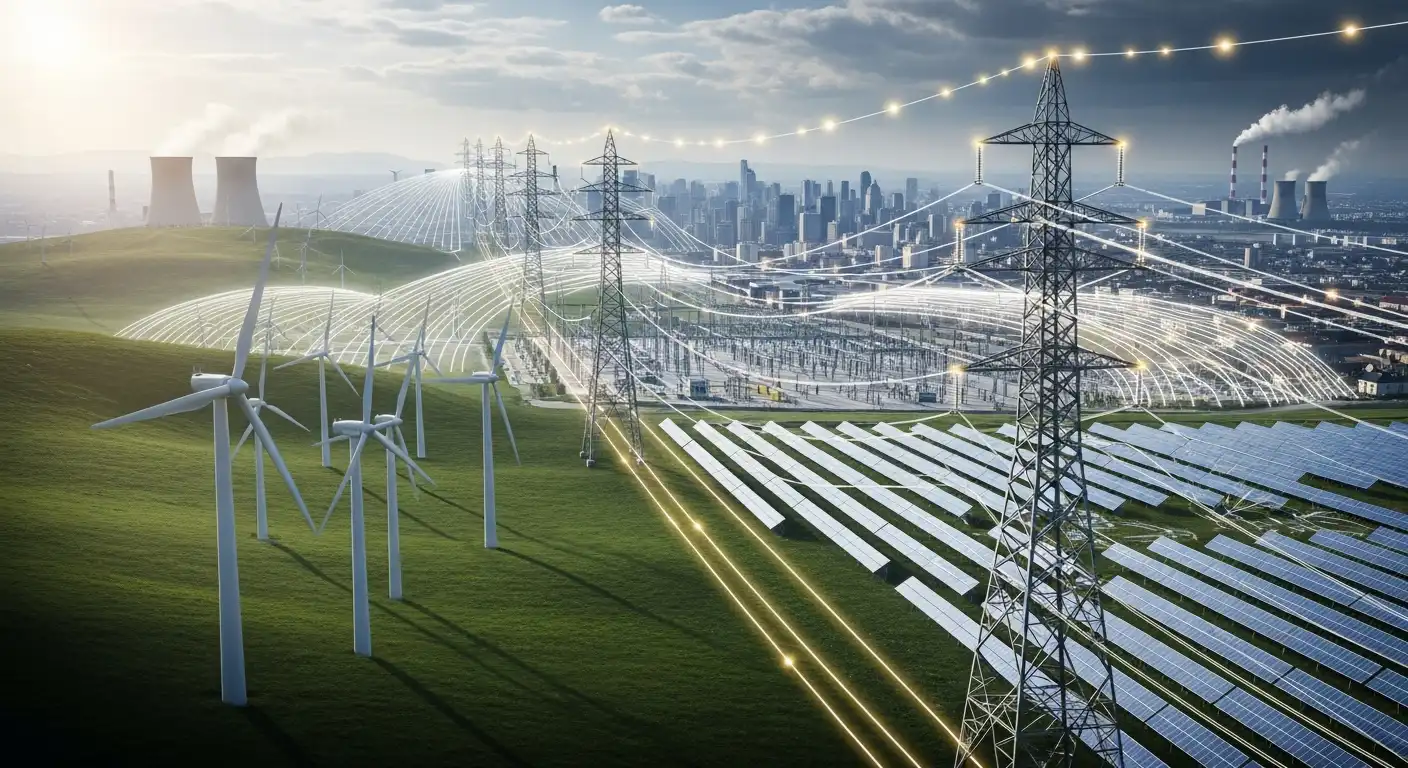
For over a century, the electrical grid has been the silent, unsung hero of the modern world. It is a monumental feat of engineering, a sprawling continent-spanning machine that has powered our homes, industries, and innovations. Yet, this marvel of the 20th century was built on a simple, almost primitive, principle: a one-way flow of power from massive, centralized power plants to passive, silent consumers. It was a “dumb” grid—an analog behemoth in a digital age, ill-equipped to handle the immense and complex challenges of the 21st century. As we hurtle towards recent future, that old model is not just being upgraded; it is being completely reinvented from the ground up.
We are in the midst of a global energy transformation, a paradigm shift driven by the existential threat of climate change, the explosive rise of renewable energy, and the electrification of everything from our cars to our homes. This new world demands a new kind of grid: one that is intelligent, responsive, resilient, and democratic. This is the Smart Grid. It is not a single technology, but a complex, interconnected ecosystem—a digital nervous system for our energy infrastructure. Paired with sophisticated Energy Management Systems (EMS), it is creating a dynamic, two-way conversation between producers and consumers, optimizing energy flow with the precision of a computer and the intelligence of AI. This comprehensive guide will explore every layer of this revolution, from the technological bedrock to the profound economic and societal impacts, providing a definitive roadmap to the intelligent, decarbonized energy landscape.
The Legacy Grid: A 20th-Century Relic Facing 21st-Century Demands
To appreciate the sheer magnitude of the smart grid revolution, we must first understand the deep-seated limitations of the system it is replacing. The traditional electrical grid was a masterpiece of centralized, top-down design, perfectly suited for an era of predictable demand and fossil-fuel-based power generation. However, its rigid, analog nature has become a critical liability in our dynamic modern world.
The One-Way Power Flow: Centralized Generation to Passive Consumer
The architectural philosophy of the legacy grid was straightforward. Large, centralized power plants (coal, natural gas, nuclear, hydro) would generate massive amounts of electricity. This power would then be “pushed” out through a network of high-voltage transmission lines and lower-voltage distribution lines to homes and businesses, which acted as passive endpoints, simply consuming whatever power was sent their way.
There was virtually no communication flowing back from the consumer to the utility. This lack of visibility and control is the core flaw that the smart grid is designed to fix.
- Lack of Real-Time Data: Utilities had very little insight into real-time energy consumption. They relied on historical data and weather forecasts to predict demand. They would often have to over-generate power just to be safe, a practice that is both wasteful and inefficient.
- Manual Operations: When an outage occurred, utilities often had to wait for customers to call and report it. Locating the fault and dispatching a crew was a slow, manual process involving paper maps and guesswork.
- Passive Consumption: Consumers had no control over their energy usage beyond flipping a switch. They received a bill once a month with a single, opaque number, giving them no information on when they used the most energy or how they could reduce their consumption.
The Crippling Inefficiencies of an Analog System
This lack of intelligence and communication resulted in a system that was inherently inefficient and brittle. It was a system that worked, but at a significant and often hidden cost.
These inefficiencies represent billions of dollars in wasted energy and operational costs annually. They are the low-hanging fruit that smart grid technologies are designed to capture.
- Line Losses: A significant percentage of electricity generated is lost as heat during transmission and distribution over long distances.
- Peak Demand Challenges: The grid had to be built to handle the highest possible demand (e.g., a hot summer afternoon when everyone’s air conditioning is on full blast). This meant that for most of the time, a large portion of the grid’s capacity sat idle, a hugely inefficient use of capital.
- Reactive Maintenance: Utilities operated on a “break-fix” maintenance schedule. They would repair equipment only after it failed, leading to more frequent and longer-lasting power outages.
The Unprecedented Challenges of the Modern Era
The legacy grid’s inherent weaknesses have been dangerously exposed by a trio of powerful, disruptive forces that are defining the energy landscape. These are not minor issues; they are systemic challenges that the old grid is simply not designed to handle.
These three forces are acting as the primary catalysts, creating an urgent and undeniable need for grid modernization. They are pushing the old system to its breaking point.
- The Rise of Intermittent Renewables: The rapid growth of solar and wind power is essential for decarbonization, but it introduces a major challenge: intermittency. Unlike a coal plant, you cannot simply command the sun to shine or the wind to blow. The grid must now cope with a fluctuating, unpredictable power supply, requiring a new level of flexibility and real-time management.
- The Electrification of Everything, Especially Transportation: The mass adoption of electric vehicles (EVs) represents the largest new electrical load in a generation. A single EV charging at home can double a household’s peak electricity demand. Unmanaged, the simultaneous charging of millions of EVs could easily overwhelm local distribution grids, causing blackouts.
- Increasing Climate Volatility and the Need for Resilience: From extreme heatwaves and wildfires to more powerful hurricanes and ice storms, climate change is placing unprecedented stress on our energy infrastructure. The old, centralized grid is vulnerable, and there is a growing demand for a more resilient system that can withstand and recover quickly from these events.
Defining the Smart Grid: The Digital Nervous System for a New Energy Era
In response to these challenges, the concept of the Smart Grid has emerged. It is a comprehensive modernization of the electrical grid that uses information and communication technology to gather, act on, and automate information about the behavior of all participants in the energy ecosystem—from the utility to the end-consumer.
More Than Just Smart Meters: A Holistic View
It is a common misconception to equate the smart grid with the rollout of smart meters. While Advanced Metering Infrastructure (AMI) is a foundational component, it is just one piece of a much larger, more complex puzzle. The true smart grid is a system of systems, an intelligent network that overlays the physical power lines.
It is best understood as a transition from a simple, one-way monologue to a dynamic, multi-directional conversation. This conversation involves a constant exchange of data and energy between all connected devices.
The Core Principles of a Smart Grid
The vision of the smart grid is guided by a set of core principles that define its capabilities and differentiate it from the legacy system. These principles will be the benchmarks by which all grid modernization efforts are measured.
These are the defining characteristics that enable a cleaner, more efficient, and more reliable energy future. Each principle addresses a key failure of the traditional grid.
- Two-Way Communication Flow: Data and energy flow in both directions. Utilities can send signals to devices in the home to reduce demand, and consumers (or their devices) can send information back to the utility.
- Self-Healing and Autonomous: The grid can automatically detect, isolate, and respond to faults and outages, rerouting power to minimize the number of affected customers and reduce restoration times.
- Resilience and Security: It is designed to withstand and recover from physical and cyber attacks, as well as natural disasters.
- Consumer Empowerment and Participation: It provides consumers with the information and tools they need to make smart decisions about their energy use and even to participate in energy markets.
- Accommodation of All Generation Types: It can seamlessly integrate a diverse range of energy sources, from large, centralized power plants to millions of small, distributed resources like rooftop solar panels and batteries.
The Technological Bedrock: Core Components of the Smart Grid
The smart grid is brought to life by a suite of advanced technologies that work in concert to create a single, intelligent, and observable system. These components will no longer be experimental; they will be deployed at scale, forming the new foundation of our energy infrastructure.
Advanced Metering Infrastructure (AMI)
AMI is the gateway to the smart grid at the consumer level. It is a system of smart meters, communication networks, and data management systems that enables two-way communication between utilities and customers.
This is the foundational data-gathering layer of the smart grid. It replaces the monthly manual meter read with a constant stream of real-time information.
- Smart Meters: These digital devices record energy consumption in near real-time (typically every 15 minutes) and communicate that information back to the utility over a secure wireless network. They can also receive signals from the utility.
- Key Capabilities: AMI enables precise, remote meter reading, faster outage detection (the meter can send a “last gasp” signal when power is lost), and detailed energy usage data for consumers.
The Internet of Things (IoT) and a Sensor-Saturated Grid
Beyond the customer’s meter, the smart grid is being saturated with thousands of IoT sensors and intelligent electronic devices. These sensors are the “nerve endings” of the grid, providing unprecedented visibility into the health and status of every component.
These devices convert the physical grid into a real-time digital model. This data is the fuel for all advanced analytics and automated control systems.
- Types of Sensors: Sensors are placed on transformers, substations, and power lines to monitor key parameters like voltage, current, temperature, and power quality in real-time.
- The Impact: This constant stream of data allows utilities to detect failing equipment before it causes an outage, pinpoint the exact location of a fault, and manage power flow with much greater precision.
Pervasive AI and Machine Learning
If sensors are the nerve endings, then artificial intelligence and machine learning are the brain of the smart grid. AI algorithms sift through the massive volumes of data generated by AMI and IoT sensors to find patterns, make predictions, and optimize the operation of the grid.
AI will be essential for managing the sheer complexity of a modern, decentralized grid. It allows utilities to move from reactive problem-solving to proactive and even predictive management.
- Predictive Maintenance: AI models can analyze sensor data from a transformer to predict its likelihood of failure, allowing the utility to schedule maintenance before a costly outage occurs.
- Advanced Load Forecasting: AI can produce highly accurate, granular forecasts of energy demand by considering weather, historical patterns, and even social events, which helps optimize power generation.
- Renewable Energy Forecasting: AI is used to predict the output of solar and wind farms, helping grid operators to manage their intermittency.
The Rise of Distributed Energy Resources (DERs)
This is one of the most transformative aspects of the new energy landscape. DERs are small-scale power generation and storage resources located on the distribution grid, often at the customer’s site.
The proliferation of DERs is turning the grid from a one-way street into a complex, multi-directional network. It is blurring the line between energy consumer and producer.
- Examples of DERs: This category includes rooftop solar panels, residential and commercial battery storage systems, and electric vehicles (which are essentially batteries on wheels).
- The Challenge and Opportunity: These resources can create stability challenges if unmanaged, but if orchestrated and controlled, they represent a massive, flexible resource that can support the grid.
The Brains of the Operation: Energy Management Systems (EMS)
While the smart grid provides the intelligent infrastructure, Energy Management Systems (EMS) are the software and control systems that leverage this infrastructure to optimize energy use. Sophisticated EMS will become common at every level of the energy ecosystem, from a single smart home to the entire grid itself.
Home Energy Management Systems (HEMS)
A HEMS is the consumer’s interface to the smart grid. It is a system that connects to and controls the various smart, energy-consuming devices within a home, optimizing their operation to save money and reduce peak demand.
HEMS turns the home from a passive energy consumer into an active, intelligent grid participant. It empowers homeowners to take control of their energy destiny.
- Core Components: A typical HEMS includes a smart thermostat, smart appliances (like water heaters and dishwashers), a smart EV charger, and often integrates with a home’s solar panels and battery storage.
- How it Works: The HEMS can respond to signals from the utility. For example, during a “demand response” event on a hot afternoon, the utility might signal a critical peak in demand. The HEMS could automatically respond by slightly pre-cooling the house and then raising the thermostat by a few degrees. It would also shift the EV charging schedule to later in the evening and run the dishwasher overnight, all without any noticeable impact on the homeowner’s comfort, but significantly reducing strain on the grid.
Building Energy Management Systems (BEMS)
Similar to a HEMS but on a much larger scale, a BEMS is used to control and optimize the energy consumption of commercial and industrial buildings.
Given that commercial buildings are responsible for a huge portion of electricity consumption, BEMS are a critical tool for energy efficiency. They use AI and advanced analytics to minimize waste and reduce operational costs.
- Key Functions: A BEMS controls the building’s largest energy loads, primarily the heating, ventilation, and air conditioning (HVAC) system, as well as lighting.
- AI-Powered Optimization: A modern BEMS uses AI to learn the building’s occupancy patterns and thermal properties. It can then proactively adjust the HVAC and lighting to ensure comfort while using the absolute minimum amount of energy, and can also participate in demand response programs.
DER Management Systems (DERMS) and Virtual Power Plants (VPPs)
This is where the true power of a decentralized grid is unlocked. A DERMS is a software platform used by utilities to manage and orchestrate the thousands or even millions of DERs on their grid. A Virtual Power Plant (VPP) is a concept where a DERMS aggregates and controls a fleet of DERs, making them behave like a single, large, dispatchable power plant.
VPPs are a revolutionary concept that turns a liability (unmanaged DERs) into a powerful asset. VPPs will be a key tool for utilities to manage grid stability and avoid building expensive new power plants.
- How a VPP Works: Imagine a heatwave is forecast for tomorrow. The utility, instead of firing up an expensive and polluting “peaker” power plant, uses its DERMS to send a signal to thousands of participating homes. The VPP could orchestrate the pre-cooling of homes, schedule the discharge of thousands of residential batteries, and even draw a small amount of power from connected EVs (in a Vehicle-to-Grid model). These actions combine to provide the same grid-stabilizing service as a traditional power plant, but more cleanly and cost-effectively.
The Transformative Impact: How Smart Grids Reshape Key Sectors
The convergence of smart grids and EMS is not just a technical upgrade; it is a catalyst for profound economic and social change, creating new business models, empowering consumers, and enabling a more sustainable and resilient society.
For Utilities: From Power Movers to Data Orchestrators
The smart grid is forcing a fundamental identity crisis and business model transformation for electric utilities. Their traditional role as the sole generator and distributor of a commodity product is becoming obsolete.
In the modern landscape, the most successful utilities are those that embrace their new role as network and data orchestrators. They are moving from selling kilowatt-hours to providing value-added services.
- Proactive Operations: With the data from a sensor-saturated grid, utilities can move to a predictive maintenance model, improving reliability (SAIDI/SAIFI metrics) and reducing operational costs.
- New Revenue Streams: Utilities can offer new services to customers, such as managing their home energy systems, installing and maintaining EV chargers, or acting as the aggregator for VPPs.
- Improved Asset Management: Detailed data allows for much smarter planning and investment in grid infrastructure, ensuring that upgrades are made where they are most needed.
For Consumers: The Rise of the “Prosumer”
Perhaps the most democratic aspect of the smart grid revolution is the empowerment of the consumer. The old, one-way relationship is being replaced by a new model where the consumer is also a producer—a “prosumer.”
This shift gives individuals an active role and a financial stake in the energy transition. It is the decentralization of power generation down to the individual household level.
- Energy Independence and Savings: A home with rooftop solar and a battery can generate and store its own electricity, reducing its reliance on the grid and saving money on its energy bills.
- Participating in Energy Markets: Through VPPs and demand response programs, prosumers can be paid for allowing the utility to use their DERs (battery, EV) to provide grid services. They are no longer just paying the utility; the utility is now paying them.
For Transportation: The EV Charging Revolution
The smart grid is the essential enabler of the electric vehicle transition. Without intelligent management, the mass adoption of EVs would be a grid catastrophe. With it, EVs become a powerful grid asset.
The key is “smart charging” or V1G, and the future is Vehicle-to-Grid (V2G). This turns millions of cars from a problem into a solution.
- Smart Charging (V1G): This is the ability to control when an EV charges. The EV is plugged in, but the utility or a HEMS can delay the charging session until electricity demand is low and renewable energy is abundant (e.g., the middle of the night), preventing grid overload.
- Vehicle-to-Grid (V2G): This is the next frontier. V2G technology allows a bidirectional flow of energy, enabling a parked and plugged-in EV to not only draw power from the grid but also to discharge power back to the grid to provide stability services during peak demand. The collective storage capacity of millions of EVs represents a massive, distributed battery that can support the grid.
For Cities and Communities: The Age of the Microgrid
A microgrid is a localized group of electricity sources and loads that can function autonomously, disconnected (“islanded”) from the traditional, centralized grid.
Microgrids are a key strategy for enhancing resilience in the face of extreme weather and other threats. They provide a new level of energy security for critical facilities and communities.
- How They Work: A typical microgrid might serve a hospital, a university campus, or a military base. It would have its own local generation (like solar panels and a natural gas generator) and battery storage. During normal operation, it remains connected to the main grid. But if a hurricane knocks out the main grid, the microgrid can automatically disconnect and continue to power its local loads indefinitely.
Navigating the Hurdles: The Challenges on the Path to a Smarter Grid
The transition to a fully realized smart grid is a monumental undertaking, and the path to recent future is not without significant challenges. These hurdles must be navigated with careful planning, policy, and investment.
The Monumental Cost of Modernization
Upgrading a century’s worth of infrastructure is incredibly expensive, running into the trillions of dollars globally. This includes the cost of new meters, sensors, software, and communication networks. The question of how to fund these upgrades and who should bear the cost—utilities, taxpayers, or ratepayers—is a major policy debate.
The Cybersecurity Imperative: Protecting Critical Infrastructure
A smarter, more connected grid is also a grid with a much larger digital attack surface. The risk of a cyberattack by state actors or ransomware gangs, which could disrupt the flow of electricity, is a top national security concern. A new, more robust approach to cybersecurity, based on principles like Zero Trust, is essential to protect this critical infrastructure.
Regulatory Inertia and Policy Evolution
The regulatory frameworks that govern the utility industry were designed for the old, centralized model. New policies are needed to address a host of complex issues, such as how to compensate prosumers for the grid services they provide fairly, how to ensure equitable access to smart grid technologies, and how to manage the vast amounts of new data being generated.
Data Privacy and the Smart Meter
Smart meters collect highly granular data about a household’s energy consumption. This data can reveal a great deal about a person’s lifestyle—when they are home, when they sleep, what kinds of appliances they use. Strong data privacy regulations and security measures are crucial to protect this sensitive information and maintain public trust.
Conclusion
As we look at the energy landscape, the direction of travel is clear and irreversible. The era of the dumb, one-way grid is over, and the age of the intelligent, multi-directional energy ecosystem has begun. The smart grid, powered by a symphony of advanced technologies from AI to IoT, is the essential and indispensable backbone for a decarbonized, electrified, and resilient future. Paired with intelligent Energy Management Systems, it is transforming the fundamental relationship between utilities, consumers, and the very flow of energy itself.
The journey is complex, costly, and fraught with challenges, from cybersecurity to regulatory reform. But the stakes could not be higher. Building a smart grid is not merely a technical upgrade; it is a foundational investment in our economic prosperity, our national security, and the long-term health of our planet. It is the enabling infrastructure that will allow us to seamlessly integrate vast amounts of renewable energy, to manage the charging of millions of electric vehicles intelligently, and to empower every individual to become an active participant in their own energy future. The silent, analog machine of the 20th century is finally finding its digital voice, and the conversation it is starting will power the world for generations to come.