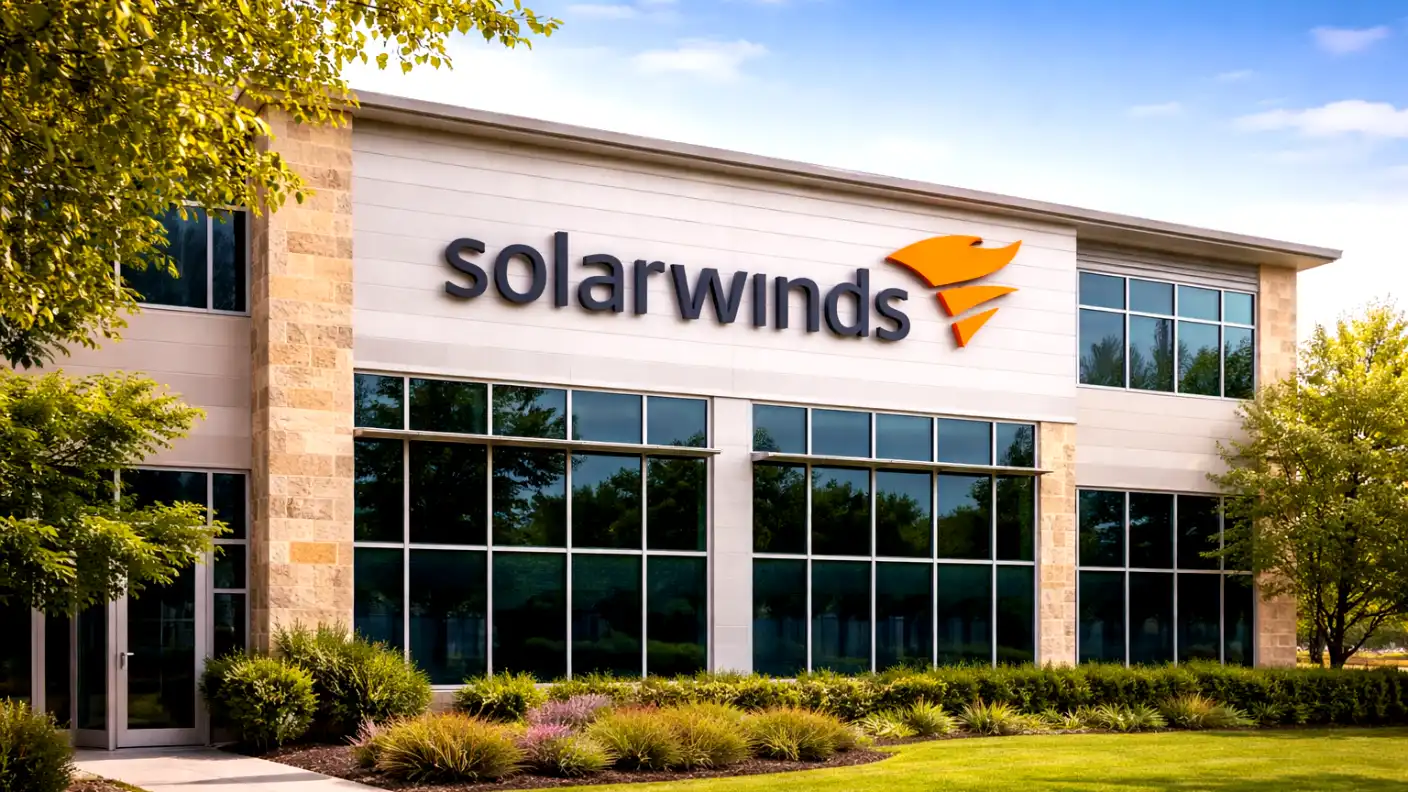
In the intricate world of enterprise technology, few companies have a story as dramatic, complex, and consequential as SolarWinds Corporation. For nearly two decades, it was the industry’s best-kept secret, a quiet giant that revolutionized how IT professionals managed their sprawling digital infrastructures. Through a brilliantly disruptive business model, it grew from a small startup in Tulsa, Oklahoma, into a multi-billion-dollar powerhouse, its software becoming the invisible yet indispensable nervous system for hundreds of thousands of organizations worldwide, including the majority of the Fortune 500 and the most sensitive branches of the U.S. government.
Then, in December 2020, the world learned SolarWinds’ name for all the wrong reasons. The company became the epicenter of SUNBURST, one of the most sophisticated, widespread, and damaging cyberattacks in history. A highly advanced nation-state actor compromised SolarWinds’ software, turning a trusted tool into a Trojan horse to spy on the world’s most protected networks. The incident was a watershed moment, a cyber Pearl Harbor that exposed the terrifying vulnerability of the global software supply chain. It plunged the company into an existential crisis, vaporized billions in market value, and shattered the trust it had spent twenty years building.
This is the complete story of SolarWinds. It is a tale of two distinct eras: the pre-breach disruptor and the post-breach survivor. We will deconstruct the unique “low-touch” business model that propelled its meteoric rise, explore the powerful Orion Platform that made it ubiquitous, and provide a detailed anatomy of the devastating SUNBURST attack. Most importantly, we will chart the company’s unprecedented journey through the fire—a story of rebuilding not just its code, but its very culture and reputation under the banner of “Secure by Design.” This is more than a cautionary tale; it is a landmark case study in corporate resilience, the evolving landscape of cyberwarfare, and the immense responsibility that comes with being a foundational pillar of our interconnected world.
The Genesis of a Disruptor: SolarWinds’ Founding and Early Philosophy
The SolarWinds story does not begin in Silicon Valley, but in Tulsa, Oklahoma, in 1999. It was founded by two brothers, Donald and David Yonce, alongside Donald’s wife, Gerri. Donald Yonce was not a typical software executive; he was a former Walmart executive deeply immersed in the retailer’s legendary culture of operational efficiency and relentless cost-cutting. This background would prove to be the secret ingredient in SolarWinds’ future success.
From Tulsa, Oklahoma, to the Global Stage
The founders were not setting out to build a conventional enterprise software company. They looked at the industry, dominated by behemoths like IBM, CA Technologies, and Hewlett-Packard, and saw a broken model. These legacy companies sold incredibly complex, monolithic software suites that required armies of high-priced sales representatives, expensive installation consultants, and lengthy, multi-year contracts. The software was powerful but also bloated, difficult to use, and prohibitively expensive for all but the largest enterprises.
The Core Problem: Overpriced and Complex Enterprise Software
The Yonce brothers identified a massive, underserved segment of the market: the individual IT professionals and system administrators—the “techies in the trenches.” These were the people who were actually responsible for keeping networks running, servers online, and applications performing. They didn’t have million-dollar budgets or the authority to sign massive contracts. They had specific, urgent problems to solve today, and they needed tools that were affordable, easy to download, and ready to use out of the box.
This simple but profound insight became the foundation of SolarWinds. The mission was clear: create powerful, enterprise-grade IT management tools that were surprisingly affordable and incredibly easy to use. They would build software for the practitioner, not the Chief Information Officer (CIO). This user-centric, bottom-up approach was revolutionary at a time when all of enterprise software sales was a top-down affair.
The “Low-Touch” Revolution: Deconstructing the SolarWinds Business Model
SolarWinds’ products were excellent, but its business model was pure genius. The company engineered a go-to-market strategy that was as innovative as its software. This “low-touch,” high-velocity model enabled it to scale to hundreds of millions in revenue with a fraction of its competitors’ sales and marketing costs.
Product-Led Growth Before It Had a Name
Long before “product-led growth” (PLG) became a popular buzzword in the tech industry, SolarWinds was perfecting the playbook. The entire business was built around a simple, powerful funnel: download, try, buy.
Here is a breakdown of the key components of this revolutionary sales model. This approach eliminated friction and enabled the product itself to serve as the primary sales tool.
- Free Tools and Free Trials: SolarWinds created dozens of genuinely useful free tools that solved small, specific problems for IT pros. These tools acted as lead magnets, drawing users to their website. Every commercial product offered a fully functional 30-day free trial that could be downloaded and installed in minutes.
- Transparent Pricing: Unlike legacy vendors who hid their prices behind layers of sales negotiations, SolarWinds published its prices directly on its website. An IT manager could see exactly what a tool would cost, build a business case, and often purchase it with a corporate credit card, completely bypassing a lengthy procurement cycle.
- No Outside Sales Force: In its formative years, SolarWinds had virtually no traditional, field-based sales representatives. The sales process was handled almost entirely by an inside sales team that would follow up with users who had downloaded a trial. Their job was not to “sell” in the traditional sense, but to answer technical questions and facilitate the purchase.
- “Selling to the Engineer”: The entire model was predicated on the idea that if you build a great product that solves a real pain point for an engineer, that engineer will become your internal champion and fight to get the budget to buy it.
The Power of Digital Marketing and SEO
Because SolarWinds didn’t have a massive sales team knocking on doors, it had to find a way to get its products in front of IT professionals. It became a master of digital marketing and search engine optimization (SEO). The company invested heavily in creating high-quality technical content—blog posts, white papers, and how-to guides—that answered the specific questions IT pros were typing into Google.
When a network engineer searched for “how to monitor Cisco router bandwidth,” a SolarWinds blog post or tool would often be the top result. This content-driven, inbound marketing approach generated a massive volume of highly qualified leads at an incredibly low cost.
THWACK: Building a Community of Raving Fans
Perhaps the most unique and powerful component of the SolarWinds model was THWACK, its online community for IT professionals. Launched in 2006, THWACK was far more than a support forum. It was a vibrant, gamified social network where users could earn points and badges for asking and answering questions, sharing scripts, and providing feedback on product development.
THWACK became the company’s eyes and ears. Product managers would hang out in the forums, getting real-time feedback from thousands of their most passionate users. This created an incredibly tight feedback loop, enabling SolarWinds to build the features its customers explicitly asked for. It also fostered a fiercely loyal community of brand advocates who would recommend SolarWinds to their peers, further fueling the company’s viral growth.
The Orion Platform and the Product Ecosystem: Solving IT’s Toughest Problems
At the heart of SolarWinds’ product portfolio is the Orion Platform, a powerful, modular, and unified platform for monitoring and managing the entire IT stack. The genius of the Orion Platform was its modularity. Customers could start with a single product and then add new modules as their needs and budget grow.
A Modular Approach to IT Management
Instead of a single, monolithic product, the Orion Platform served as a common backend for a suite of individual products that shared a common database, user interface, and alerting engine. This enabled seamless integration across different tools. For example, a network performance alert could be automatically correlated with a server health issue or a database query problem, giving IT teams a holistic view of an application’s performance.
This “start small, expand anywhere” approach was incredibly appealing to customers. They could solve their most pressing problem first—for example, network monitoring—and then later add on capabilities for server monitoring, log analysis, or database performance, all within the same familiar interface.
Key Pillars of the SolarWinds Product Suite
The SolarWinds product portfolio is vast, covering nearly every aspect of modern IT operations. The following list outlines the major product categories, most of which can be integrated through the Orion Platform.
- Network Management: This is SolarWinds’ bread and butter. Products like Network Performance Monitor (NPM) and NetFlow Traffic Analyzer (NTA) are industry standards for monitoring the health and performance of routers, switches, and firewalls.
- Systems Management: Tools like Server & Application Monitor (SAM) provide deep visibility into the health of physical and virtual servers and the performance of critical business applications such as Microsoft Exchange and SQL Server.
- Database Management: Through acquisitions such as SolarWinds Database Performance Analyzer (DPA), the company offers powerful tools that help database administrators diagnose and resolve performance bottlenecks in complex database environments.
- IT Security: Products like Security Event Manager (SEM) provide security information and event management (SIEM) capabilities, helping organizations collect and analyze log data to detect security threats.
- IT Service Management (ITSM): SolarWinds offers help desk and service desk software to help IT teams manage support tickets and deliver better service to end users.
A Journey of Growth: IPOs, Acquisitions, and Private Equity
Powered by its disruptive business model and strong product portfolio, SolarWinds experienced explosive growth. This journey was marked by several major financial and strategic milestones, including going public, being taken private, and then going public again.
Going Public, Going Private, and Going Public Again
SolarWinds first became a publicly traded company in 2009 with a successful IPO on the New York Stock Exchange. The company continued to grow rapidly as a public entity. In 2015, in a testament to its strong fundamentals and market position, the private equity firms Silver Lake and Thoma Bravo acquired SolarWinds for approximately $4.5 billion, taking the company private.
Private equity ownership often signals a period of operational streamlining and strategic repositioning. Under their stewardship, SolarWinds continued to grow and refine its strategy. In 2018, the company went public for a second time, a rare feat that underscored the enduring strength of its business model.
Growth by Acquisition: Expanding the Portfolio
A key component of SolarWinds’ growth strategy has been the acquisition of smaller technology companies. The company has a long history of acquiring companies with strong products that solve specific problems for IT professionals, then integrating those products into its high-velocity digital marketing and sales engine.
This strategy allowed SolarWinds to rapidly expand its total addressable market and enter new technology domains. Notable acquisitions included Pingdom (web performance monitoring), Loggly (cloud-based log management), and SentryOne (database performance monitoring), among many others.
The Turning Point: The SUNBURST Supply Chain Attack
For over two decades, the SolarWinds story was one of brilliant, uninterrupted success. In December 2020, that narrative came to a catastrophic halt. The company found itself at the center of SUNBURST, a cyberattack so sophisticated and far-reaching that it sent shockwaves through the global cybersecurity community and the halls of government.
December 2020: A Security Catastrophe Unfolds
On December 8, 2020, the cybersecurity firm FireEye, itself one of the most respected security companies in the world, disclosed that a highly sophisticated, state-sponsored actor had breached it. During its investigation into its own breach, FireEye’s researchers made a stunning discovery: the hackers had not attacked FireEye directly but had gained access to its network through a trojanized software update from one of its trusted IT vendors—SolarWinds.
On December 13, SolarWinds issued a security advisory confirming that its Orion Platform software had been compromised. The company urged all its customers to upgrade to a secure version immediately. The news was devastating. The very tool that thousands of organizations used to monitor the health and security of their networks had become the hackers’ gateway into those networks.
Anatomy of the Attack: How Hackers Breached the Bastion
The SUNBURST attack was a masterpiece of clandestine cyber-espionage, attributed by U.S. intelligence agencies to the Foreign Intelligence Service of the Russian Federation (SVR RF), also known as APT29 or Cozy Bear. It was a “supply chain attack” that targeted a trusted software vendor, compromising all of its downstream customers.
Here is a step-by-step breakdown of how this incredibly sophisticated attack was executed. This multi-stage process demonstrated a level of patience and stealth rarely seen before.
- Initial Breach: The attackers first gained access to SolarWinds’ internal network. The exact method is still under debate, but it allowed them to study the company’s software development and build processes.
- The Test Run (SUNSPOT): Before deploying the main backdoor, the hackers first injected a harmless piece of code into the Orion build process. This malware, dubbed SUNSPOT, was designed to watch the build process and surreptitiously insert malicious code into the final software package without tripping any alarms. This test was successful.
- The Malicious Implant (SUNBURST): After testing their method, the attackers used SUNBURST to inject the SUNBURST backdoor into a legitimate SolarWinds Orion software update. The malicious code was embedded in a genuine, digitally signed SolarWinds Dynamic Link Library (DLL) file.
- Distribution: Between March and June of 2020, trojanized versions of the Orion Platform were downloaded by up to 18,000 SolarWinds customers during routine software updates.
- Dormancy and Activation: Once installed, the SUNBURST backdoor would remain dormant for up to two weeks, taking no action to avoid detection. After this period, it would “call home” to a command-and-control (C2) server under the attackers’ control.
- Second-Stage Payload (TEARDROP): For a small, carefully selected number of high-value targets, the attackers would use the SUNBURST backdoor to deploy a much more powerful, second-stage malware known as TEARDROP. This gave them persistent, hands-on keyboard access deep inside the victim’s network, allowing them to steal data and move laterally across systems.
The Discovery: FireEye’s Pivotal Role
The brilliance of the SUNBURST attack was its stealth. The malicious code was hidden in plain sight, masquerading as legitimate network traffic from a trusted piece of software. It was only discovered because the hackers, after breaching FireEye, made a critical mistake. To access FireEye’s systems, they attempted to register a new device to a FireEye employee’s account to bypass multi-factor authentication. This anomalous activity triggered an alert, which led FireEye’s elite incident responders down a rabbit hole that ultimately unraveled the entire global espionage campaign.
The Devastating Fallout: A Global Impact
The impact of the SUNBURST attack was staggering. Because the Orion Platform manages the most critical IT infrastructure, a compromise of Orion would give attackers the “keys to the kingdom.” The list of known victims included a who’s who of the U.S. government and corporate America.
Affected organizations included the U.S. Treasury Department, the Department of Commerce, the Department of Homeland Security, the Department of Justice, and numerous Fortune 500 companies, including Microsoft and Intel. The full extent of the data stolen and the long-term impact of the espionage campaign may never be fully known. For SolarWinds, the immediate fallout was a corporate nightmare: its stock price plummeted, its reputation was in tatters, and it faced an onslaught of lawsuits and government investigations.
The Response and the Road to Recovery: From Crisis to “Secure by Design”
In the face of an existential crisis, SolarWinds had two choices: collapse under the weight of the scandal or embark on a radical and transparent path to redemption. The company chose the latter, launching one of the most comprehensive and scrutinized corporate security transformations in history.
A New Leader for a New Era: The Appointment of Sudhakar Ramakrishna
Just weeks after the breach was disclosed, SolarWinds made a pivotal leadership change, appointing the veteran technology executive Sudhakar Ramakrishna as its new CEO. Ramakrishna was no stranger to corporate turnarounds. He immediately took a hands-on, public-facing role, vowing to make SolarWinds a model for secure software development. His calm, transparent, and engineering-focused approach was critical in stabilizing the company and beginning the long process of rebuilding trust with customers, investors, and the public.
“Secure by Design”: A New Philosophy for a Post-Breach World
Under Ramakrishna’s leadership, SolarWinds launched its “Secure by Design” initiative, a comprehensive, multi-year plan to set a new standard for software supply chain security. This was not just a marketing slogan; it was a fundamental re-architecture of the company’s people, processes, and technology.
The initiative is built on several core principles that aim to make the company’s internal environment more defensible and its software development process more resilient.
- Assume a Breach Posture: Adopting a zero-trust security model that assumes attackers are already inside the network. This involves micro-segmentation of networks, enforcing the principle of least privilege, and implementing multi-factor authentication everywhere.
- Reduce the Attack Surface: Systematically identifying and eliminating potential security weaknesses across the entire organization, from employee laptops to production cloud environments.
- Radical Transparency: Proactively sharing threat intelligence and lessons learned with customers, partners, and the broader security community. Ramakrishna famously said he wanted the company to be an “open book,” a stark contrast to the often-secretive nature of corporate breach responses.
- Invest in Top Talent: Hiring some of the best minds in cybersecurity to lead the transformation, including a new Chief Information Security Officer (CISO) and a team of seasoned security architects and engineers.
The “Next-Generation Build System”: Re-engineering the Core
The most tangible and impressive component of the “Secure by Design” initiative was the complete re-engineering of the company’s software build environment. The original build system was the vector of the SUNBURST attack, so SolarWinds set out to build a new one from the ground up that would be a model of resiliency.
This “next-generation build system” incorporates a novel “parallel build” architecture. It consists of three independent, geographically dispersed build pipelines. A software component is built simultaneously in all three environments, and the resulting code is then cryptographically compared. If the outputs are not bit-for-bit identical, the entire build is automatically rejected and triggers a high-priority security alert. This makes it exponentially more difficult for an attacker to surreptitiously inject malicious code, as they would need to compromise all three isolated build environments simultaneously, in the same way.
The Unprecedented Aftermath: Regulatory Scrutiny and the SEC Lawsuit
The road to recovery for SolarWinds has been complicated by intense and ongoing scrutiny from government regulators. The SUNBURST attack was not just a corporate crisis; it was a national security event that drew unprecedented attention from Washington, D.C.
Facing the Regulators: The SEC Investigation
In the months following the breach, the U.S. Securities and Exchange Commission (SEC) launched an investigation into the company’s security practices and its public disclosures leading up to the attack. The SEC’s inquiry focused on whether SolarWinds and its executives had misled investors by failing to disclose known cybersecurity weaknesses.
The Landmark Lawsuit: A New Precedent for CISO Liability?
In October 2023, the SEC took the extraordinary step of suing not only SolarWinds Corporation but also its Chief Information Security Officer (CISO), Timothy Brown. The lawsuit alleges that the company and Brown defrauded investors by misrepresenting the company’s cybersecurity practices in its public filings. The SEC claimed that internal documents showed the company was aware of significant security risks for years before the attack but failed to address them or adequately disclose them to investors.
This lawsuit is a landmark event in the world of corporate governance and cybersecurity. It is one of the first times the SEC has personally charged a CISO for their company’s alleged security failings. The case has sent a chill through the CISO community, raising profound questions about the personal liability of security executives. The outcome of this legal battle will likely set a major precedent for how public companies must disclose cybersecurity risks and the level of accountability placed on their security leaders.
Rebuilding Trust and Transforming the Business
While navigating the legal and regulatory minefield, SolarWinds has simultaneously been executing a fundamental transformation of its business and product strategy, aiming to emerge from the crisis as a stronger, more modern company.
Radical Transparency and Industry Collaboration
A cornerstone of the recovery strategy has been a commitment to radical transparency. The company has published detailed technical blog posts dissecting the SUNBURST attack, shared its “Secure by Design” blueprints with the industry, and actively collaborates with government agencies such as the Cybersecurity and Infrastructure Security Agency (CISA). This open approach is a deliberate effort to rebuild trust by demonstrating accountability and contributing to the collective defense of the entire software ecosystem.
The Shift to a Subscription-First Model
Like many enterprise software companies, SolarWinds is in the midst of a strategic shift from a traditional, perpetual license model to a subscription-first model. This provides more predictable recurring revenue and aligns the company more closely with its customers’ ongoing success. The crisis, in some ways, accelerated this transition, as the company worked to re-engage with its customer base and demonstrate continuous value.
The Future of the Product: SolarWinds Hybrid Cloud Observability
The company has also evolved its product strategy to meet the demands of modern, hybrid IT environments. It has consolidated many of its core Orion Platform modules into a new, unified offering called SolarWinds Hybrid Cloud Observability. This platform is designed to provide a single pane of glass for monitoring performance across on-premises data centers, private clouds, and public cloud providers like AWS and Azure. This move to “observability” reflects a broader industry trend towards more intelligent, AI-driven monitoring that can automatically detect and diagnose complex performance issues in distributed systems.
The SolarWinds Legacy: Lessons for the Entire Industry
The SolarWinds SUNBURST attack was a painful and costly lesson not just for the company but also for the entire technology industry and governments worldwide. It has left a lasting legacy and has fundamentally changed the conversation around cybersecurity.
The Supply Chain as the New Frontier of Cyberwarfare
SUNBURST was a brutal demonstration that an organization’s security is only as strong as its weakest link. The attack highlighted the immense, often unseen risk inherent in the software supply chain. In response, there has been a massive industry and government push for greater software supply chain security, including the promotion of concepts such as the Software Bill of Materials (SBOM), a formal record of the components used to build a piece of software.
The Evolving Role and Liability of the CISO
The SEC’s lawsuit against SolarWinds and its CISO has permanently altered the risk calculus for security executives. The CISO role is no longer just a technical function; it is a critical corporate governance role with significant legal and financial implications. The case has underscored the importance of accurate, transparent communication about security risks between the CISO, the executive team, the board of directors, and investors.
Conclusion
The story of SolarWinds is a gripping corporate drama with few parallels. It is the story of a brilliant disruptor that changed the rules of enterprise software, only to become the symbol of a new and terrifying form of cyber risk. The company’s name will forever be linked to the SUNBURST attack, a legacy it can never fully escape.
However, to see SolarWinds as only a cautionary tale is to miss the more compelling story that has unfolded in the years since the breach. The company’s response—characterized by radical transparency, deep engineering investment, and a humble, open collaboration with the very community it was accused of failing—offers a powerful playbook for resilience in the face of catastrophe. The “Secure by Design” initiative and the next-generation build system are not just fixes; they are genuine contributions to the state of the art in secure software development.
SolarWinds is now a company forged in the hottest fires of a modern crisis. It is simultaneously a case study in vulnerability and a testament to the possibility of recovery. Its journey continues under the watchful eye of customers, competitors, and regulators, and its ultimate success will depend on its ability to prove that the painful lessons of its past have truly made it a secure partner of the future. The story is not over, but its transformation from a victim to a potential leader in cyber resilience will be studied for decades to come.