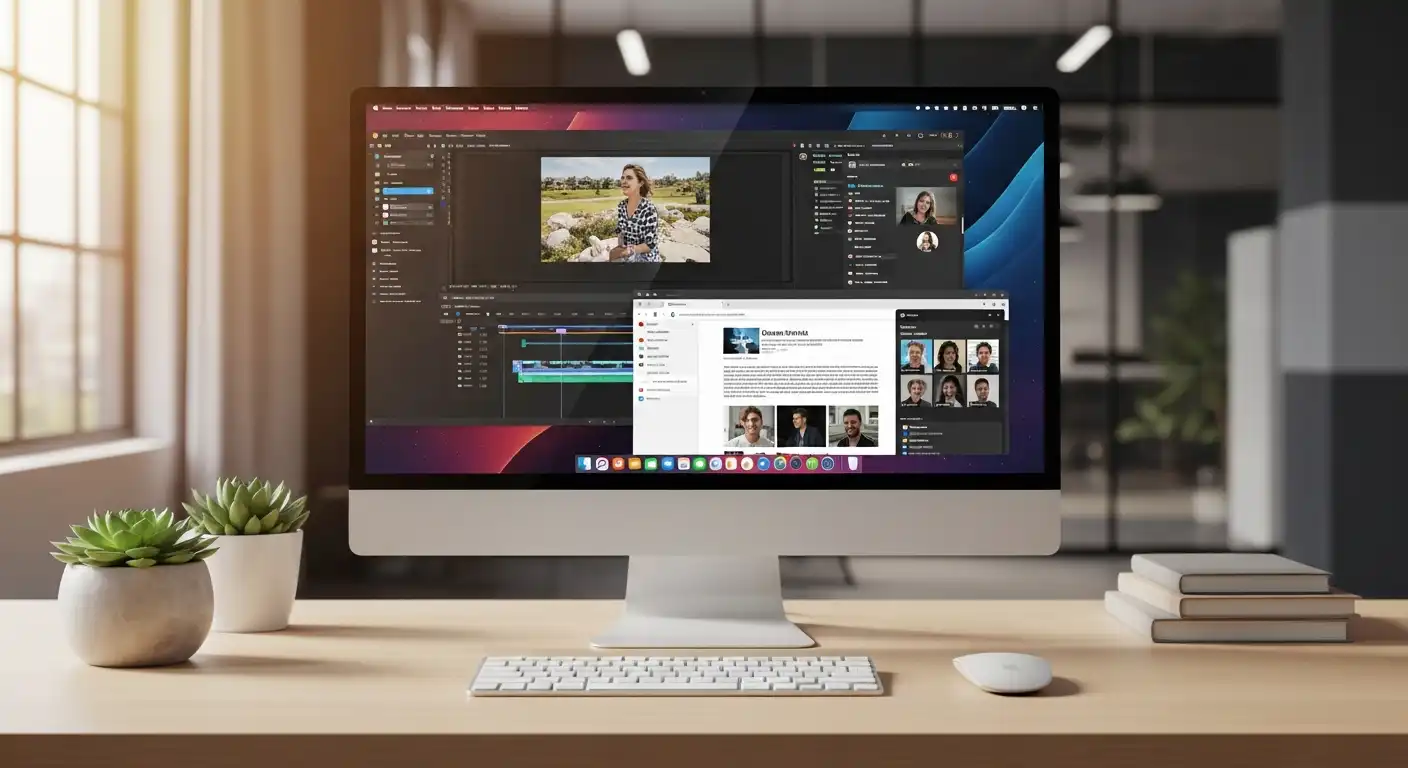
Walk into any electronics store, and you’ll see them: sleek, beautiful All-in-One (AIO) computers. They promise a clean, minimalist desk with no clunky tower to hide. The appeal is obvious. It’s a simple, elegant package that combines a monitor and a computer into a single unit. But behind that stylish exterior lies a series of terrible compromises. The AIO tries to be the best of both worlds but ends up being a master of none. It’s a product that sacrifices power, repairability, and long-term value for a clean look, and for most people, it’s simply a bad deal.
The Upgrade Nightmare
The single biggest flaw of the AIO is its sealed-box design. With a traditional desktop PC, when a part becomes slow or outdated, you can open the case and replace it. Need more memory? Pop in a new RAM stick. Want to play the latest games? Upgrade your graphics card. This ability to evolve makes a desktop a long-term investment. An AIO throws that entire concept out the window. Nearly everything is soldered onto the motherboard or crammed into a case you were never meant to open. When your AIO starts to feel slow in a few years—and it will—your only option is to buy a whole new machine.
Paying Desktop Prices for Laptop Guts
To fit everything behind a thin screen, manufacturers have to make some serious sacrifices, especially when it comes to power. AIOs almost exclusively use laptop components to manage heat and space. This means you’re getting a mobile processor and often a mobile graphics chip in a machine that will never leave your desk. You’re paying the price of a desktop but getting the performance of a laptop. For the same money, you could buy or build a traditional tower PC that would run circles around it in terms of raw speed and capabilities, whether you’re editing video, playing games, or just multitasking.
Forever Chained to Your Screen
With an AIO, the computer and the monitor are a package deal. This might seem convenient at first, but it quickly becomes a huge liability. Monitor technology changes rapidly. What happens in three years when 4K becomes standard, or you want a screen with a higher refresh rate for smoother motion? You’re stuck. Even worse, what if the screen dies or gets a cluster of dead pixels? On a normal setup, you’d just buy a new monitor. With an AIO, a dead screen often means you have a very expensive and very useless brick on your desk. The lifespan of your entire computer is tied to the lifespan of its screen.
The High Cost of Looking Good
AIOs command a premium price for their design. You are paying extra for the engineering that went into shrinking everything down and making it look tidy. But this “style tax” comes at the expense of value. Compare the specs of a $1,200 AIO to a $1,200 desktop and monitor combination. The separate components will almost always give you a faster processor, a better graphics card, more storage, and a higher-quality screen. The AIO asks you to pay more for less, simply to avoid having a small box sitting on or under your desk. For anyone concerned with getting their money’s worth, it’s a losing proposition.
Conclusion
The All-in-One PC is an exercise in compromise, and the user is the one who loses. You sacrifice the power of a desktop, the portability of a laptop, and the upgradability that gives traditional PCs their longevity. While it may look nice on a desk, its sealed design and reliance on weaker components make it a poor investment. If you want a clean setup, consider a small-form-factor tower you can tuck away, paired with a great monitor of your choice. That way, you get the aesthetic you want without giving up the power, flexibility, and value you deserve.