Key Points
- Engineers designed a magnetic cloak to hide objects from magnetic fields.
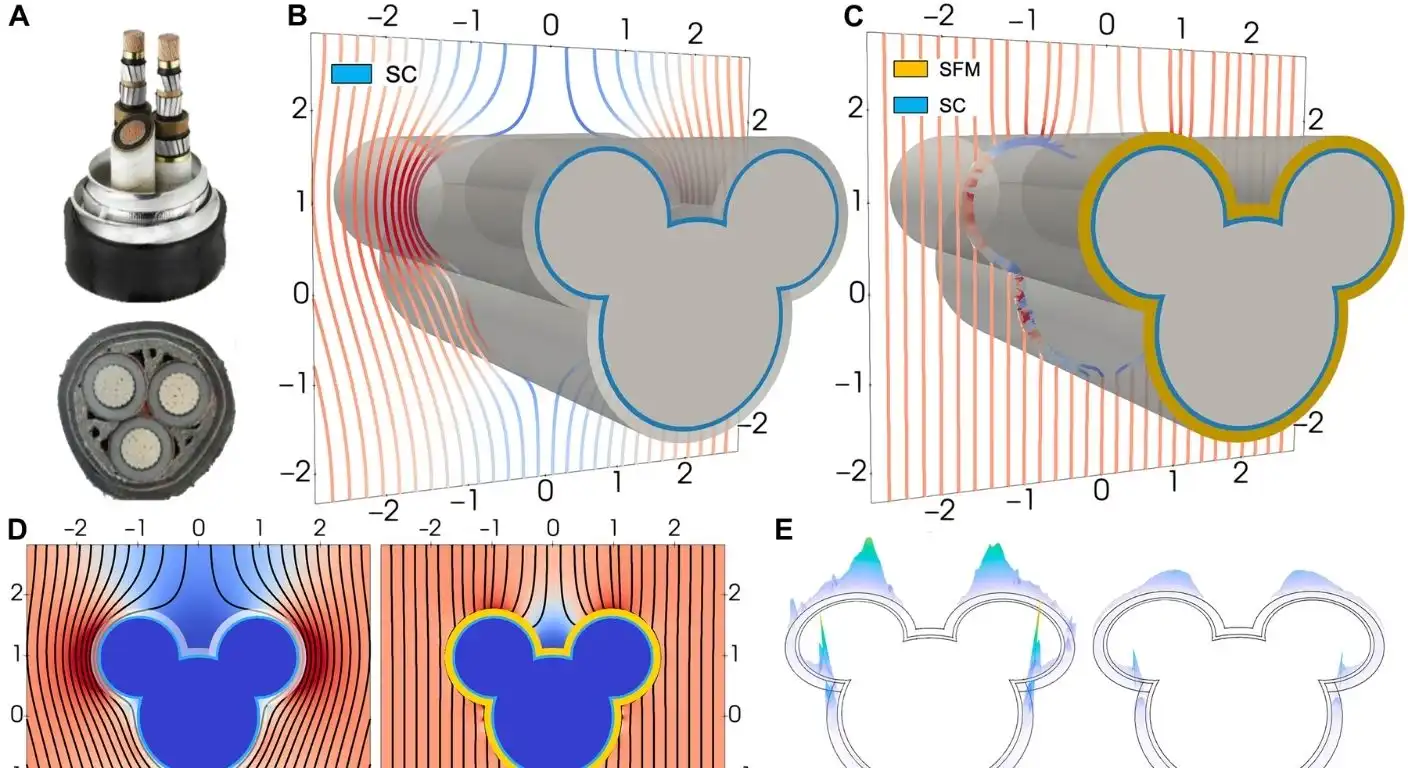
- This technology can now be applied to complex, real-world shapes.
- The cloak employs existing materials such as superconductors and soft magnets.
- It will protect medical devices and space technology from interference.
Engineers at the University of Leicester have come up with a way to make objects “disappear” from magnetic fields. They developed a concept for a magnetic cloak that hides sensitive technology from interference. While we usually think of cloaking in movies, this version is all about protecting high-tech tools from magnetic forces that can ruin their performance.
A magnetic cloak operates by altering how magnetic fields propagate around an object. Instead of hitting the object, the field flows smoothly around it, just like water moves around a rock in a stream. This renders the object invisible to nearby sensors or magnetic detectors.
In the past, scientists could only do this with very simple shapes like tubes. However, this new research demonstrates that we can now fabricate these cloaks for objects of any shape, regardless of their irregularity.
The team used advanced computer simulations and mathematics to demonstrate that these cloaks are feasible to build. They plan to use real materials such as superconductors and soft magnets that companies can already purchase today. This is a huge deal for several industries.
For example, MRI machines use powerful magnets, but those same magnets can interfere with other medical equipment in the room. A magnetic cloak could solve that problem by shielding specific components.
Beyond hospitals, this technology could protect satellites in space, improve the performance of fusion reactors, and prevent delicate sensors in navigation systems from failing. Unwanted magnetic fields often cause data errors or equipment malfunctions, which can be dangerous or expensive.
Dr. Harold Ruiz, one of the lead engineers, explained that this is no longer just a futuristic dream. The physics are solid, and the team is ready to start building physical prototypes. Their next step involves using high-temperature tapes and specialized magnetic composites to assess how these cloaks perform in real-world conditions. If it works as expected, we might soon see “invisible” components in everything from power grids to quantum computers.
Source: Science Advances (2025).