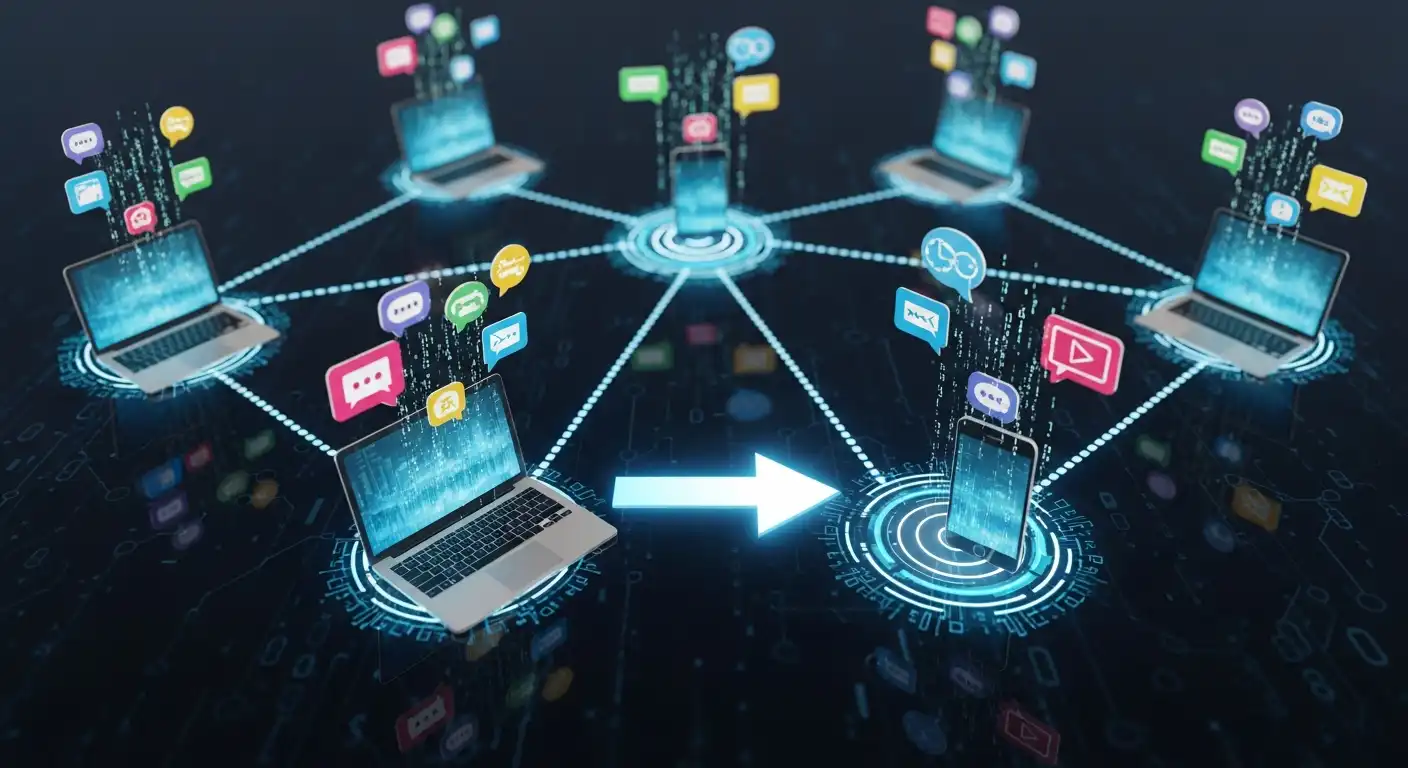
In the early days of the internet, there was a dream. It was a vision of a decentralized world, a network of equals, where we could connect and share directly with one another without needing a powerful intermediary. This was the world of peer-to-peer (P2P). But then, the giants moved in. Google, Facebook, and Amazon centralized the internet, turning us from active participants into passive users of their platforms. The P2P dream faded. But now, a quiet renaissance is brewing, and it has the power to restore the internet we were promised.
The Old P2P and Its Bad Reputation
For many people, the term “P2P” brings to mind Napster. In the early 2000s, P2P became synonymous with illegal file-sharing and digital piracy. It was a chaotic, often insecure world. This bad reputation, combined with the rise of convenient, centralized services like Spotify and Netflix, pushed P2P to the fringes. It was a brilliant technology that got off to a rocky start, but its core idea was never the problem.
Why We Need P2P More Than Ever
The centralized internet we live in today has a dark side. We have traded control for convenience. A handful of large corporations now act as the keepers of our digital lives. They control what we see, they own our data, they can censor content, and their massive servers represent a single point of failure. When Facebook goes down, a huge chunk of our social world goes with it. P2P is the perfect antidote to this dangerous centralization. In a P2P application, there is no central server to control, censor, or fail. The network is the users.
The New P2P: Secure, Fast, and User-Owned
The new generation of P2P applications is light-years ahead of the old file-sharing clients. Fueled by technologies like the blockchain and distributed hash tables, modern P2P is secure, efficient, and user-friendly. We are starting to see the emergence of P2P social networks in which you, not the company, own your data and control who can see it. There are truly private P2P messaging apps with no central company that can read your conversations. This model puts the user in control.
A More Resilient and Uncensorable Web
One of the most exciting applications of modern P2P is in building a more resilient, free internet. Projects like the InterPlanetary File System (IPFS) are working to build a web in which content is hosted not on a single server but distributed across a network of users. This makes the web faster because you can retrieve data from a user’s device rather than from a server halfway around the world. More importantly, it makes censorship incredibly difficult. If a government wants to block a website, that doesn’t just shut down a single server; it would have to shut down every user hosting a piece of that site.
The Slow Return to the Original Vision
This renaissance won’t happen overnight. Centralized services are highly convenient and not going away. But a growing number of people are recognizing the costs of our centralized world. We are becoming more aware of the importance of data ownership, privacy, and censorship resistance. The new wave of P2P applications offers a real, functional alternative. It is a slow but steady return to the original, decentralized vision of the internet—a network that empowers the individual, not the corporation. The dream is not dead; it was just sleeping.