

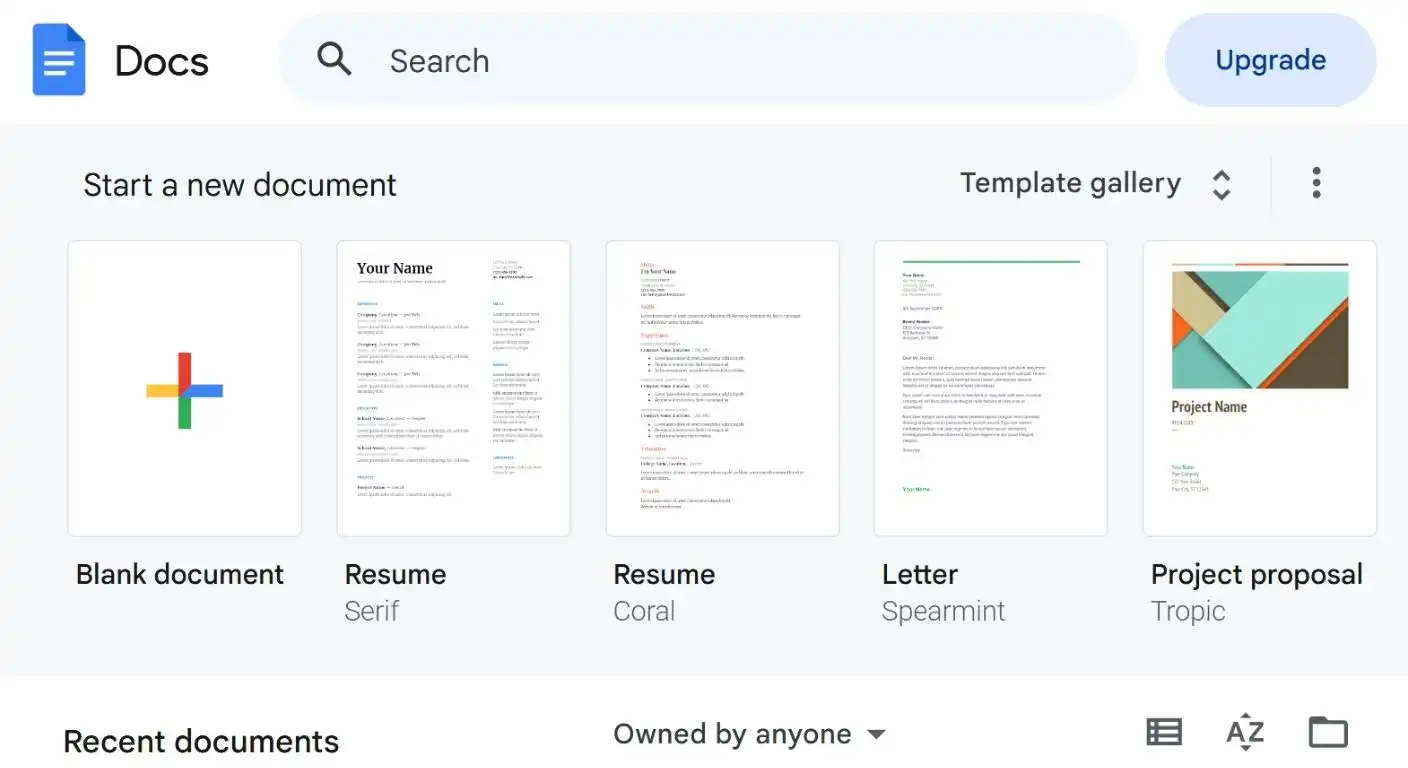
For years, Google Docs was my digital home. It was the place I went to write everything: work projects, personal essays, even grocery lists. The convenience was undeniable. It was free, it was everywhere, and the collaboration features were magic. My work was always saved, always accessible, and I never had to think about hitting “Ctrl+S.” But slowly, over time, I realized that this convenience came at a cost. I was trading control, focus, and even ownership for a bit of ease, and I’ve finally decided to move out.
The Tyranny of the Always-Online Leash
The biggest illusion of cloud-based software is that it’s always there for you. The reality is that it’s only there when your internet connection is. I’ve lost count of the times I’ve been on a plane, in a coffee shop with spotty Wi-Fi, or in a rural area, only to be met with that dreaded “Trying to connect…” message. This creates a low-grade anxiety. You are fundamentally dependent on a connection to a distant server to access your own thoughts. An offline app just works. It doesn’t care about Wi-Fi. It’s a reliable tool, not a conditional service.
The War Against a Million Distractions
Google Docs doesn’t live in a quiet, peaceful app. It lives in a browser tab. And that browser tab is surrounded by distractions. A click away is your email, your social media, a news site, and a dozen other rabbit holes. The temptation is constant. A dedicated, offline writing application, by contrast, creates a sanctuary. When I open it, it’s just me and a blank page. No other tabs are calling my name. This simple act of removing the browser from my writing process has been the single biggest boost to my productivity.
Reclaiming Ownership of My Words
There’s a subtle yet profound difference between storing a file on your own computer and on Google’s servers. When a file is on my hard drive, it’s mine. I have total control over it. I can back it up however I want, move it wherever I want, and be certain no one is scanning its contents to sell me ads. When my work lives in the cloud, I am a tenant, not an owner. I am trusting a massive corporation to be a good steward of my data, and that’s a trust that feels increasingly misplaced in the modern world.
The Joy of Speed and Simplicity
Google Docs has become a beast. It’s a word processor, a spreadsheet tool, a presentation maker, and a collaboration suite all rolled into one. But for just writing, it’s often slow and bloated. There’s a noticeable lag on large documents that you simply don’t get with a native, offline application. An offline app is built for one purpose, and it does that purpose incredibly well. It’s fast, responsive, and free of the feature creep that plagues so many web-based tools. It’s the difference between a Swiss Army knife and a perfectly crafted chef’s knife.
The Verdict: A Deliberate Downgrade
This isn’t about saying Google Docs is bad. It’s a fantastic tool for what it’s designed for: real-time collaboration. But for the solitary act of writing, it’s a compromise. I’ve made a conscious decision to “downgrade” my technology. I’ve traded the convenience of the cloud for the focus, speed, and peace of mind of a simple file on my own computer. It’s a quieter, more reliable way to work, and I’m never going back.






