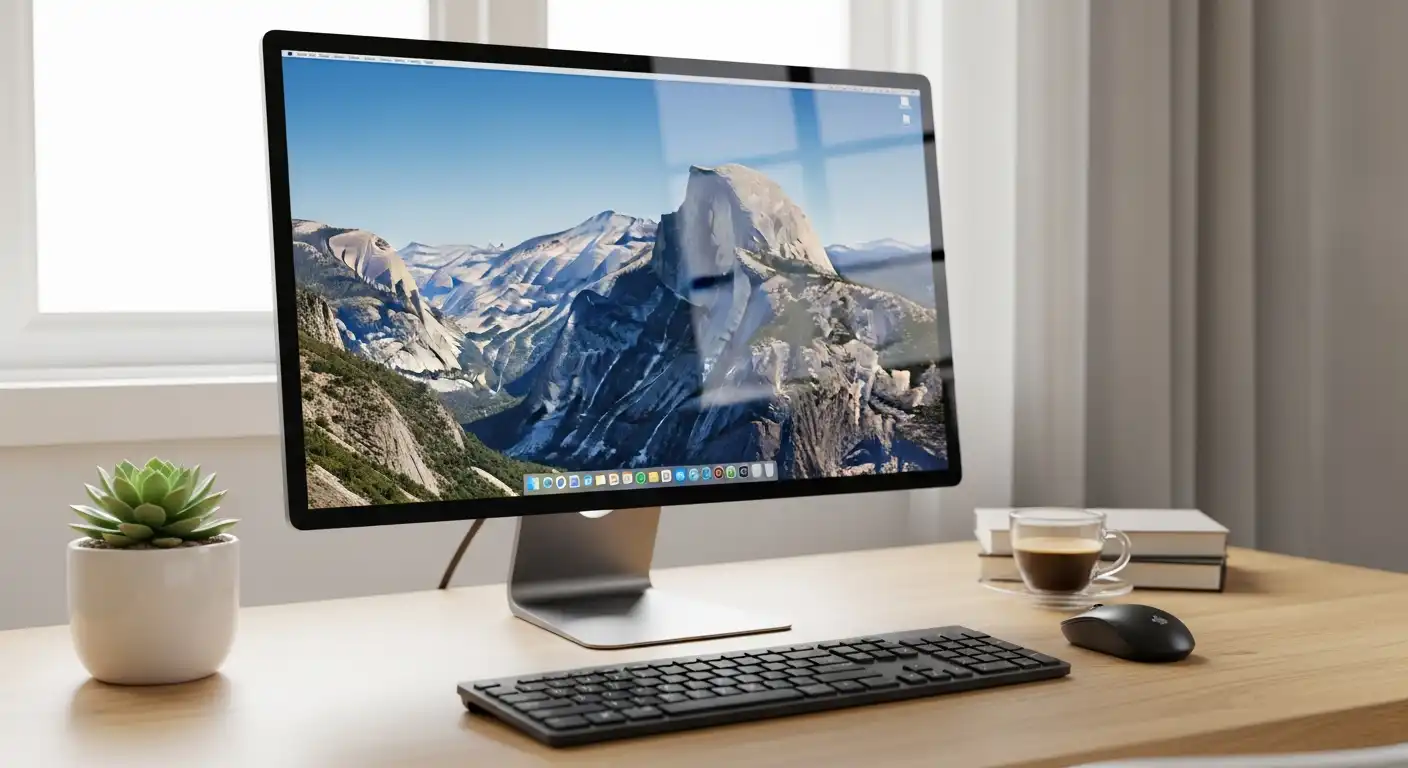
Look up any guide to the perfect ergonomic desk setup, and you’ll find a set of rigid, unyielding rules. Your monitor must be directly in front of you. The top of the screen should be at or slightly below eye level. You must be centered, symmetrical, and perfectly aligned, like a pilot in a cockpit ready for a mission. This is the gospel of modern productivity. But I’m here to confess a heresy: for years, I’ve worked with my monitor skewed off to the side, and it is a more comfortable, creative, and human way to work.
Breaking the ‘Command Center’ Mentality
The perfectly centered monitor creates a powerful psychological effect. It turns your desk into a command center. The screen becomes a portal, a dominant force that demands your full, undivided attention. It creates a sense of formality and urgency. But not all work requires that kind of intense, head-on focus. A skewed monitor, sitting off to the side like a well-placed notebook, changes your relationship with the machine. It becomes a more casual partner in your work, a tool you can glance at rather than a world you must dive into.
The Ergonomics of Real Life
The ergonomic argument for a centered screen is based on the avoidance of neck strain. And if you were a statue, that would be great advice. But we are not statues. We are living, breathing people who fidget, lean, and shift our weight. The “perfect” static posture, held for eight hours, is its own kind of prison. A skewed monitor encourages a more dynamic posture. It invites you to lean back in your chair, to turn your head, to shift your position. It breaks the rigid symmetry and allows for the kind of micro-adjustments and movements that are the hallmark of a truly comfortable body.
A Different Kind of Focus
There are times when you need to be pixel-perfect, staring directly at the screen. But much of our work—writing an email, thinking through a piece of code, brainstorming an idea—doesn’t require that level of visual intensity. Looking at a screen from an angle creates a subtle sense of distance. You see the whole forest, not just the individual trees. This “soft focus” can be a powerful tool for creativity. It encourages big-picture thinking and frees you from getting bogged down in the tiny details on the screen, allowing your mind to wander more freely.
The Joy of a Casual Glance
A skewed monitor respects the physical space you are in. It acknowledges that there is a room around you, a window to look out of, and a cup of coffee on your desk. A centered monitor dominates the space, becoming the sole focus of your reality. An off-center screen, by contrast, feels like just another object in the room. It reduces the screen’s power over you. It transforms the interaction from an intense stare-down into a series of casual glances, making the entire experience of being at your desk less draining and more integrated with the world around you.
In Praise of the Imperfect Setup
This isn’t just about monitors. It’s a small rebellion against the modern obsession with optimizing every aspect of our lives into a perfect, scientifically approved ideal. We are told there is one “right” way to sit, to work, to focus. But the truth is that we are all different. The best setup is not the one that looks perfect on an Instagram post; it’s the one that feels right for you. So, give it a try. Skew your screen. Break the rules. You might just find a more comfortable and creative way to get your work done.