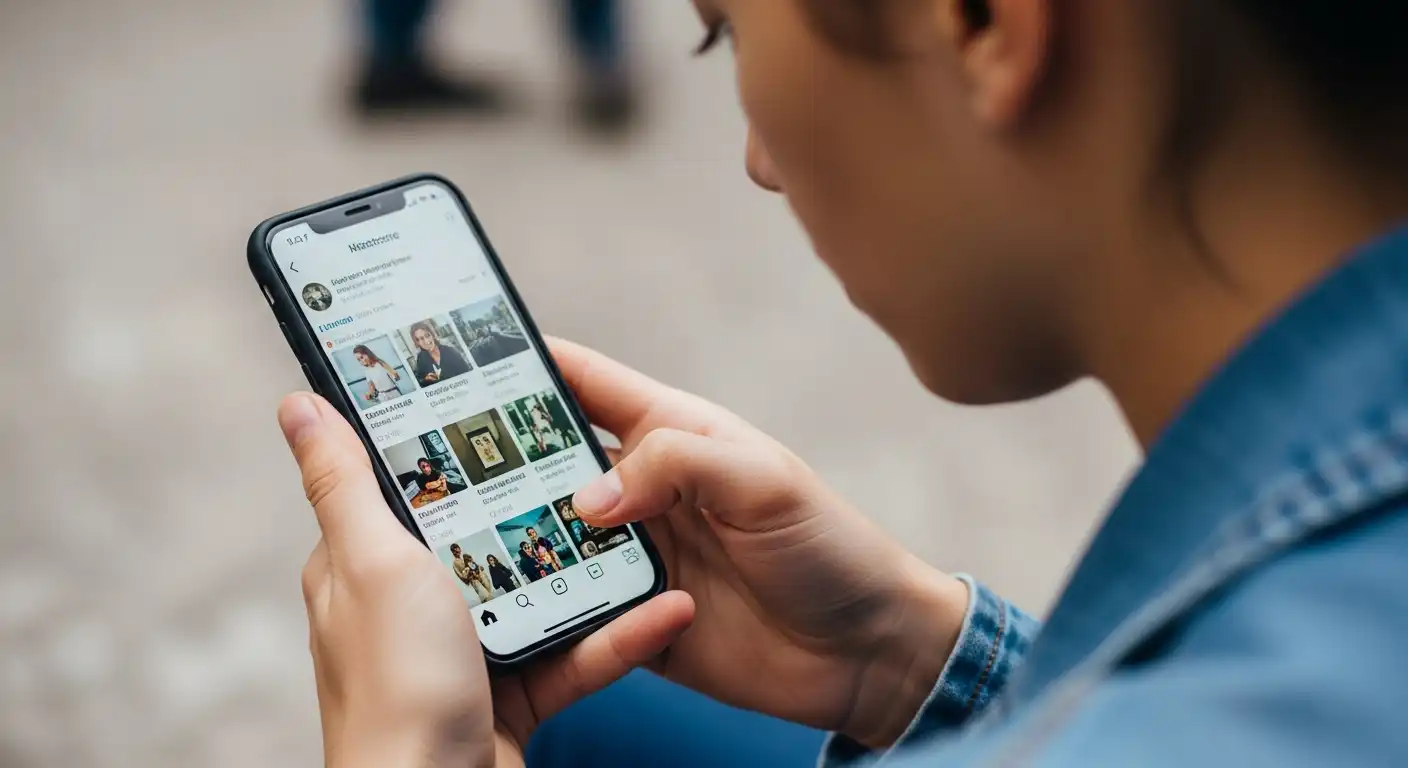
Do you remember what it was like to be bored? To wait in line at the grocery store, on a bus, or for a friend to arrive at a restaurant, and have nothing to do but look around? We used to observe the world, make eye contact with strangers, or simply get lost in our own thoughts. Then, in just a few short years, a small slab of glass and metal appeared in everyone’s pocket, and that world vanished forever. The smartphone wasn’t just a new kind of phone; it was a device that fundamentally rewired the source code of human interaction.
The End of Idle Moments
The first and most profound change was the death of the idle moment. The smartphone became the ultimate boredom-killer. Every spare second of our lives—in an elevator, waiting for a coffee, walking down the street—became an opportunity to check email, scroll through a feed, or play a game. While this feels productive, we lost something precious. We lost the empty spaces in our day, the moments that often led to spontaneous conversations, quiet reflection, or a simple, shared acknowledgment with another person. We filled the silence, but we also filled the space where random human connections used to happen.
A World of Curated Selves
Before the smartphone, your “self” was the person you presented in the room. It was messy, unedited, and authentic. The rise of social media, powered by the always-on camera in our pockets, changed that. We began to live our lives through a curated digital persona. We started to perform for our online audience, carefully filtering our photos, crafting witty captions, and presenting a highlight reel of our lives. This has changed the nature of getting to know someone. We often meet the polished digital version long before we meet the real, complex person.
The Constant Interruption
Look around any restaurant, and you’ll see it: a table of friends or a family, all together, but with at least one person looking down at a glowing screen. This phenomenon, “phubbing” (phone snubbing), has become a normal part of our social etiquette. The smartphone has introduced a state of “continuous partial attention.” We are physically present, but our minds are always halfway somewhere else, ready to be pulled away by the buzz of a notification. This constant digital interruption has degraded the quality of our in-person conversations, turning them into a series of fragmented moments instead of a shared, focused experience.
Connected Globally, Disconnected Locally
The great paradox of the smartphone is that it has made us more connected and more isolated at the same time. It is a magical tool that allows us to have a face-to-face conversation with a loved one on the other side of the planet. It has allowed communities to form and friendships to be maintained across vast distances. But this incredibly long-distance connection has often come at the expense of our local one. We have become masters at connecting with people who aren’t there, often at the expense of ignoring the person sitting right across from us.
The New Social Contract
The smartphone isn’t going away, and it shouldn’t. It is a tool of immense power and utility. But we are like a society that was handed a powerful, addictive new substance without an instruction manual. The evolution is not over. The next chapter isn’t about new hardware, but about us. It’s about learning to be the masters of this technology, not its servants. It’s about developing a new social contract, one where we learn to put the phone down, to look up, and to reconnect with the person right in front of us.