Key Points
- Nvidia has unveiled its new DGX SuperPOD, powered by the next-generation Rubin platform.
- The system is designed for extreme AI performance in a dense, liquid-cooled package.
- A SuperPOD with 576 Rubin GPUs can achieve 28.8 Exaflops of performance.
- The new system is more efficient than Huawei’s competing Atlas 950 SuperPod, requiring fewer GPUs to achieve higher performance.
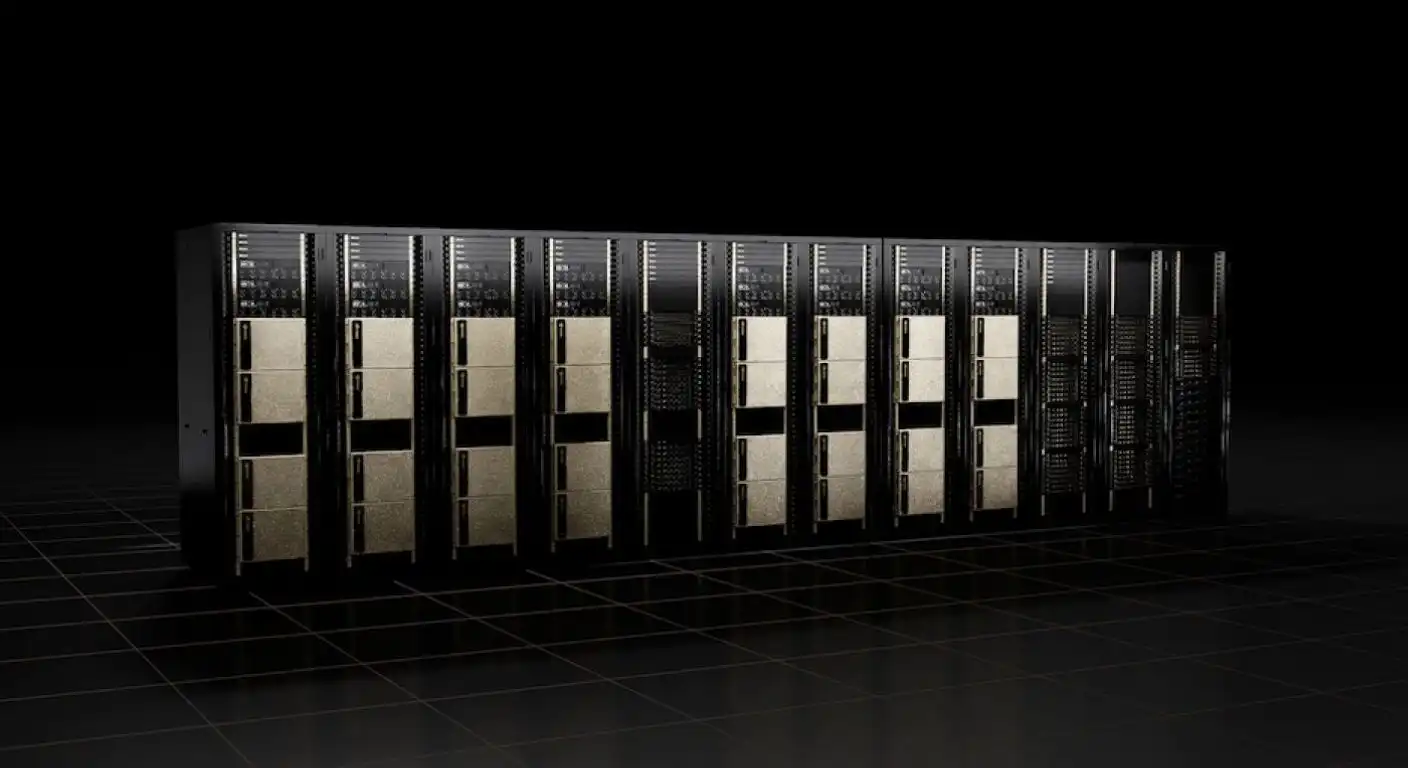
Nvidia is once again raising the bar for artificial intelligence computing. At CES 2026, the company unveiled its next-generation DGX SuperPOD, a massive system powered by its brand-new “Rubin” platform. This new machine is designed to deliver significant AI power in a compact, efficient package.
The SuperPOD is a collection of smaller systems, called NVL72s, linked together to function as a single AI brain. Each NVL72 rack is a powerhouse in itself, packed with 36 CPUs, 72 new Rubin GPUs, and 18 specialized networking units. To prevent overheating, the entire system is liquid-cooled.
Nvidia’s new Rubin GPU is the star of the show. It features a third-generation “Transformer Engine” and specialized hardware for data compression, enabling it to run AI models with exceptional efficiency. When you combine 576 of these new GPUs in a SuperPOD, you get a staggering 28.8 Exaflops of performance.
This new system is a direct shot at Nvidia’s main competitor in the high-end AI space, Huawei.
While Huawei’s Atlas 950 SuperPod can deliver a respectable 16 Exaflops, Nvidia’s new machine achieves higher performance with fewer GPUs and a smaller physical footprint. This “performance density” is a key selling point for Nvidia, as it reduces space, power, and operational costs for companies building these massive AI factories.
The Rubin platform isn’t just about hardware. It’s a complete, end-to-end solution that includes Nvidia’s AI Enterprise software and a new orchestration tool called Mission Control. This tightly integrated stack is designed to make it easier for companies to manage large-scale AI workloads and deploy next-generation AI models.